
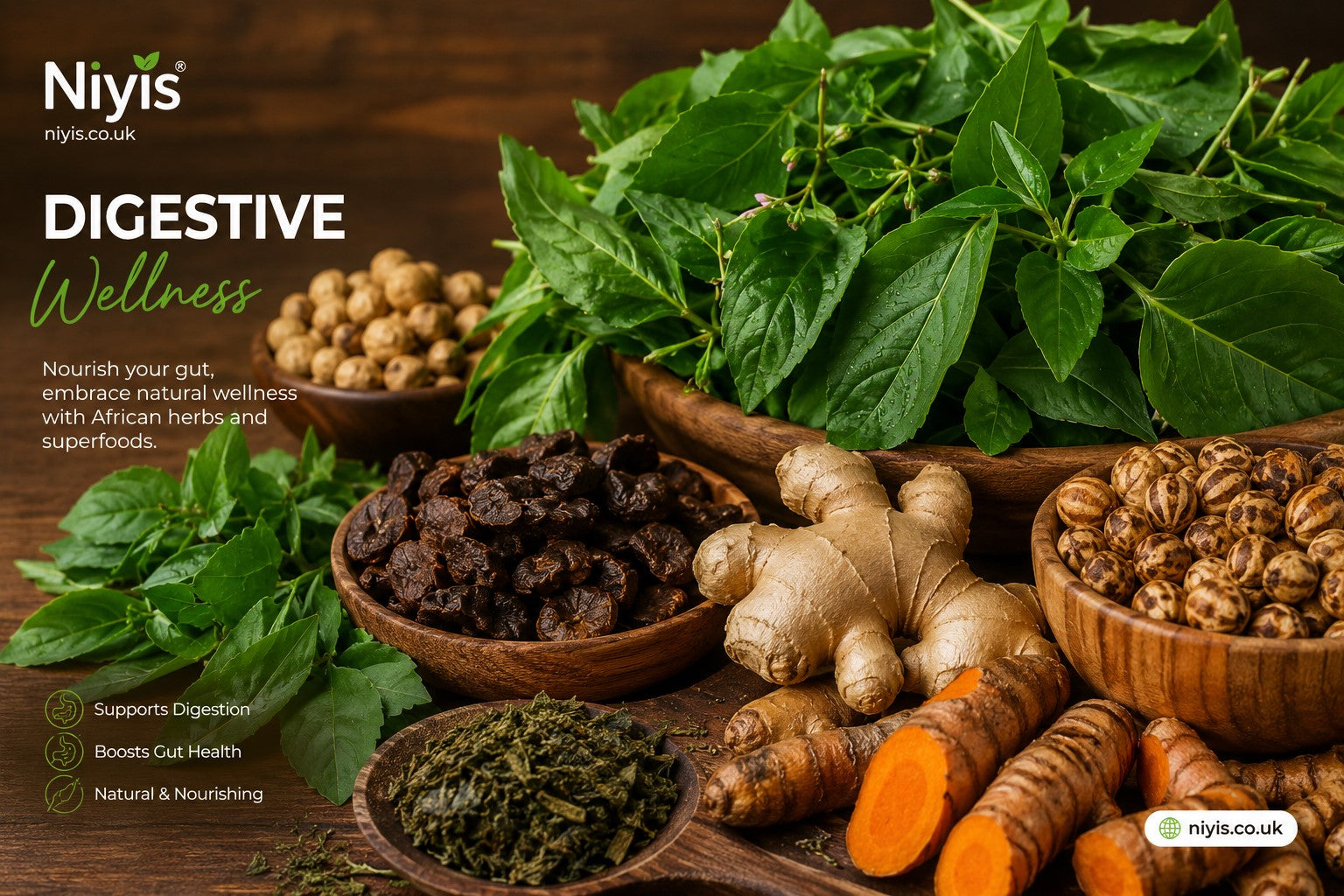
African herbs for digestion have been used for generations across Nigeria, Ghana, Cameroon, and other parts of West Africa to support gut health, reduce digestive discomfort, and promote overall wellness. Many of these traditional herbs and plant foods are rich in fibre, antioxidants, and beneficial plant compounds that may support healthy digestion. As interest in natural wellness continues to grow in the UK, African herbs for digestion are becoming increasingly popular among people seeking traditional food-based approaches to digestive health.
While these herbs are deeply rooted in African food culture, they are also commonly incorporated into soups, teas, drinks, and everyday meals that support a healthy digestive system.
Quick Answer
What Are African Herbs for Digestion?
African herbs for digestion are traditional herbs, leaves, spices, and plant foods commonly used across Africa to support digestive function, gut health, and overall wellbeing.
What Are African Herbs Good For?
Many African herbs may help support:
-
Healthy digestion
-
Gut microbiome balance
-
Regular bowel movements
-
Reduction of digestive discomfort
-
General wellness and nutrition
 Nutritional Profile of African Digestive Herbs
Many traditional African digestive herbs contain nutrients that support digestive and overall health.
|
Nutrient |
Benefits |
|
Fibre |
Supports bowel regularity |
|
Vitamin A |
Supports immune health |
|
Vitamin C |
Antioxidant support |
|
Iron |
Supports normal body functions |
|
Magnesium |
Supports digestive processes |
|
Plant Polyphenols |
Antioxidant protection |
|
Flavonoids |
May support gut health |
Common African digestive herbs and vegetables include:
-
Fresh Waterleaf
-
Ugu Leaves
-
Ewedu Leaves
-
Bitter Leaf
-
Locust Beans (Iru)
-
Ginger
-
Turmeric
Many of these ingredients are staples in traditional African soups and wellness foods.

Top Benefits of African Herbs for Digestion
1. May Support Healthy Digestion
Many African vegetables and herbs contain dietary fibre, which helps maintain regular bowel movements and supports digestive comfort.
Foods such as fresh waterleaf and ewedu are commonly consumed in traditional diets because of their naturally high fibre content.
You can explore Niyis' collection of frozen vegetables including:
These vegetables are frequently used in soups that form part of balanced African diets.
2. Rich in Fibre
Fibre is one of the most important nutrients for digestive health.
African leafy vegetables including waterleaf, ugu, and ewedu contribute fibre that may help support:
-
Gut health
-
Digestive regularity
-
Satiety
-
Healthy bowel function
Combining fibre-rich vegetables with legumes such as black-eyed beans can further support digestive wellness.
Browse:
3. May Support Gut Microbiome Health
Traditional African diets often include fermented foods and fibre-rich vegetables.
Ingredients such as:
-
Iru (locust beans)
-
Ugu leaves
-
Waterleaf
are commonly included in meals that provide diverse plant nutrients for gut bacteria.
You can find:
at Niyis.
4. Rich in Antioxidants
Many African herbs contain naturally occurring antioxidants that may help protect cells from oxidative stress.
Examples include:
-
Turmeric
-
Bitter leaf
-
Ugu leaves
-
Waterleaf
Turmeric remains one of the most researched spices worldwide for its antioxidant properties.
Explore:
5. May Promote Overall Wellness
Digestive health is closely linked with overall wellbeing.
Traditional African diets emphasise:
-
Whole foods
-
Plant-based ingredients
-
Fibre-rich vegetables
-
Natural herbs
This food-first approach remains a key part of African wellness traditions today.

Traditional African Uses
Across Nigeria and other West African countries, digestive herbs are commonly incorporated into daily meals.
Examples include:
Waterleaf
Waterleaf is frequently used in edikang ikong and vegetable soups.
Ugu Leaves
Ugu is a staple ingredient in:
-
Egusi soup
-
Vegetable soups
-
Traditional wellness meals
Ewedu
Ewedu is often prepared as a smooth soup served with amala and other traditional dishes.
Locust Beans (Iru)
Iru adds flavour and depth to soups while forming part of traditional Yoruba cooking.
These traditional food practices have been passed down through generations and continue to be widely used among African communities living in the UK.
How to Use African Herbs for Digestion
You can incorporate African digestive herbs into your diet through:
Soups
-
Ewedu soup
-
Egusi soup
-
Vegetable soup
-
Ogbono soup
Smoothies
Blend waterleaf with fruits for a nutrient-rich smoothie.
Herbal Drinks
Turmeric and ginger can be brewed into warming drinks.
Traditional Meals
Add ugu and waterleaf to soups and stews.
Useful ingredients include:

Possible Side Effects
Although generally safe when consumed as food, some people may experience:
-
Digestive discomfort from excessive fibre intake
-
Allergic reactions to specific herbs
-
Bloating when introducing high-fibre foods too quickly
Always introduce new foods gradually and consult a healthcare professional if you have medical concerns.
Who Should Avoid Them?
Certain individuals should exercise caution:
-
People with known food allergies
-
Individuals following medically prescribed diets
-
People taking medications that may interact with herbal supplements
These herbs are foods rather than medicines and should not replace professional medical advice.
Where to Buy African Herbs in the UK
You can buy authentic African herbs, vegetables, and wellness ingredients from Niyis African Supermarket, which offers UK-wide delivery and a large range of African grocery products.
Recommended products
Share:
How Africans Use Bitter Leaf Traditionally for Wellness in the UK (2026)
Best African Foods for Gut Health in the UK (2026)