
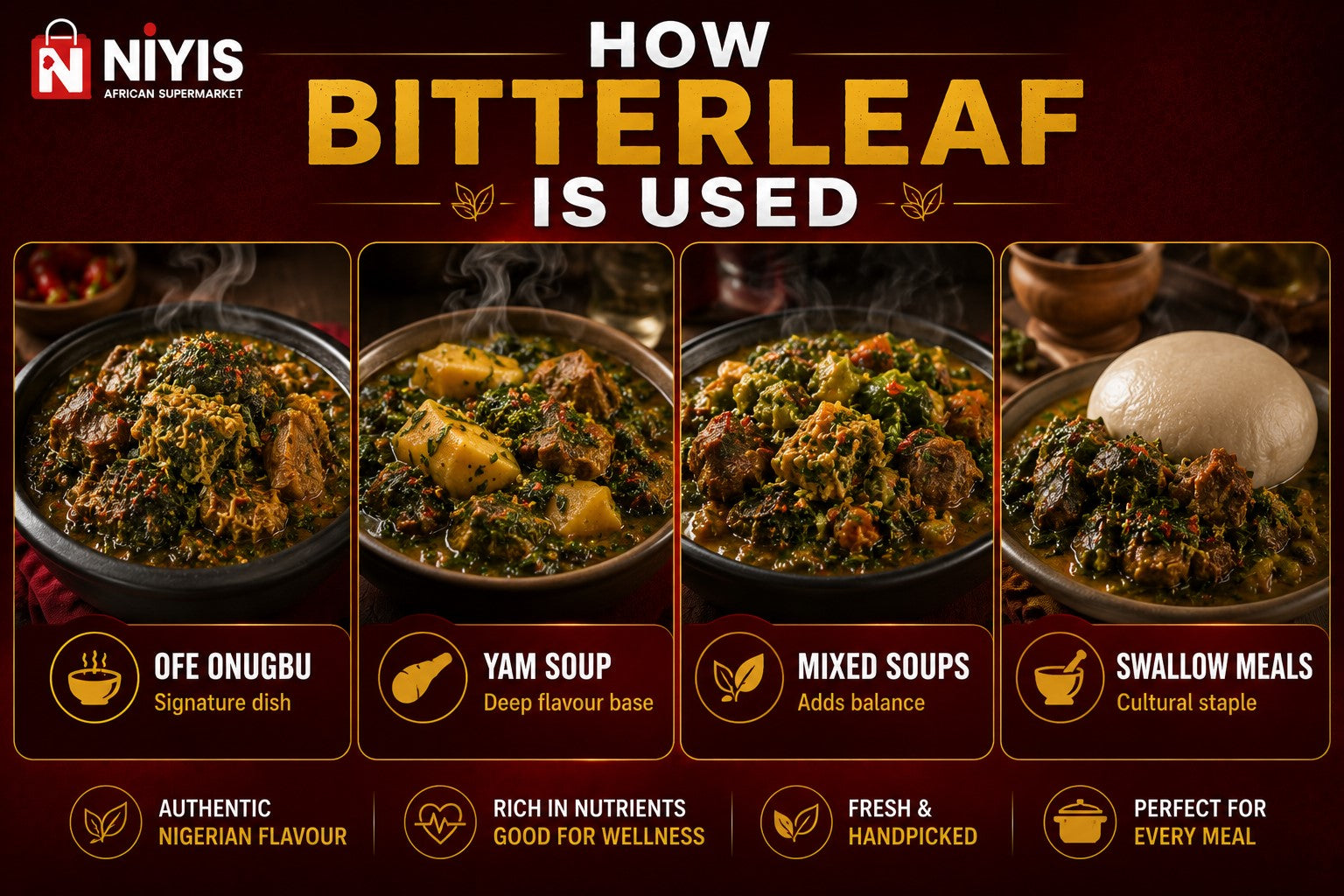
Bitterleaf — Vernonia amygdalina, known as onugbu in Igbo — is one of the defining flavours of Nigerian cooking. It's the star of bitterleaf soup (ofe onugbu), a key component in yam and bitterleaf soup, and a powerhouse of health benefits on its own.
When you're living in the UK, you typically face a choice: fresh bitterleaf (seasonal, harder to find) or dried/processed bitterleaf (more available, but different results). This guide settles the debate once and for all.
What is Bitterleaf?

Bitterleaf is a tropical shrub whose leaves are used both medicinally and culinarily across West and Central Africa. The leaves have a characteristic, pleasant bitterness that is reduced — but not eliminated — by washing. In Nigerian cooking, the slight residual bitterness is intentional — it's what gives ofe onugbu its distinctive character.
Beyond cooking, Healthline notes that bitterleaf contains compounds associated with blood sugar regulation, anti-inflammatory properties, and immune support.
Fresh Bitterleaf: Pros and Cons

Pros
-
Authentic flavour — the bitterness is natural and nuanced
-
Better texture — fresh leaves hold their shape better in soup
-
Richer colour — deep green rather than muted
-
Health benefits are better preserved in fresh leaves
Cons
-
Harder to find in the UK
-
Requires washing and squeezing to reduce bitterness before use
-
Shelf life is short — use within 3–5 days of delivery
Dried/Processed Bitterleaf: Pros and Cons
Pros
-
Available in many African grocery stores year-round
-
Longer shelf life
-
Pre-washed versions reduce prep time
Cons
-
Much of the natural flavour is lost in drying
-
Texture becomes mushy when cooked
-
Some dried versions are over-processed, losing the bitterness entirely
-
Less nutritionally rich than fresh
The Verdict: Which Should You Choose?
For bitterleaf soup (ofe onugbu), fresh bitterleaf is always the superior choice. The flavour difference is significant. If fresh isn't available, use dried as a backup — but manage your expectations.
The rule is simple: fresh when you can get it, dried when you can't.

How to Prepare Fresh Bitterleaf for Cooking
-
Rinse the leaves thoroughly under cold water
-
Rub the leaves together in batches and squeeze out the bitter juice
-
Rinse again — repeat this 3–5 times depending on how bitter you want the final dish
-
Shred or chop the leaves as required by your recipe
-
Add to your soup towards the end of cooking (last 5–10 minutes)
For the full recipe using bitterleaf, read our guide: How to Prepare Bitterleaf Soup (And Where to Buy Fresh Leaves in UK).
Where to Buy Fresh Bitterleaf in the UK
The most reliable source for fresh bitterleaf in the UK is Niyis African Supermarket. Niyis dispatches all fresh leaves every Wednesday — specifically to ensure maximum freshness on arrival. They cover the entire UK with DPD and ParcelForce delivery.
Browse the Niyis fresh vegetables collection to find bitterleaf and other essential African leaves.
Health Benefits of Bitterleaf
Used as both food and medicine across Africa, bitterleaf has been studied for:
-
Blood sugar regulation
-
Liver protection
-
Anti-inflammatory and antimicrobial properties
-
Digestive support
See this overview from WebMD on bitterleaf benefits for more detail.
Related Articles
-
How to Prepare Bitterleaf Soup (And Where to Buy Fresh Leaves in UK)
-
Buy African Vegetables Online in the UK (Fresh, Authentic & Delivered Fast)
-
Struggling to Find Fresh African Ingredients in the UK? Read This
Summary
Fresh bitterleaf delivers better flavour, better texture, and better health benefits than dried. In the UK, you can now get it delivered to your door from Niyis — dispatched every Wednesday for maximum freshness.
Buy Fresh Bitterleaf at Niyis →
Share:
Fresh Ugu Leaves in the UK: Storage, Uses & Where to Buy
15 Proven Uziza Leaf Benefits, Uses and Where to Buy in the UK (2026)