
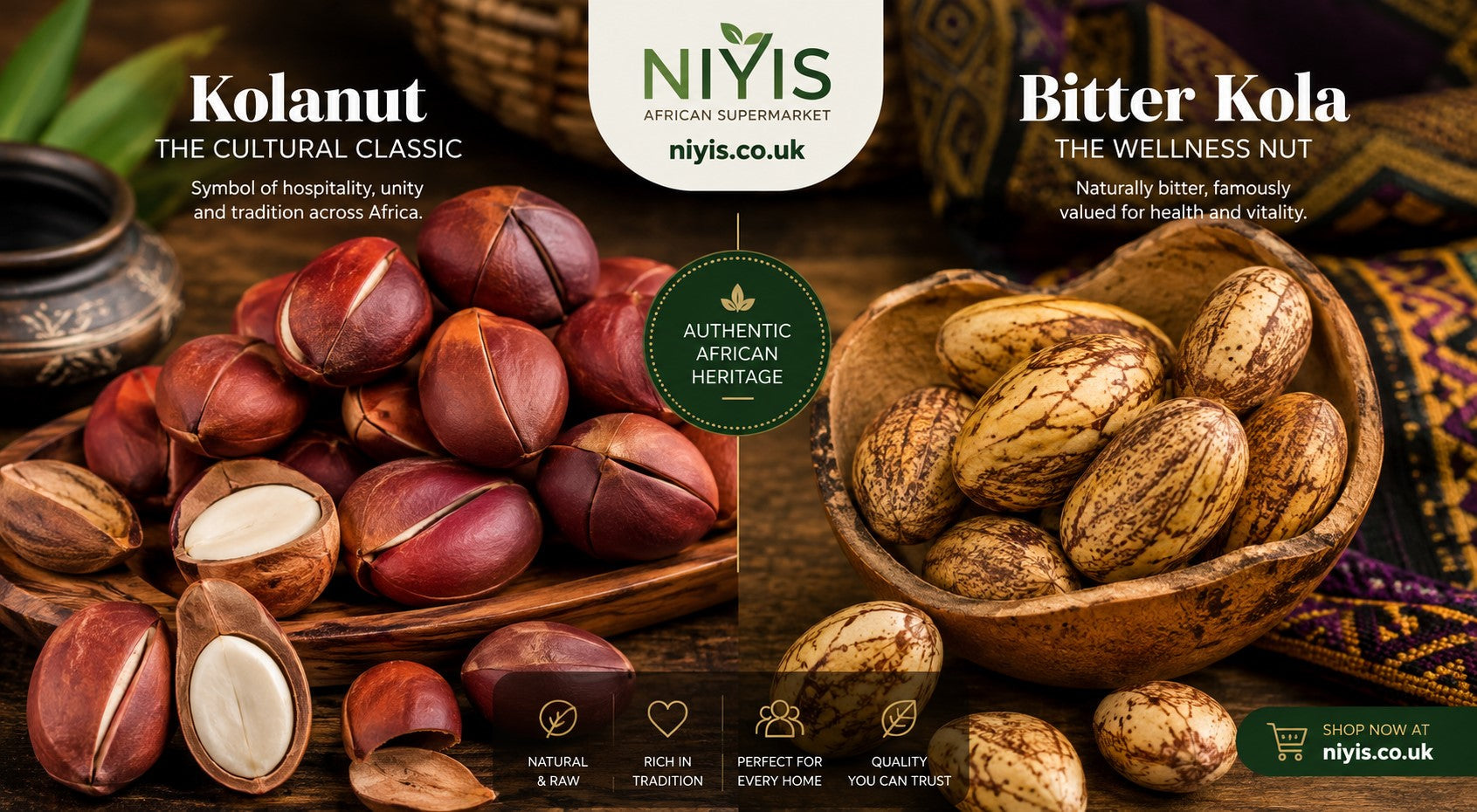
Kolanut and bitter kola are two of the most recognised traditional African nuts enjoyed across Nigeria and many parts of West Africa. Although they are often mentioned together, kolanut and bitter kola come from different plants, have distinct flavours, and play unique roles in African culture. Today, many people in the UK continue to enjoy African kola nut and bitter kola as part of cultural traditions, family gatherings, and everyday life. Whether you are curious about kolanut benefits, bitter kola benefits, or looking to buy kolanut UK, understanding their history and traditional uses helps you appreciate why these natural products remain so popular.
People shopping at an African food shop in the UK often purchase both products alongside other traditional favourites such as Tiger Nuts, Bitter Leaf, and African Groceries to recreate authentic West African food traditions at home.
What Is Kolanut?
Kolanut is the edible seed of the kola tree. It has a naturally bitter taste and has traditionally been offered during ceremonies, family gatherings, and important social occasions across West Africa.
What Is Bitter Kola?
Bitter kola is the seed of a different tropical tree known for its distinctly bitter flavour. It is commonly chewed in many Nigerian communities and is valued for its long history in traditional African culture.
What Is the Difference Between Kolanut and Bitter Kola?
Although both are commonly called "kola," they come from different plant species. Kolanut is primarily known for its caffeine content and ceremonial importance, while bitter kola is recognised for its strong bitter taste and traditional wellness uses.
Nutritional Profile

Both kolanut and bitter kola contain naturally occurring plant compounds that have been widely studied for their nutritional composition. While they are not major sources of calories or protein, they contain several naturally occurring phytochemicals that contribute to their distinctive taste and traditional appeal.
|
Nutrient/Compound |
Kolanut |
Bitter Kola |
|
Natural caffeine |
High |
Very low |
|
Fibre |
Moderate |
Moderate |
|
Polyphenols |
Present |
Present |
|
Antioxidant compounds |
Present |
Present |
|
Bitter phytochemicals |
Mild |
High |
Kolanut contains natural caffeine, making it one of the reasons it has traditionally been chewed to promote alertness during long ceremonies and community gatherings. Bitter kola, on the other hand, is naturally rich in bitter-tasting plant compounds that contribute to its unique flavour profile.
Many families enjoy combining traditional ingredients from an African grocery shop. Alongside authentic Kolanut, shoppers often buy Bitter Kola,Alligator pepper, and Tiger Nuts for cultural ceremonies and traditional hospitality.
What Is Kolanut?
Kolanut is the seed produced by trees belonging to the Cola species, native to tropical West Africa. For generations, it has been regarded as one of the most important traditional symbols of hospitality throughout Nigeria, Ghana, Sierra Leone, and neighbouring countries.
In many Nigerian communities, presenting kolanut to visitors is considered a sign of respect, friendship, and goodwill. It often appears at weddings, naming ceremonies, traditional meetings, festivals, and family celebrations.
People searching for traditional African kola nut or looking to buy kolanut UK can now enjoy authentic products without travelling abroad. You can conveniently purchase Kolanut from Niyis African Supermarket alongside other traditional essentials such asAlligator pepper, Bitter Kola, and a wide selection of African Groceries delivered across the UK.
Kolanut has also become a familiar ingredient in discussions about African history because it was historically traded throughout West Africa long before modern transportation. Its cultural value often exceeded its commercial value, symbolising unity and mutual respect among communities.
What Is Bitter Kola?
Although many people assume bitter kola and kolanut are the same, bitter kola comes from an entirely different tree species known as Garcinia kola. It has a noticeably stronger bitter taste and is commonly chewed on its own rather than shared ceremonially.
Across Nigeria, bitter kola is widely enjoyed because of its unique flavour and longstanding place in traditional African customs. It is frequently offered during family gatherings and remains popular among people who appreciate naturally bitter foods.
Today, anyone looking to buy bitter kola UK can easily order authentic Bitter kola from Niyis African Supermarket. Many customers also purchase kolanut together with fresh ginger,cloves, and other products from the African Groceries Collection to enjoy a wider variety of traditional African foods.
Unlike kolanut, bitter kola contains very little caffeine, making the two products quite different despite their similar names. This distinction is important for anyone researching the difference between kolanut and bitter kola or deciding which traditional African ingredient best suits their preferences.
Traditional Uses of Kolanut in African Culture

Kolanut has a deep cultural meaning across many African communities, especially in Nigeria, Ghana, and other parts of West Africa. Beyond being a traditional snack, the African kolanut has historically represented respect, hospitality, friendship, and unity.
In many Nigerian homes, offering kolanut to guests is a sign of welcome. During important occasions such as weddings, naming ceremonies, community meetings, and family gatherings, the breaking and sharing of kolanut often comes before discussions begin.
Traditionally, elders may say prayers or offer blessings before the kolanut is shared among guests. This practice reflects the importance of gratitude, connection, and respect within African culture.
Today, many Africans living in the UK continue to preserve these traditions by purchasing authentic ingredients from trusted African grocery stores in the UK. Having access to traditional foods helps families maintain cultural practices while living abroad. (Niyis African Supermarket)
Kolanut is also appreciated because it carries a unique bitter taste and natural aroma. Some people enjoy chewing small pieces slowly, while others include it as part of cultural celebrations rather than everyday consumption.
Traditional Uses of Bitter Kola
Bitter kola, also known as Garcinia kola, is another traditional African ingredient with a long history of use. Unlike regular kolanut, bitter kola has a sharper, more bitter flavour, which is why many people enjoy it in small amounts.
The Bitter Kola is traditionally valued in different African communities for cultural and wellness practices. Many people associate bitter kola with traditional routines passed down through generations.
In Nigeria, bitter kola is often shared among family members, visitors, and community members during gatherings. It may also be offered alongside other traditional foods and drinks as part of hospitality.
For Africans living in the UK, finding authentic ingredients can sometimes be challenging. Shopping from a trusted African food shop in the UK makes it easier to access traditional products that connect people with home.
Bitter kola is often enjoyed alongside other African staples, including traditional snacks, drinks, and ingredients used in everyday cooking. Niyis provides a wide selection of authentic African products, making it easier to recreate familiar cultural experiences. (Niyis African Supermarket)
Difference Between Kolanut and Bitter Kola

Although both are called “kola,” kolanut and bitter kola are different products with different appearances, flavours, and traditional uses.
|
Feature |
Kolanut |
Bitter Kola |
|
Botanical source |
Cola species |
Garcinia kola |
|
Taste |
Slightly bitter with a nutty flavour |
Stronger bitter taste |
|
Traditional role |
Ceremonies, hospitality, cultural events |
Traditional wellness practices and chewing |
|
Appearance |
Brown or reddish nut |
Hard yellow-brown seed |
|
Common use |
Chewed fresh |
Chewed in small pieces |
The main difference between kolanut and bitter kola is their cultural role and flavour profile. Traditional kolanut is commonly associated with ceremonies and welcoming guests, while Bitter kola is usually enjoyed for its distinctive bitter taste.
Both products remain important parts of African food culture, especially among Nigerian and West African communities worldwide.
How to Eat and Enjoy Kolanut
Many people searching for how to eat kolanut are interested in understanding the traditional way it is prepared and shared.
Unlike common nuts that are eaten in large quantities, kolanut is usually consumed in small portions because of its strong flavour and cultural importance.
Traditional ways to enjoy kolanut include:
-
Cleaning the kolanut before serving.
-
Breaking it into smaller pieces.
-
Sharing it among family members or guests.
-
Chewing small pieces slowly.
In Nigerian culture, sharing kolanut is often more important than simply eating it. The process represents friendship, respect, and acceptance.
For people living in the UK, finding authentic Kolanut 200g helps families continue these traditions during cultural events and celebrations.
Kolanut is also sometimes enjoyed alongside other traditional African foods. Many customers purchase it together with other products from an African grocery collection to prepare for weddings, ceremonies, and family gatherings.
How to Eat Bitter Kola
If you are wondering how to eat bitter kola, the traditional method is simple. Bitter kola is usually eaten fresh by removing the outer covering and chewing the inner seed.
Common ways people enjoy bitter kola include:
-
Removing the outer shell.
-
Cutting the seed into smaller pieces.
-
Chewing small amounts at a time.
Because bitter kola has a naturally strong bitter taste, many people prefer eating only a small quantity.
The flavour is very different from ordinary nuts, which is why it has remained a unique part of African food culture.
People searching to buy bitter kola UK often look for suppliers that provide authentic products suitable for traditional use. Purchasing fresh Bitter Kola 200g from a trusted African supermarket helps customers enjoy the ingredient in the same way it has been appreciated for generations.
Bitter kola is also commonly purchased alongside other traditional products from a reliable African food shop in the UK, especially among Nigerian and West African communities living abroad.
Kolanut and Bitter Kola in Nigerian and West African Traditions
Kolanut and bitter kola both hold significant places in Nigerian and West African culture, but their roles are different.
Kolanut is strongly connected with ceremonies, hospitality, and community traditions. The act of presenting and sharing kolanut can represent peace, friendship, and respect.
Bitter kola, on the other hand, is traditionally valued for its unique taste and its role in cultural food practices. Many families continue to enjoy it as part of traditional routines.
The continued popularity of kolanut and bitter kola among African communities in the UK shows how food can preserve cultural identity. For many immigrants and their families, traditional ingredients create a connection to home.
Access to authentic products through online African supermarkets has made it easier for people to maintain these traditions. A well-stocked African groceries collection allows customers to discover traditional foods, cooking ingredients, and cultural products in one place.
From family celebrations to everyday enjoyment, kolanut and bitter kola remain important examples of how African food traditions continue across generations.
Where to Buy Kolanut and Bitter Kola in the UK

Finding authentic traditional African ingredients in the UK can sometimes be challenging, especially for customers looking for products that match the quality and cultural expectations they remember from home.
If you are searching to buy kolanut UK or buy bitter kola UK, choosing a trusted African supermarket makes it easier to access genuine products with convenient delivery options.
At Niyis African Supermarket, customers can purchase traditional ingredients including Kolanut and Bitter Kola for cultural celebrations, family gatherings, and personal enjoyment.
These products are popular among Nigerians and West Africans living in the UK who want to maintain important traditions while having access to authentic African foods.
Alongside kola products, customers can explore a wide selection of traditional ingredients through the African groceries collection, including pantry staples, cooking ingredients, and specialty foods from across Africa.
Whether you are preparing for a Nigerian ceremony, looking for traditional ingredients, or simply reconnecting with familiar flavours, shopping from a reliable African food shop UK makes it easier to access the foods that matter to your culture.
Kolanut and Bitter Kola FAQs
1. What is the difference between kolanut and bitter kola?
Kolanut and bitter kola are two different African seeds with different characteristics. Kolanut comes from the Cola plant and is traditionally associated with ceremonies, hospitality, and social gatherings.
Bitter kola comes from the Garcinia kola tree and has a stronger bitter taste. Both have cultural importance in Nigerian and West African traditions, but they are not the same ingredient.
2. What are the traditional benefits of kolanut?
The commonly discussed kolanut benefits are mainly connected to traditional African practices. For generations, kolanut has been valued culturally as a symbol of hospitality, respect, and connection.
Many communities have traditionally enjoyed kola nut during gatherings, celebrations, and important social occasions.
3. What are the traditional benefits of bitter kola?
The commonly discussed bitter kola benefits come from traditional African food practices and cultural knowledge.
Bitter kola has historically been appreciated as part of African food heritage and continues to be enjoyed by many communities today.
Scientific research has explored compounds found in Garcinia kola, but more studies are needed before making specific health claims.
4. How do you eat kolanut?
If you want to know how to eat kolanut, the traditional method involves breaking the nut into smaller pieces and sharing it among family members or guests.
Kolanut is usually eaten in small portions because of its distinctive bitter flavour and cultural significance.
5. How do you eat bitter kola?
The traditional way to eat bitter kola is by removing the outer layer and chewing small pieces of the seed.
Because of its naturally bitter taste, many people prefer consuming small amounts rather than large portions.
6. Is kolanut the same as kola nut?
Yes. Kolanut and kola nut refer to the same traditional African seed. The spelling may differ depending on the region, but both terms describe the same culturally important ingredient.
7. Can I buy kolanut in the UK?
Yes. Customers looking to buy kolanut UK options can purchase authentic Kolanut online from African supermarkets that provide traditional ingredients with UK delivery.
8. Where can I buy bitter kola in the UK?
You can purchase authentic Bitter Kola from Niyis African Supermarket, making it easier for customers searching to buy bitter kola UK options.
Related Traditional African Ingredients to Explore
Kolanut and bitter kola are only part of the wider range of traditional African foods enjoyed by Nigerian and West African communities.
Many customers combine these ingredients with other authentic products such as:
-
African vegetables for traditional soups and meals.
-
Fresh Nigerian ingredients for authentic home cooking.
-
Pepper soup mix for traditional Nigerian pepper soup recipes.
-
Whole Ogbono Seeds for preparing classic Nigerian soups.
-
Ground Crayfish for adding authentic seafood flavour to traditional dishes.
These ingredients help recreate familiar African flavours for families across the UK.
Final Thoughts: Preserving African Food Traditions in the UK
Kolanut and bitter kola are more than just traditional ingredients. They represent history, hospitality, identity, and cultural connection.
From Nigerian ceremonies where kolanut is shared with guests to traditional practices involving bitter kola, these ingredients continue to play an important role in African communities worldwide.
For Africans living in the UK, access to authentic products makes it possible to continue these traditions while introducing younger generations to their cultural heritage.
Whether you are looking for traditional African kola nut, authentic African kola nut, or quality ingredients from an African food shop in the UK, Niyis African Supermarket provides access to traditional products delivered across the UK.
Explore authentic Kolanut, Bitter Kola, and other African grocery essentials to bring traditional flavours and cultural experiences into your home.
Share:
Healthy African Foods for Pregnancy: A Complete Guide for Expecting Mothers in the UK (2026)
Where to Buy Pangasius Fish in the UK: Benefits, Nutrition, Safety and Cooking Guide (2026)