
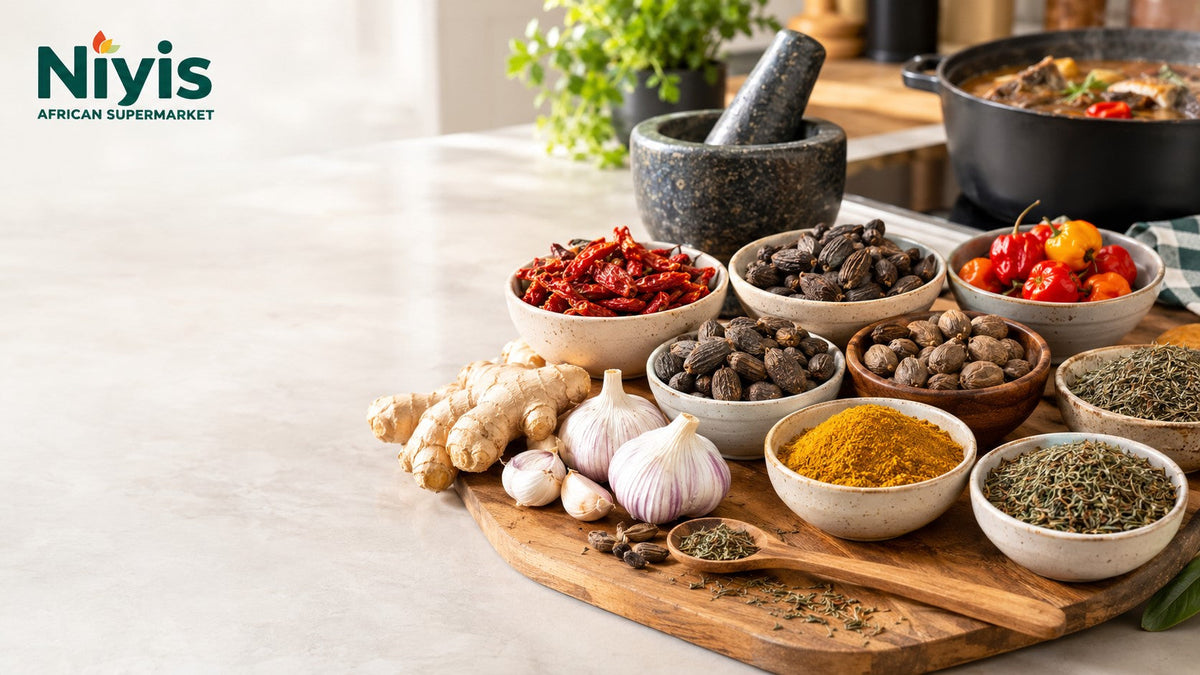
Nigerian spices are the foundation of the country's rich and distinctive cooking traditions. From the smoky warmth of uda to the aromatic depth of ehuru and the fiery kick of Cameroon pepper, these ingredients transform everyday rice, soups, stews and grilled meats. For Nigerian home cooks in the UK, understanding which spices to use, how much to add and where to buy authentic ingredients makes recreating familiar flavours much easier.
Whether you are preparing jollof rice, egusi soup, pepper soup or suya, this guide explains 10 essential Nigerian spices, their flavour differences and the dishes they complement. You will also discover practical buying tips and where to find Nigerian cooking ingredients at Niyis African Supermarket.
What Are the Most Important Nigerian Spices?
The 10 Nigerian spices and seasonings every home cook should know are:
-
Cameroon pepper
-
Uda, also known as grains of Selim
-
Ehuru, or African nutmeg
-
Uziza
-
Alligator pepper
-
Ginger
-
Garlic
-
Scotch bonnet pepper
-
Curry powder
-
Thyme
Some are indigenous West African ingredients, while others are widely used in modern Nigerian home cooking. Together, they provide heat, aroma, earthiness, sweetness and savoury depth.
1. 10 Nigerian Spices Every Home Cook Should Know

1. Cameroon Pepper: For Intense, Aromatic Heat
Cameroon pepper is a popular choice for cooks who want more than ordinary chilli heat. It is known for its pungent, intense flavour and is commonly used in Nigerian soups, stews, marinades and meat dishes.
How to use it: Add a small pinch to pepper soup, tomato stew or a meat marinade, then taste before adding more.
Best for: Pepper soup, goat meat, assorted meat, spicy stews and grilled fish.
If you are building a spice cupboard, explore Niyis' seasoning and spices collection to find available options for everyday Nigerian cooking.
2. Uda: The Distinctive Flavour of Nigerian Pepper Soup
Uda, also called grains of Selim or Negro pepper, is a traditional African spice with a smoky, woody aroma and slightly bitter finish. It is particularly important in many Nigerian pepper soup recipes.
How to use it: Add a small amount of the whole spice to simmering broth, or prepare it according to your recipe. Remove the larger pieces before serving if preferred.
Best for: Goat meat pepper soup, fish pepper soup, assorted meat broth and traditional soups.
Keep Niyis Uda seeds in your pantry if you regularly prepare aromatic Nigerian broths.
3. Ehuru: African Nutmeg for Warm, Complex Flavour
Ehuru, also known as African or calabash nutmeg, has a warm, nutty and aromatic flavour with subtle peppery notes. Although its name resembles conventional nutmeg, it comes from a different plant and has its own distinctive culinary character.
How to use it: Crack or grind a small quantity of the seeds before adding them to a soup or spice blend.
Best for: Pepper soup, native soups, rich stews and traditional spice combinations.
For an authentic flavour profile, try African nutmeg ehuru seeds and grind them shortly before cooking.
4. Uziza: A Peppery Nigerian Herb and Spice
Uziza is used in Nigerian cooking as both a leafy ingredient and a seed spice. Its leaves have a distinctive peppery aroma, while the seeds deliver a more concentrated, pungent flavour.
How to use it: Add chopped uziza leaves towards the end of cooking to preserve their aroma. Use ground seeds sparingly in recipes that call for their stronger flavour.
Best for: Nsala soup, pepper soup, Ogbono soup and other traditional soups.
For convenience, dried uziza leaves are a useful pantry option for UK cooks.
5. Alligator Pepper: A Bold, Fragrant West African Spice
Alligator pepper is a traditional West African spice with a pungent, aromatic flavour that can be peppery, warm and slightly bitter. It is used in some regional cooking traditions, although its culinary role varies between households.
How to use it: Crush a small quantity and add it to a traditional spice blend when your recipe calls for it. Start with a little because its flavour can quickly become dominant.
Best for: Selected pepper soup recipes, traditional spice blends and regional dishes.
Alligator pepper should not be confused with ordinary black pepper. Each brings a different aroma and intensity to a recipe.
6. Ginger: Fresh Warmth for Soups, Rice and Marinades
Ginger is widely used in Nigerian cooking because its warm, slightly citrusy flavour complements meat, fish, vegetables and tomato-based sauces.
How to use it: Grate fresh ginger into marinades, blend it with onions and peppers, or add ground ginger to soups and stews.
Best for: Jollof rice, fried rice, chicken stew, pepper soup and grilled meat.
For a convenient pantry ingredient, Niyis Ground Ginger can be added directly to suitable recipes.
7. Garlic: A Savoury Base for Everyday Nigerian Cooking
Garlic adds a pungent, savoury aroma that becomes sweeter and mellower when cooked. Although it is not exclusive to Nigerian cuisine, it is a versatile addition to many contemporary Nigerian recipes.
How to use it: Crush fresh garlic into a marinade, combine it with ginger for meat seasoning, or add it to a stew base.
Best for: Chicken stew, grilled fish, fried rice, meat marinades and vegetable dishes.
Use garlic alongside onions and ginger when you want a deeper savoury flavour without relying entirely on chilli heat.
8. Scotch Bonnet Pepper: Fruity Heat for Nigerian Dishes
Scotch bonnet peppers are known for their fruity aroma and substantial heat. They are a familiar ingredient in Nigerian kitchens, where they add both pungency and fresh pepper flavour.
How to use it: Blend with tomatoes and onions for stew, or chop a small quantity into soups. Remove the seeds and inner membranes if you prefer to reduce some of the heat, although this will not make the pepper mild.
Best for: Jollof rice, tomato stew, pepper soup, beans and pepper sauces.
Handle hot peppers carefully, avoid touching your eyes, and adjust the amount to suit everyone eating the meal.
9. Curry Powder: A Familiar Seasoning for Rice and Chicken
Curry powder is a prepared blend rather than a single spice. Depending on its ingredients, it may contain turmeric, coriander, cumin, fenugreek and other spices.
In Nigerian home cooking, it is commonly used to season fried rice, chicken and some stews. Its warm, earthy flavour differs from the intense heat of Cameroon pepper.
How to use it: Add a measured amount to your cooking base or vegetables, allowing it to cook briefly before adding the remaining ingredients.
Best for: Nigerian fried rice, chicken, vegetable dishes and marinades.
For a ready-made option, explore Dunns River mild curry powder. Its listing describes a Caribbean-style blend, so use it according to your preferred flavour profile.
10. Thyme: An Aromatic Herb for Rice, Stews and Meat
Thyme is a dried herb rather than a seed spice. Its earthy, slightly minty aroma works particularly well alongside onions, garlic and curry powder.
How to use it: Add a small pinch during cooking so its flavour has time to infuse the dish.
Best for: Jollof rice, fried rice, chicken stew, beef stew and marinades.
Niyis' dried thyme selection is useful for keeping this everyday seasoning ready to hand.
2. How Nigerian Spices Compare
|
Spice |
Main flavour |
Best culinary use |
|
Cameroon pepper |
Intense, pungent heat |
Pepper soup and spicy stews |
|
Uda |
Smoky, woody, slightly bitter |
Traditional broths |
|
Ehuru |
Warm, nutty, aromatic |
Pepper soup and native soups |
|
Uziza |
Peppery and pungent |
Nsala and other traditional soups |
|
Alligator pepper |
Bold, aromatic, peppery |
Selected traditional spice blends |
|
Ginger |
Warm and slightly citrusy |
Rice, marinades and soups |
|
Garlic |
Pungent and savoury |
Stews, meats and sauces |
|
Scotch bonnet |
Fruity, very hot |
Jollof, stews and pepper sauces |
|
Curry powder |
Warm, earthy, blended spices |
Fried rice and chicken |
|
Thyme |
Herbal and earthy |
Rice, stews and meat |
The main distinction is that not every spice contributes heat. Uda and ehuru create aromatic depth, while ginger, garlic and thyme build a flavour base. Cameroon pepper and Scotch bonnet deliver heat in different ways.
3. How to Use Nigerian Spices in Everyday Cooking

You do not need to use all 10 spices in every meal. The best combination depends on the dish.
-
For jollof rice: Start with tomatoes, peppers and onions, then add suitable seasonings such as thyme and curry powder.
-
For pepper soup: Combine the spices required by your recipe, such as uda, ehuru and pepper, with your preferred protein.
-
For grilled meat: Use ginger, garlic and pepper in a marinade, adjusting the salt and heat to taste.
-
For native soups: Choose traditional ingredients such as uziza and ehuru where the recipe calls for them.
-
For fried rice: Use measured curry powder and thyme, then balance the seasoning with vegetables and your preferred protein.
For an example of how indigenous spices work together, follow Niyis' authentic Nigerian pepper soup recipe.
4. Where to Buy Nigerian Spices in the UK
If you are looking for Nigerian spices in the UK, a specialist African supermarket can make it easier to find traditional ingredients alongside everyday seasonings.
Niyis African Supermarket offers a range of African groceries, herbs and spices. You can explore its African-Caribbean pantry essentials guide for further ideas on stocking your kitchen.
Before ordering, check individual product listings for availability, pack sizes, prices and delivery details. Where possible, buy whole spices for recipes that benefit from fresh grinding, and choose ground spices for convenience.
5. Frequently Asked Questions About Nigerian Spices
What are the most commonly used Nigerian spices?
Common choices include Cameroon pepper, uda, ehuru, uziza, ginger, garlic, Scotch bonnet pepper, curry powder and thyme. The exact selection varies by dish and region.
What spices are used in Nigerian pepper soup?
Many recipes use uda, ehuru, pepper and other aromatic ingredients. Some include uziza or alligator pepper. The precise combination varies between households and regional traditions.
Is Cameroon pepper hotter than Scotch bonnet?
They have different flavour profiles and can both be intensely hot. Their perceived heat depends on the particular pepper, preparation and quantity used, so there is no universal comparison for every product.
What is the difference between uda and ehuru?
Uda has a smoky, woody aroma with a slightly bitter finish. Ehuru has a warmer, nutty and aromatic flavour. They can complement one another, but they are not interchangeable in every recipe.
Can I use ordinary supermarket spices in Nigerian cooking?
Yes. Ginger, garlic, thyme and curry powder are widely available in UK supermarkets. Specialist ingredients such as uda, ehuru and uziza may be easier to find at African grocery shops.
Should Nigerian spices be stored in the fridge?
Most dried spices can be stored in airtight containers in a cool, dry cupboard away from sunlight and moisture. Follow the packaging instructions, especially for fresh herbs and other perishable ingredients.
Are Nigerian spices used for medicinal purposes?
Some spices have traditional uses beyond cooking, and research has investigated compounds found in various spices. However, traditional use or laboratory findings do not establish that a spice treats or prevents a medical condition. This guide focuses on culinary uses.
How do I stop Nigerian food from becoming too spicy?
Start with small quantities of hot peppers, taste as you cook and increase gradually. You can also prepare a milder portion separately before adding more pepper to the main pot.
6. Related Nigerian Recipes to Try
Once you have stocked your spice cupboard, practise using these ingredients in familiar dishes. Try Niyis' guide to preparing Igbo soups for traditional soup combinations, or learn how to use scent leaf in Nigerian cooking to understand how fresh herbs complement aromatic spices.
Final Thoughts
Learning how to use Nigerian spices is one of the easiest ways to improve your home cooking. Start with everyday ingredients such as ginger, garlic, thyme and curry powder, then explore traditional spices such as uda, ehuru and uziza as you try more regional recipes.
Pay attention to flavour, use small quantities when testing unfamiliar spices and choose combinations that complement the dish rather than overpower it.
Explore Niyis African Supermarket to find the ingredients you need to bring authentic Nigerian flavours into your UK kitchen.
Share:
What to Cook This Week: A 7-Day Nigerian Meal Plan With a Practical Shopping List in the UK (2026)