
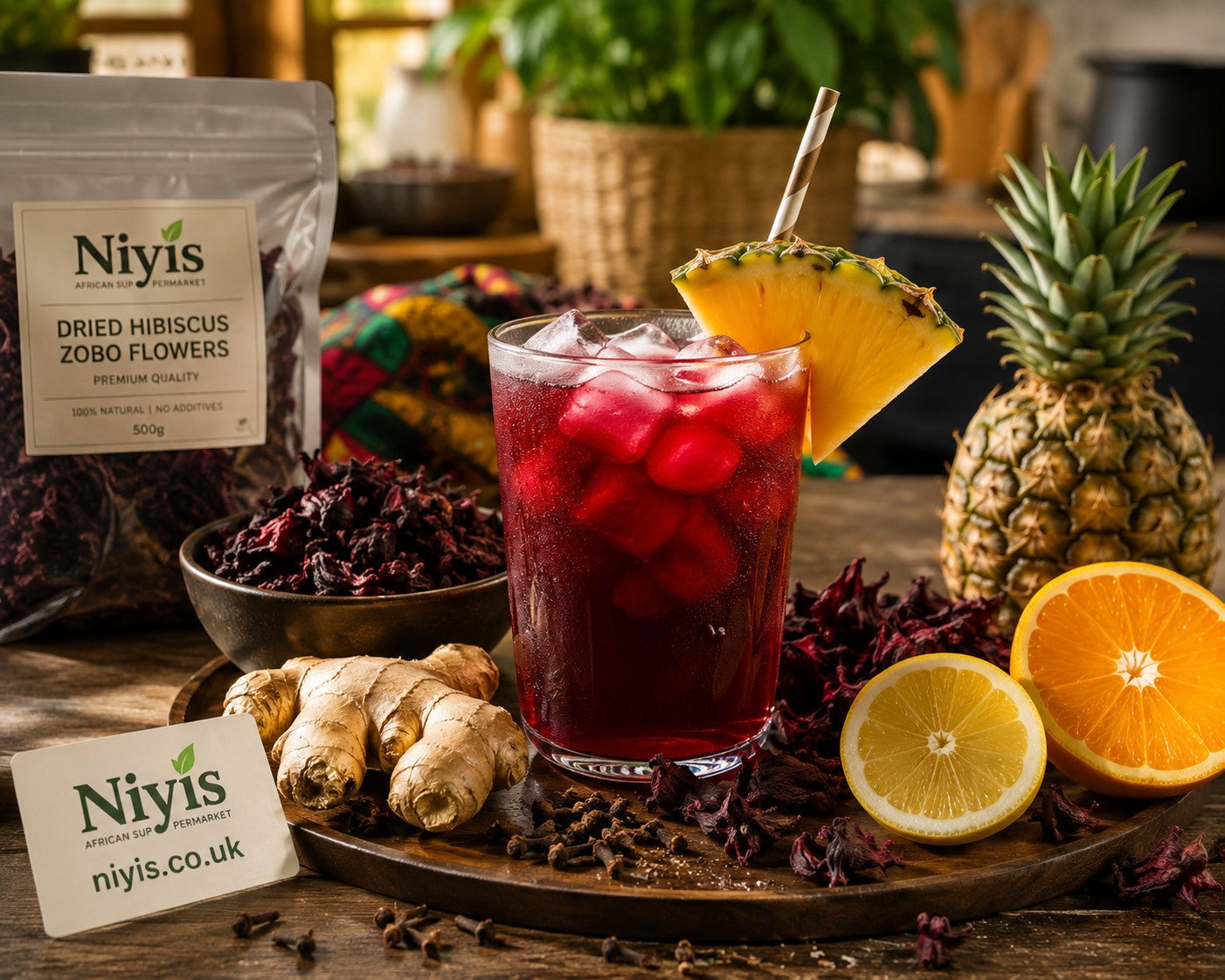
Zobo drink is a popular Nigerian and West African beverage made from the dried calyces of Hibiscus sabdariffa. Also called hibiscus tea, sobolo, or sorrel in different parts of Africa and the Caribbean, zobo is known for its deep red colour, naturally tart flavour and refreshing taste. In the UK, it has become increasingly popular among people looking for traditional African drinks that can be prepared at home. When made without excessive sugar, zobo can be a refreshing, low-calorie alternative to many sweetened soft drinks and provides plant compounds such as polyphenols and anthocyanins. Research on hibiscus also suggests potential cardiovascular benefits, although zobo should not be treated as medicine.
What is zobo drink?
Zobo is a Nigerian-style hibiscus drink prepared by steeping dried hibiscus calyces in water, often with ingredients such as ginger, cloves, pineapple, citrus or other spices.
Is zobo healthy?
Unsweetened or lightly sweetened zobo can be a healthier alternative to sugary drinks. Hibiscus contains antioxidant compounds, and clinical research suggests it may modestly lower blood pressure in some adults.
What happens when you drink zobo daily?
For most healthy adults, drinking a moderate amount of unsweetened zobo daily can be part of a balanced diet. However, drinking large amounts may not be appropriate for everyone, particularly people with low blood pressure or those taking certain medicines.
What Is Zobo Made From?
The main ingredient in traditional zobo drink is dried hibiscus calyces from Hibiscus sabdariffa. These deep-red calyces are steeped or simmered in water to extract their colour, tart flavour and plant compounds.
The basic recipe can be surprisingly simple:
-
Dried zobo leaves
-
Water
-
Ginger
-
Cloves
-
Pineapple or citrus for flavour
-
Optional sweetener
For an authentic homemade drink, you can start with Niyis Sorrel Zobo Leaves. Niyis describes these as premium sorrel leaves suitable for brewing refreshing sorrel drinks.
Fresh ginger can also give homemade zobo a warm, spicy kick. Niyis currently stocks Fresh Ginger, which can be grated, crushed or sliced before adding it to the drink.
Zobo Drink Nutritional Profile

The nutritional value of zobo depends heavily on how it is prepared. A homemade drink made mainly from hibiscus, water and spices is very different from a heavily sweetened commercial drink.
|
Component |
What It Contributes |
|
Anthocyanins |
Plant pigments with antioxidant activity |
|
Polyphenols |
Bioactive plant compounds |
|
Organic acids |
Contribute to zobo's characteristic tart taste |
|
Vitamin C |
Present in hibiscus and can also come from added fruits |
|
Minerals |
Hibiscus contains small amounts of minerals |
|
Calories |
Generally low when prepared without added sugar |
|
Added sugar |
Can substantially increase calories when used generously |
It is important to remember that the nutrition of your finished zobo depends on the recipe. Adding large quantities of sugar, syrup or sweetened fruit concentrates changes its nutritional profile considerably.
Health Benefits of Zobo Drink
1. May Support Healthy Blood Pressure
One of the most researched potential benefits of hibiscus is its relationship with blood pressure.
A 2022 systematic review and meta-analysis found that Hibiscus sabdariffa significantly reduced systolic and diastolic blood pressure compared with placebo in several clinical trials. Another review reported similar findings, although more research is still needed to confirm ideal dosage and long-term effects.
This does not mean zobo should replace prescribed blood-pressure medication. Instead, unsweetened zobo can be considered as one beverage option within an overall healthy diet.
If you want to make your own, Niyis Sorrel Zobo Leaves provide the traditional hibiscus base.
2. Rich in Antioxidant Plant Compounds
The deep red colour of zobo comes from natural plant pigments such as anthocyanins and flavonoids. These compounds have antioxidant activity, meaning they help the body manage oxidative stress.
Rather than claiming disease prevention, it is more accurate to say zobo contributes antioxidant plant compounds as part of a balanced diet.
For more information about traditional uses, see Niyis' guide to health benefits of zobo drink.
3. May Be a Better Choice Without Added Sugar
One of the biggest advantages of homemade zobo is control over sweetness.
Traditional zobo is naturally tart, so it can be enjoyed without sugar or with only a small amount of sweetener. This makes zobo without sugar a useful alternative to sugary soft drinks.
Removing added sugar also helps reduce overall calorie intake, which can support healthier beverage choices.
4. May Support Cardiovascular Health
Research suggests hibiscus may have a modest effect on cardiovascular markers, including blood pressure and LDL cholesterol in some studies.
However, zobo is not a treatment for heart disease. It is best viewed as part of a heart-conscious lifestyle when used to replace sugary drinks.
5. Provides a Refreshing Alternative to Sugary Soft Drinks
Cold zobo has a naturally fruity, tangy flavour that makes it a refreshing alternative to fizzy drinks.
You can prepare it in batches, refrigerate it, and enjoy it throughout the week.
Niyis also categorises zobo alongside other African drinks and beverages, making it easier to explore traditional drinks in the UK.
Benefits of Zobo Without Sugar
If you want the healthiest everyday version of zobo, reducing or removing sugar is one of the best choices.
Unsweetened zobo may:
-
Reduce added sugar intake
-
Lower overall calorie content
-
Preserve natural tart flavour
-
Work as a soft drink alternative
-
Highlight ginger, cloves and fruit flavours
For extra flavour, try Fresh Ginger or natural additions like pineapple, lemon or orange.
Zobo Benefits for Men and Women

There is no strong evidence that zobo provides gender-specific health benefits.
For men
Men may enjoy zobo as a low-sugar drink with antioxidant plant compounds. Its potential cardiovascular effects may be relevant to general wellness.
For women
Women can also enjoy zobo as part of a balanced diet. However, pregnancy requires caution due to limited safety data on concentrated hibiscus intake.
Zobo should not be promoted as a treatment for fertility, menstrual issues or sexual health conditions.
What Happens When You Drink Zobo Daily?

Drinking moderate amounts of unsweetened zobo daily is generally fine for most healthy adults.
Possible benefits include replacing sugary drinks and increasing intake of plant compounds from hibiscus.
However, more is not always better. There is no universally recommended daily amount, and individual tolerance varies.
A balanced approach is best.
Zobo as a Nigerian and African Beverage
Zobo is deeply rooted in Nigerian food culture and is commonly served chilled at gatherings, celebrations and social events.
Across West Africa, similar hibiscus drinks are known by different names, including sobolo in Ghana and sorrel in the Caribbean.
For many Nigerians in the UK, zobo is also a cultural connection to home and tradition.
How to Make Zobo at Home
Making zobo is simple:
Step 1: Rinse
Wash dried hibiscus calyces to remove impurities.
Step 2: Add spices
Add ginger, cloves, and optional fruits like pineapple or citrus.
Step 3: Simmer
Boil in water until the liquid turns deep red.
Step 4: Steep
Let it cool to develop flavour.
Step 5: Strain
Remove solids.
Step 6: Sweeten lightly (optional)
Taste before adding sugar.
For a detailed version, follow Niyis' zobo drink recipe with ginger, cloves and citrus.
Possible Side Effects of Zobo Drink

Zobo is generally safe in moderation, but may not be suitable for everyone.
Low blood pressure
Hibiscus may lower blood pressure, which could cause dizziness in some individuals.
Stomach sensitivity
Its acidity may cause discomfort in sensitive stomachs.
Medication interactions
It may interact with certain medications, especially for blood pressure or chronic conditions.
Pregnancy
Safety during pregnancy is not well established, so medical advice is recommended.
Who Should Avoid or Limit Zobo?
Be cautious if you:
-
Have low blood pressure
-
Take blood-pressure medication
-
Use medications that may interact with herbs
-
Experience stomach irritation
-
Are pregnant
-
Have been advised to avoid hibiscus
Where to Buy Zobo in the UK
To make authentic Nigerian zobo at home, start with quality ingredients.
You can buy Niyis Sorrel Zobo Leaves in the UK.
You can also explore the African drinks collection and African groceries for more ingredients.
Pair hibiscus with Fresh Ginger for a traditional homemade recipe.
Frequently Asked Questions About Zobo
Is zobo healthy?
Yes, when unsweetened or lightly sweetened, it can be a healthier drink option.
Can I drink zobo every day?
Yes in moderation, but there is no fixed recommended daily amount.
What are the benefits of drinking zobo without sugar?
It reduces sugar intake and calories while preserving natural flavour.
Does zobo help lower blood pressure?
Studies suggest possible modest effects, but it is not a treatment.
What are the disadvantages of zobo?
Possible low blood pressure, stomach sensitivity, and medication interactions.
What are the benefits of zobo for men?
General wellness support through hydration and plant compounds.
What are the benefits of zobo for women?
Balanced diet support, but caution is needed during pregnancy.
What ingredients are used in zobo?
Hibiscus, ginger, cloves, citrus, pineapple, and optional sweeteners.
Is zobo the same as hibiscus tea?
They are closely related; zobo is a traditional West African hibiscus drink.
Where can I buy zobo leaves in the UK?
From Niyis Sorrel Zobo Leaves online.
Related Zobo Recipes and Reading
Final Takeaway
Zobo is a traditional Nigerian hibiscus drink that can be refreshing, low in sugar, and rich in plant compounds when prepared properly.
While research suggests potential benefits, especially around blood pressure, it is not a medicine. The healthiest version is simple: hibiscus, ginger, spices, and minimal sugar.
It remains a cultural, refreshing, and enjoyable drink that fits well into modern UK lifestyles.
Share:
The Easy Way to Add Authentic African Flavour to Your Cooking in the UK (2026)
Effects of Peanuts on Females: Benefits, Nutrition, Risks & UK Guide (2026)