
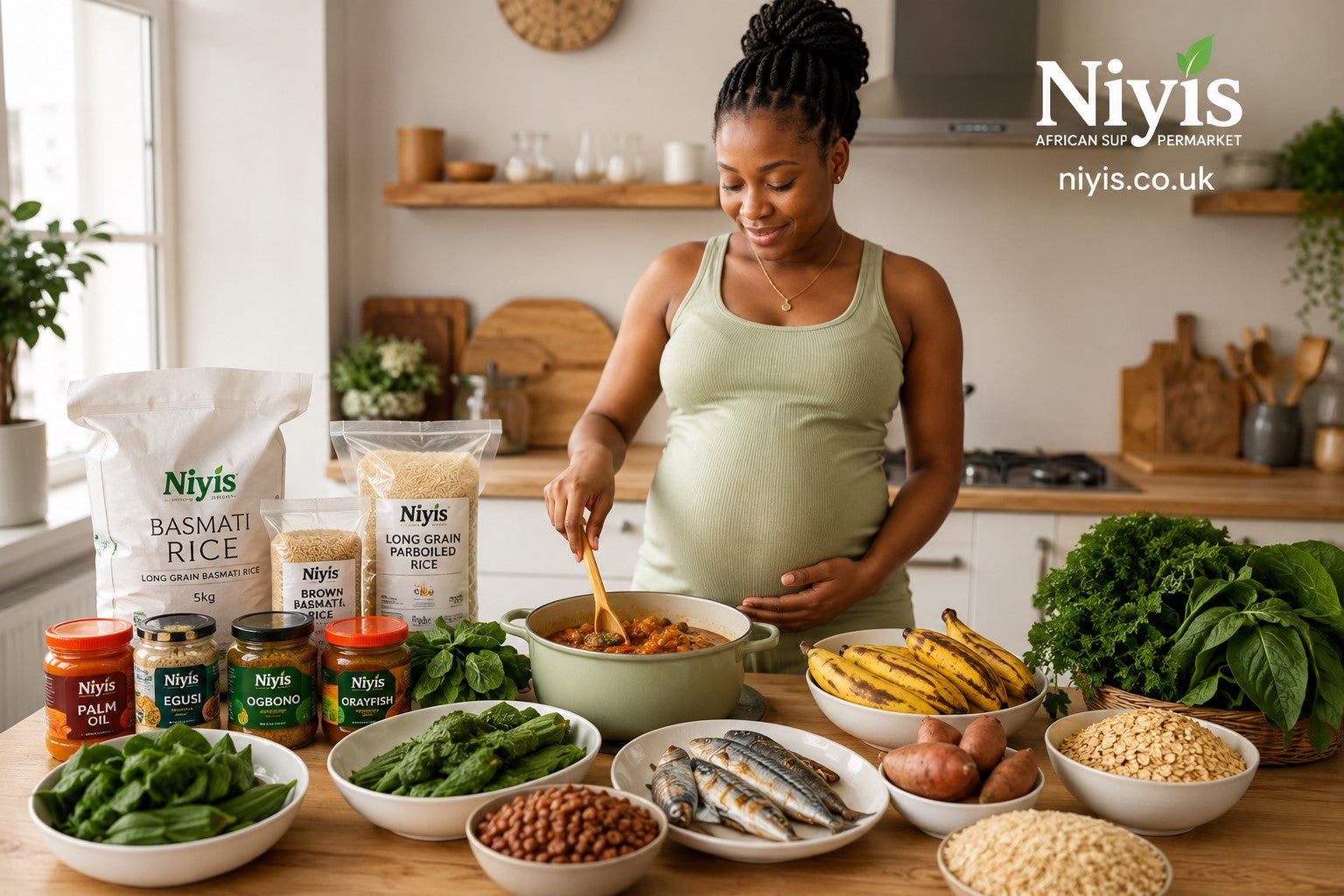
Pregnancy is a special period when nutrition plays an important role in supporting both the mother and developing baby. Choosing the right African foods for pregnancy can help expecting mothers enjoy traditional meals while meeting important nutritional needs. Across Nigerian and wider African communities, many Nigerian foods for pregnant women naturally include protein-rich ingredients, whole grains, vegetables, and healthy fats that support a balanced healthy pregnancy diet. From African pregnancy foods such as beans, leafy vegetable soups, and whole grains to nutrient-rich staples available in the UK, traditional African cooking offers many options for mothers looking for the best foods for expecting mothers while maintaining good pregnancy nutrition.
This complete guide explores nutritious African ingredients, their benefits, traditional uses, meal ideas, and where UK families can buy authentic ingredients from Niyis African Supermarket.
What Are the Best African Foods for Pregnancy?

The best African foods for pregnancy include:
-
Beans and legumes
-
Brown rice and Basmati rice
-
Oats
-
Millet
-
Pap (ogi)
-
Leafy vegetables
-
Plantain
-
Yam
-
Sweet potatoes
-
Egusi
-
Ogbono
-
Okra
-
Lean proteins such as fish and eggs
These foods provide important nutrients including protein, fibre, iron, folate, vitamins, minerals, and energy-supporting carbohydrates.
Are Nigerian Foods Healthy During Pregnancy?
Yes, many Nigerian foods for pregnant women can form part of a healthy pregnancy diet when prepared with balanced portions. Traditional meals such as bean porridge, vegetable soups, Moi Moi, rice dishes, and soups made with leafy vegetables can provide essential nutrients needed during pregnancy.
Nutritional Profile of African Pregnancy Foods

Traditional African ingredients are naturally rich in nutrients that contribute to a balanced pregnancy diet.
The table below highlights some important nutrients found in common African foods.
|
Nutrient |
Importance During Pregnancy |
African Food Sources |
|
Protein |
Supports growth and tissue development |
Beans, fish, eggs, Moi Moi |
|
Fibre |
Supports digestion and bowel regularity |
Beans, oats, brown rice |
|
Iron |
Helps support normal blood production |
Beans, leafy vegetables, fish |
|
Folate |
Important during pregnancy |
Vegetables, beans |
|
Calcium |
Supports bones and teeth |
Fish, dairy, leafy greens |
|
Potassium |
Supports fluid balance and muscles |
Plantain, sweet potatoes |
|
Antioxidants |
Helps protect cells from oxidative stress |
Vegetables, spices, fruits |
Top Benefits of African Foods During Pregnancy
1. Beans Provide Plant-Based Protein and Fibre
Beans are one of the most valuable ingredients in African pregnancy nutrition because they provide affordable plant-based protein, fibre, iron, and essential minerals.
Traditional Nigerian meals frequently include different types of beans, including:
These protein-rich beans can support healthy meals during pregnancy because protein contributes to the growth and repair of body tissues.
Beans are also naturally high in fibre, which may help support digestive comfort during pregnancy.
Popular Nigerian dishes made with beans include:
-
Moi Moi
-
Beans porridge
-
Akara
-
Beans and rice
For example, Moi Moi is a traditional steamed bean dish that combines blended beans with ingredients such as peppers, onions, and protein additions.
A balanced plate combining beans with vegetables and healthy carbohydrates can create a nutritious pregnancy meal.
2. Whole Grains Provide Energy and Essential Nutrients
Pregnancy increases the body's need for energy, making healthy carbohydrate sources an important part of a balanced diet.
African and international whole grains can provide sustained energy while adding fibre and important nutrients.
Oats
A bowl of wholegrain oats topped with fruit can be a simple and nutritious breakfast option for expecting mothers.
Oats contain:
-
Fibre
-
Magnesium
-
Complex carbohydrates
-
Plant-based nutrients
They can be enjoyed as porridge, overnight oats, or blended into smoothies.
Brown Rice
Whole grains such as brown rice can contribute fibre and nutrients to a balanced pregnancy diet.
Brown rice contains the outer bran layer, giving it more fibre compared with some refined rice varieties.
It can be served with:
-
Vegetable sauces
-
Grilled fish
-
Chicken
-
Beans
Basmati Rice
Basmati rice is a popular choice among many African families in the UK because it produces light, fluffy grains and pairs well with vegetables and lean proteins.
It can be used for:
-
Jollof rice
-
Fried rice
-
Vegetable rice
-
Curry dishes
For mothers wanting perfectly cooked grains, Niyis also provides guidance on how to cook Basmati rice.
Millet
Traditional African grains remain valuable additions to pregnancy meals.
Millet has been consumed across many African communities for generations and can be prepared as porridge or incorporated into varied meals.
3. Leafy Vegetables Support Pregnancy Nutrition
Vegetables are among the most important components of a healthy pregnancy diet.
Leafy vegetables provide nutrients including:
-
Folate
-
Fibre
-
Vitamins
-
Minerals
-
Plant antioxidants
Fresh spinach is often used as a substitute for traditional African leafy greens such as ugu when preparing soups in the UK.
Leafy vegetables are commonly combined with popular soup ingredients including:
These ingredients form the foundation of many traditional African soups enjoyed by families.
4. Healthy African Carbohydrates Support Daily Energy
Traditional African meals include many nutritious carbohydrate sources that can provide energy during pregnancy.
Plantain
Ripe plantain is a versatile ingredient that can be boiled, roasted, baked, or fried.
It provides:
-
Energy
-
Potassium
-
Fibre
Plantain can be paired with beans, vegetables, eggs, or fish for a balanced meal.
Yam
Yam remains one of the most popular African staples.
It can be enjoyed with:
-
Vegetable sauces
-
Egg sauce
-
African soups
Yam provides carbohydrates needed for energy while adding variety to pregnancy meals.
Sweet Potatoes
Sweet potatoes add colour and nutrients to family meals.
They contain:
-
Fibre
-
Potassium
-
Vitamin A compounds
They can be roasted, boiled, or added to stews.
Traditional African Pregnancy Foods and Cultural Uses

Food traditions play an important role in African families, especially during pregnancy.
Across Nigerian households, expecting mothers often enjoy meals prepared with familiar ingredients that have been passed down through generations.
Common traditional pregnancy meals include:
Pap (Ogi)
Pap (ogi) is a popular Nigerian breakfast made from fermented maize.
It is commonly served with:
-
Beans
-
Eggs
-
Fish
-
Milk
When combined with protein-rich foods, pap can become a more balanced breakfast option.
Nigerian Soups
Traditional African soups are often prepared with vegetables, protein, and flavourful ingredients.
Popular examples include:
-
Egusi soup
-
Ogbono soup
-
Okra soup
-
Vegetable soup
Ingredients such as:
are commonly used to add traditional flavour.
Palm oil is a traditional African cooking ingredient and can be enjoyed in moderation as part of an overall balanced diet.
Best African Ingredients for Expecting Mothers
|
Ingredient |
Main Benefits |
Traditional Uses |
|
Beans |
Protein and fibre |
Moi Moi, porridge |
|
Oats |
Fibre and energy |
Breakfast |
|
Brown Rice |
Whole grain nutrients |
Rice meals |
|
Basmati Rice |
Light carbohydrate source |
Jollof, rice dishes |
|
Millet |
Traditional grain variety |
Porridge |
|
Pap |
Traditional breakfast |
Ogi meals |
|
Plantain |
Energy and potassium |
Roasted, boiled |
|
Yam |
Carbohydrates |
Soups and sauces |
|
Egusi |
Healthy fats and flavour |
Soups |
|
Ogbono |
Traditional soup ingredient |
Soups |
|
Okra |
Fibre-rich vegetable |
Soup dishes |
Healthy Pregnancy Meal Ideas
Breakfast Ideas

- Oats with fruit and yoghurt
-
Pap with eggs or beans
-
Wholegrain toast with avocado
Lunch Ideas
-
Brown rice with vegetables and fish
-
Beans porridge with spinach
-
Vegetable soup with protein
Dinner Ideas
-
Basmati rice with chicken and vegetables
-
Egusi soup with leafy greens
-
Okra soup with moderate portions of swallow
More Benefits of African Foods During Pregnancy
5. Iron-Rich African Foods May Support Healthy Blood Production
Iron is an important nutrient during pregnancy because the body requires more blood to support the growing baby and placenta. Including iron-rich foods as part of a balanced pregnancy diet can help expecting mothers meet their nutritional needs.
Many traditional African foods for pregnancy naturally contain iron, including beans, leafy vegetables, fish, and fortified foods.
For example, beans such as black-eyed beans and honey beans provide plant-based iron alongside protein and fibre. Pairing beans with vitamin C-rich foods such as tomatoes, peppers, and vegetables may help improve iron absorption.
Traditional Nigerian meals such as bean porridge, Moi Moi, and vegetable soups are excellent examples of how African cooking combines nutrient-dense ingredients.
Leafy vegetables are also valuable. Foods such as spinach and other leafy vegetables are commonly included in soups because they contribute important vitamins and minerals.
Pregnant women who are concerned about iron levels should speak with their healthcare provider, as individual iron requirements vary during pregnancy.
6. Healthy Fats Support a Balanced Pregnancy Diet
Healthy fats play an important role in overall nutrition during pregnancy. They help the body absorb fat-soluble vitamins and contribute to a balanced eating pattern.
Traditional African cooking uses several sources of healthy fats, including fish, nuts, seeds, and cooking oils.
Palm oil is one of the most recognised ingredients in African cuisine. It is commonly used in Nigerian soups, stews, and traditional dishes to provide flavour, colour, and texture.
However, like all cooking oils, palm oil should be enjoyed in moderation as part of a balanced diet.
Other traditional ingredients such as egusi also provide healthy fats and are widely used to prepare nutritious Nigerian soups.
Egusi soup prepared with leafy vegetables and a suitable protein source can be a satisfying meal option for expecting mothers.
7. Fibre-Rich Foods May Support Digestive Comfort
Digestive changes are common during pregnancy, and many expecting mothers look for foods that support healthy digestion.
Fibre-rich African ingredients can be valuable additions to a healthy pregnancy diet.
Good sources include:
-
Beans
-
Oats
-
Brown rice
-
Vegetables
-
Sweet potatoes
-
Plantain
Brown rice and other whole grain foods contain more fibre compared with many refined grain alternatives.
Similarly, oats provide soluble fibre that can help create satisfying meals.
Traditional Nigerian meals often naturally include fibre-rich combinations, such as:
-
Beans with plantain
-
Vegetable soups with whole foods
-
Rice served with vegetables
-
Yam with leafy sauces
A varied intake of fibre alongside adequate fluids can support digestive health during pregnancy.
8. Traditional African Spices Add Flavour and Variety
One advantage of African cooking is the use of herbs and spices to create rich flavours without relying only on salt.
Traditional African spices can add depth to pregnancy meals while helping families continue enjoying familiar dishes.
Common Nigerian cooking ingredients include:
-
Curry powder
-
Thyme
-
Ginger
-
Garlic
-
Pepper
-
Bay leaves
Spices can be used in moderation to flavour:
-
Rice dishes
-
Soups
-
Stews
-
Beans meals
Maintaining cultural food traditions during pregnancy can also support emotional wellbeing by allowing expecting mothers to enjoy familiar meals from home.
Traditional African Pregnancy Foods Across Generations
Food traditions are an important part of pregnancy experiences across Africa.
In many Nigerian households, family members prepare nourishing meals for expecting mothers using ingredients believed to provide strength and comfort.
Examples of traditional African pregnancy meals include:
Beans and Plantain
A popular combination across West Africa, beans and plantain provide:
-
Protein
-
Fibre
-
Energy
-
Minerals
Using ripe plantain alongside beans creates a filling meal enjoyed by many families.
Vegetable Soups
African soups are often nutrient-rich because they combine several food groups in one dish.
Popular soups include:
-
Egusi soup
-
Ogbono soup
-
Okra soup
-
Vegetable soup
Ingredients such as ogbono, vegetables, fish, and lean meats create flavourful meals that reflect generations of African cooking.
Rice-Based Meals
Rice remains a staple across Nigerian homes.
Popular options include:
-
Jollof rice
-
Fried rice
-
Coconut rice
-
Rice and beans
Basmati rice is increasingly popular among UK African households because it creates light, separate grains and works well with vegetables and protein.
How to Use African Foods During Pregnancy

The best pregnancy meals usually combine different food groups rather than focusing on one ingredient.
A simple approach is:
Step 1: Add a Protein Source
Choose:
-
Beans
-
Fish
-
Eggs
-
Chicken
-
Lean meat
Examples include Moi Moi, bean porridge, or soups containing fish and vegetables.
Step 2: Add a Healthy Carbohydrate
Options include:
-
Brown rice
-
Basmati rice
-
Yam
-
Plantain
-
Sweet potatoes
-
Millet
For example, a meal of Basmati rice with vegetables and grilled fish provides a balanced combination of carbohydrates, protein, and nutrients.
Step 3: Add Vegetables
Vegetables can increase the nutritional value of meals.
Great choices include:
-
Spinach
-
Okra
-
Tomatoes
-
Peppers
-
Leafy greens
Step 4: Add Traditional Flavour
Ingredients such as ground crayfish, stockfish, and spices can help create authentic Nigerian flavours.
Possible Side Effects and Pregnancy Food Safety Considerations
Although many African foods are nutritious during pregnancy, some considerations are important.
Portion Control
Even healthy foods should be eaten in appropriate portions.
Large amounts of calorie-dense foods such as oils, fried foods, and high-carbohydrate meals may contribute to excessive calorie intake.
Food Allergies
Some individuals may have allergies or sensitivities to certain ingredients.
Common foods requiring awareness include:
-
Fish
-
Seafood
-
Nuts
-
Dairy products
Anyone experiencing symptoms after eating a particular food should seek medical advice.
Food Preparation and Hygiene
Food safety is especially important during pregnancy.
Good practices include:
-
Washing vegetables thoroughly
-
Cooking meat and fish properly
-
Storing leftovers safely
-
Avoiding contaminated foods
The NHS recommends following pregnancy food safety guidance to reduce risks associated with foodborne illnesses.
Herbal Ingredients and Supplements
Some African herbs and traditional remedies may not be suitable during pregnancy.
Always speak with a qualified healthcare professional before using concentrated herbal products, teas, or supplements.
Who Should Avoid or Limit Certain African Foods During Pregnancy?
Most traditional African foods can be enjoyed during pregnancy when prepared safely. However, some women may need personalised guidance.
Women With Gestational Diabetes
Women managing gestational diabetes may need to monitor portions of carbohydrate-rich foods such as:
-
Rice
-
Yam
-
Garri
-
Plantain
A healthcare provider can recommend the most suitable eating pattern.
Women With Food Allergies
Anyone with allergies should avoid foods that trigger reactions.
Women Advised to Follow Specific Medical Diets
Some pregnancies require specialised nutrition plans due to medical conditions.
Always follow advice from:
-
Midwives
-
Doctors
-
Registered dietitians
Where to Buy African Foods for Pregnancy in the UK
Finding authentic ingredients makes it easier to prepare traditional pregnancy meals at home.
Looking for authentic African ingredients to prepare healthy pregnancy meals? Explore Niyis African Supermarket for quality staples, including rice products, beans, grains, vegetables, African soup ingredients, spices, palm oil, and fresh produce delivered across the UK.
Recommended pregnancy-friendly pantry staples include:
-
Beans for protein-rich meals
-
Brown rice and Basmati rice for balanced carbohydrates
-
Oats for breakfast options
-
Millet for traditional grain recipes
-
Pap and ogi for Nigerian breakfasts
-
Vegetables for soups and sauces
-
Spices for authentic flavour
Niyis African Supermarket helps UK families access familiar African ingredients while preparing nutritious meals inspired by traditional cooking.
Frequently Asked Questions
1. What are the best African foods for pregnancy?
The best African foods for pregnancy include beans, vegetables, whole grains, rice, plantain, yam, sweet potatoes, and traditional soups prepared with balanced ingredients.
2. Are Nigerian foods healthy during pregnancy?
Yes, many Nigerian foods can support a healthy pregnancy diet when meals include a balance of protein, vegetables, whole grains, and healthy fats.
3. Can pregnant women eat beans?
Yes. Beans are a nutritious source of plant protein, fibre, and minerals. They can be enjoyed as Moi Moi, bean porridge, or combined with rice and vegetables.
4. Is pap (ogi) good during pregnancy?
Pap can be included in pregnancy meals, especially when combined with protein-rich foods such as eggs, beans, or fish.
5. Can pregnant women eat egusi soup?
Yes, egusi soup can be enjoyed during pregnancy when prepared with safe ingredients and balanced portions of vegetables and protein.
6. Is plantain good for pregnant women?
Yes. Plantain provides carbohydrates and nutrients such as potassium. It can be boiled, baked, or grilled for healthier preparation methods.
7. Can pregnant women eat Nigerian soups?
Yes. Nigerian soups made with vegetables, protein sources, and properly prepared ingredients can be part of a balanced pregnancy diet.
8. Is Basmati rice good during pregnancy?
Yes. Basmati rice can be included as part of a balanced pregnancy diet and pairs well with vegetables and lean proteins.
Related Recipes and Meal Ideas
Expecting mothers can explore traditional African recipes such as:
-
Nigerian Jollof Rice
-
Beans Porridge
-
Moi Moi Recipe
-
Egusi Soup
-
Ogbono Soup
-
Okra Soup
-
Pap and Beans Breakfast
-
Vegetable Rice
-
African Breakfast Bowls
Final Thoughts
Healthy African foods for pregnancy provide a powerful connection between nutrition, culture, and family traditions. Ingredients such as beans, rice, vegetables, plantain, yam, oats, and traditional Nigerian soups can all contribute to a varied and balanced pregnancy diet.
For expecting mothers in the UK, combining traditional African meals with modern nutrition guidance makes it possible to enjoy familiar flavours while supporting healthy pregnancy nutrition.
From everyday staples to special family recipes, Niyis African Supermarket makes it easier to find authentic ingredients for preparing nutritious African meals at home.
Share:
Best Rice for Nigerian Jollof Rice: How to Choose the Perfect Rice in the UK (2026)
Kolanut vs Bitter Kola: Uses, Benefits and Traditional African Significance in the UK (2026)