
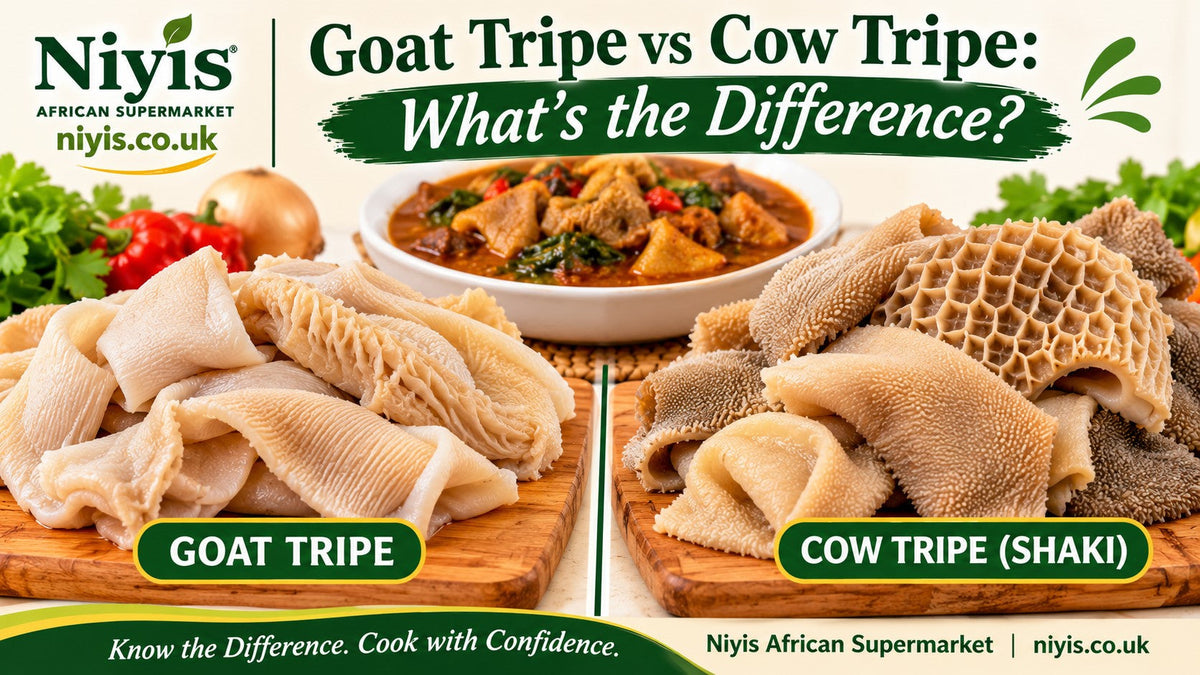
When comparing goat tripe vs cow tripe, the main differences to consider are flavour, texture, appearance and cooking requirements. Both are edible animal stomach linings used in traditional African cooking, particularly Nigerian soups, pepper soup and assorted meat dishes. However, goat tripe and beef tripe can produce slightly different results depending on the cut and preparation.
For Nigerians living in the UK, knowing which type of tripe to choose makes shopping for authentic ingredients easier. Whether you prefer the familiar chewy texture of cow shaki or want to experiment with goat tripe, understanding their differences can help you prepare more satisfying traditional meals.
What Is the Difference Between Goat Tripe and Cow Tripe?
-
Goat tripe: Stomach lining from a goat, commonly used in pepper soup, traditional soups and assorted meat.
-
Cow tripe: Stomach lining from cattle, commonly called beef tripe or shaki in Nigerian cooking.
-
Taste: Both have relatively mild, savoury flavours, although goat tripe may have a more noticeable characteristic goat flavour.
-
Texture: Both can be firm and chewy, depending on the stomach section and preparation.
-
Cooking: Both benefit from thorough cleaning where required and slow simmering until tender.
Neither is universally better. Your choice depends on the flavour and texture you prefer.
1. What Is Goat Tripe?
Goat tripe is the edible stomach lining of a goat. It is used in various African cuisines and is particularly popular in traditional soups and meat combinations.
Depending on the stomach section, goat tripe can have a smooth, ridged or honeycomb-like appearance.
Its texture is generally firm when raw and becomes softer with prolonged cooking. Its flavour is savoury, sometimes with the characteristic aroma associated with goat meat.
In Nigerian cooking, goat tripe works particularly well in:
-
Goat meat pepper soup.
-
Egusi soup.
-
Ogbono soup.
-
Afang soup.
-
Assorted meat stew.
If you want to try it, Niyis offers Frozen Goat Tripe (Shaki) 1kg, which is hygienically cleaned, vacuum-sealed and frozen.
2. What Is Cow Tripe?
Cow tripe, also known as beef tripe, is the edible stomach lining of cattle.
In Nigerian cuisine, it is commonly called shaki, particularly in Yoruba food terminology.
Cow tripe is popular because of its distinctive chewy texture and ability to absorb the flavours of pepper, onions, seasoning and traditional Nigerian spices.
It is frequently added to:
-
Assorted meat pepper soup.
-
Egusi soup.
-
Ogbono soup.
-
Efo Riro.
-
Nigerian tomato stew.
-
Jollof rice meat combinations.
Cow tripe comes in different forms depending on the stomach section. Honeycomb tripe, for example, has a distinctive patterned surface and is particularly popular in soups and stews.
You can explore Niyis Frozen Beef Tripe (Shaki) 1kg, which is pre-washed and portioned for convenient cooking.
3. Goat Tripe vs Cow Tripe: Main Differences

The best way to understand these two ingredients is to compare their characteristics.
|
Feature |
Goat tripe |
Cow tripe |
|
Animal source |
Goat |
Cattle |
|
Common Nigerian name |
Goat tripe |
Shaki |
|
Flavour |
Savoury, sometimes with a goat-like flavour |
Mild, savoury and earthy |
|
Texture |
Firm and chewy |
Firm and chewy |
|
Appearance |
Depends on stomach section |
Can be smooth or honeycomb-patterned |
|
Popular dishes |
Pepper soup, egusi, assorted meat |
Egusi, ogbono, pepper soup, stew |
|
Cooking method |
Simmering and slow cooking |
Simmering and slow cooking |
Which Tastes Better?
Taste is subjective.
Goat tripe may appeal to people who enjoy the distinctive flavour associated with goat meat. Cow tripe offers the familiar shaki flavour found in many Nigerian assorted meat dishes.
The seasoning also makes a significant difference. Both absorb the flavours of onions, ginger, garlic, pepper and traditional Nigerian spices.
Which Has a Chewier Texture?
Both can be chewy, but the final texture depends on the particular stomach section.
Cow honeycomb tripe has a distinctive surface and substantial bite, while goat tripe can also have a firm, satisfying texture.
If you enjoy experimenting with different tripe textures, consider Frozen Honeycomb Shaki 1kg.
4. Nutritional Comparison

Both goat and cow tripe are animal-derived foods that provide protein and several micronutrients.
Their nutritional composition varies according to the animal, cut, processing and preparation method.
|
Nutritional component |
Goat tripe |
Cow tripe |
|
Protein |
Provides protein |
Provides protein |
|
Vitamin B12 |
May contribute |
May contribute |
|
Zinc |
Contains some zinc |
Contains some zinc |
|
Selenium |
Contains selenium |
Contains selenium |
|
Iron |
Contains iron |
Contains iron |
|
Fat |
Varies by cut and trimming |
Varies by cut and trimming |
Is tripe healthy?
Tripe can form part of a balanced diet because it provides protein and essential micronutrients. However, nutritional value depends on portion size, cooking ingredients and the overall meal.
For example, a heavily salted or oil-rich stew will have a different nutritional profile from lightly seasoned boiled tripe.
Enjoy it in moderation as part of a varied diet.
5. How Nigerians Use Goat and Cow Tripe
Tripe has an important place in Nigerian food culture.
In many Nigerian households, shaki is a familiar ingredient in assorted meat dishes. It is often combined with beef, goat meat, kpomo and other cuts to create rich, flavourful soups and stews.
Goat tripe offers another option for people who enjoy goat-based dishes and traditional pepper soup.
Popular combinations include:
Goat tripe pepper soup: Simmer goat tripe with pepper soup spices, onions, ginger and scent leaves for a warming broth.
Cow shaki egusi: Add tender cow tripe to egusi soup with palm oil, crayfish, peppers and ugu.
Mixed assorted meat: Combine goat tripe and cow shaki with other suitable meats for a hearty Nigerian soup.
Shaki and ogbono: Use tender beef tripe to add texture to thick, traditional ogbono soup.
For more inspiration, explore Niyis' guide to popular Nigerian foods made with shaki.
6. How to Cook Goat and Cow Tripe
Both types of tripe require sufficient cooking time to achieve a tender texture.
Basic Preparation
-
Defrost frozen tripe safely in the refrigerator.
-
Check the product instructions to determine whether additional cleaning is necessary.
-
Rinse where instructed and cut into manageable pieces.
-
Place in a pot with chopped onions, ginger, garlic and seasoning.
-
Add enough water to cover the tripe.
-
Bring to a boil, then reduce the heat and simmer.
-
Continue cooking until tender, adding water when necessary.
-
Use the cooked tripe in your preferred soup or stew.
Pre-cleaned products can reduce preparation time, but always follow their individual handling instructions.
Best Cooking Methods Compared
|
Cooking method |
Goat tripe |
Cow tripe |
|
Pepper soup |
Excellent |
Excellent |
|
Tomato stew |
Suitable |
Excellent |
|
Egusi soup |
Excellent |
Excellent |
|
Ogbono soup |
Suitable |
Excellent |
|
Grilled tripe |
Suitable after tenderising |
Suitable after tenderising |
|
Assorted meat |
Excellent |
Excellent |
Cooking tip: Do not assume both types will take exactly the same time to soften. The size, thickness and stomach section matter. Check tenderness regularly rather than relying on a fixed cooking time.
For a complete preparation guide, read How to Cook Shaki: Nigerian Recipes and UK Shopping Guide.
7. Where to Buy Goat and Cow Tripe in the UK
Finding authentic Nigerian meat and offal in the UK can sometimes be challenging, particularly when looking for specific cuts such as goat tripe and shaki.
Niyis African Supermarket stocks frozen options for customers who want to prepare traditional Nigerian dishes at home.
Here are three options to consider:
-
Frozen Goat Tripe (Shaki) 1kg: Goat tripe for pepper soup, egusi, ogbono and afang.
-
Frozen Beef Tripe (Shaki) 1kg: Pre-washed and portioned cow tripe for traditional Nigerian cooking.
-
Frozen Honeycomb Shaki 1kg: A distinctive honeycomb-textured option for soups and stews.
You can also browse the Niyis Meat and Seafood Collection for other Nigerian meat products and the African Grocery Collection for complementary cooking ingredients.
Check individual listings for current availability, storage instructions and delivery arrangements before ordering.
8. Frequently Asked Questions
1. Is goat tripe the same as cow tripe?
No. Goat tripe comes from a goat's stomach, while cow tripe comes from cattle. Both are edible stomach linings but have different animal sources.
2. Is shaki goat or cow meat?
Shaki commonly refers to cow tripe in Nigerian cooking. However, some product listings use shaki as a general culinary description alongside goat tripe. Always check the animal source on the product description.
3. Which is softer, goat tripe or cow tripe?
Neither is automatically softer. Texture depends on the stomach section, thickness and cooking method.
4. Does goat tripe taste different from cow tripe?
Yes, it can. Goat tripe may have a more noticeable goat-like flavour, while cow tripe generally has a mild, earthy and savoury taste.
5. Can I use goat tripe instead of cow tripe in egusi soup?
Yes. Goat tripe can be used instead of cow tripe in egusi soup. The flavour and texture may differ slightly, but both work well with traditional egusi ingredients.
6. How long does tripe take to cook?
Cooking time varies according to the type and thickness. Allow sufficient time for simmering and check regularly until tender. Some cuts may require 60–90 minutes or longer.
7. Is honeycomb shaki the same as regular cow tripe?
Honeycomb shaki is a type of cow tripe with a distinctive honeycomb-patterned surface. It is different in appearance and texture from smoother tripe varieties.
8. Is tripe the same as kpomo?
No. Tripe is the stomach lining of an animal, while kpomo is cow skin. They have different textures and cooking requirements.
9. Can I freeze goat and cow tripe?
Yes. Both can be frozen. Keep them properly packaged, follow the storage instructions and defrost safely before cooking.
10. Where can I buy goat tripe and cow shaki in the UK?
Niyis African Supermarket offers frozen goat tripe, beef tripe and honeycomb shaki through its online store, subject to availability.
9. Related Nigerian Recipes and Guides
Explore more Niyis cooking guides to discover how to use traditional African meat and ingredients:
Final Thoughts
When comparing goat tripe vs cow tripe, the biggest differences come down to animal source, flavour, texture and personal preference.
Goat tripe is an excellent option for traditional goat-based soups and assorted meat dishes, while cow tripe, popularly known as shaki, remains a familiar choice for Nigerian egusi, ogbono, pepper soup and stews.
Both can produce delicious results when properly prepared and cooked until tender.
Whether you prefer goat tripe, traditional cow shaki or honeycomb tripe, Niyis African Supermarket makes it easier to find authentic frozen Nigerian meat products in the UK.
Explore Niyis' goat tripe and cow tripe range today and bring more traditional Nigerian flavours to your kitchen.
Share:
How to Cook Turkey Midwings: 5 Delicious Nigerian Recipes to Try at Home (2026)
What Meat Goes Best with Egusi Soup? Best Traditional Nigerian Combinations in the UK (2026)