
The Ultimate Guide to West African Spices and Their Hidden Health Benefits
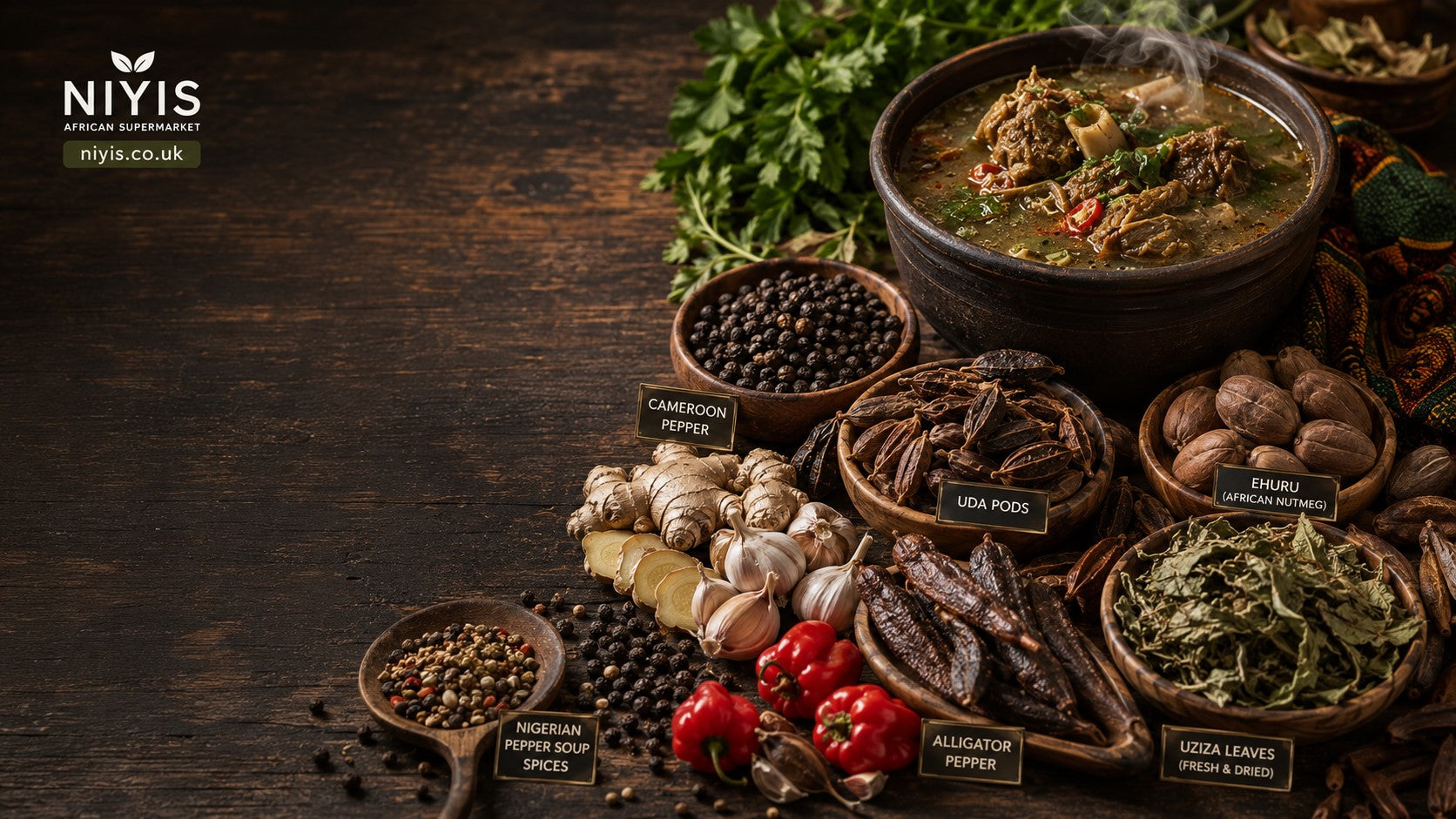
West African spices are the secret behind the bold aroma, heat and depth of Nigerian, Ghanaian and Cameroonian cooking. From Cameroon pepper and Uda pods to Ehuru, Uziza and alligator pepper, these traditional African spices do much more than make food taste better. Many contain naturally occurring plant compounds with antioxidant activity, while some have a long history of traditional culinary use for digestion and general wellbeing.
For Africans living in the UK, building a pantry with authentic Nigerian spices and seasonings is one of the easiest ways to recreate traditional soups, stews and pepper soups at home. Niyis stocks everything from Cameroon Pepper to Uda seeds and African nutmeg, also known as Ehuru.
What are West African spices?
West African spices are aromatic seeds, fruits, leaves and other plant ingredients traditionally used to season dishes across countries including Nigeria, Ghana and Cameroon. Popular examples include Cameroon pepper, Uda, Ehuru, Uziza and alligator pepper.
What are West African spices good for?
Beyond flavour, many spices contain antioxidants and other plant compounds. Some are traditionally associated with digestive comfort and general wellness, although evidence varies considerably between individual spices and much of the research involves laboratory or animal studies rather than human clinical trials.
What Makes West African Spices Different?

If you've only used black pepper, paprika and standard curry powder, West African spices can completely transform your cooking.
The difference is their complexity. A single traditional pepper soup may combine several aromatic ingredients to create heat, fragrance and depth rather than relying on chilli alone. Niyis' Pepper Soup Spice ingredients, for example, include traditional flavours such as Uda, ginger and black pepper.
These spices also reflect centuries of food culture. Nigerian households use indigenous spices in everything from pepper soup and native soups to meat marinades and fish dishes.
And that is where their potential health value becomes interesting. Spices are concentrated sources of phytochemicals, including phenolic compounds and other antioxidants. However, they should be viewed primarily as food ingredients, not medicines.
West African Spice Nutritional and Plant Compound Profile

Spices are generally eaten in small quantities, so they should not be relied upon as a major source of vitamins or minerals. Their interest from a wellness perspective comes largely from their naturally occurring plant compounds.
|
Spice |
Key Characteristic |
Traditional Culinary Use |
|
Cameroon Pepper |
Strong heat and aroma |
Soups, stews, marinades |
|
Uda |
Smoky, aromatic flavour |
Pepper soup, native soups |
|
Ehuru |
Warm, nutmeg-like aroma |
Soups and stews |
|
Uziza |
Peppery fragrance |
Soups and pepper soup |
|
Alligator Pepper |
Pungent, spicy flavour |
Soups and traditional dishes |
Research on spices broadly shows that many contain antioxidant compounds, while studies specifically examining African spices have identified promising antioxidant activity.
1. Cameroon Pepper: Heat With Character
Cameroon pepper, sometimes written as Cameroon pepper, is a powerful ingredient for anyone who enjoys genuinely spicy Nigerian food.
Niyis' Cameroon Pepper is described as bold and aromatic, with a balance of heat and savoury depth that works in soups, stews, marinades and rubs. Its biggest culinary advantage is that you need only a small amount to transform a dish.
Try adding cameroon pepper to goat meat pepper soup, tomato stew or grilled chicken marinades. It can also be combined with ginger, garlic and onions to create a deeply aromatic seasoning base.
From a health perspective, chilli peppers contain bioactive compounds such as capsaicinoids. However, the amount consumed in normal cooking is much smaller than doses used in many experimental studies, so claims about specific disease prevention should be treated cautiously.
2. Uda Seeds: The Classic Pepper Soup Spice
If there is one spice that immediately reminds many Nigerians of authentic pepper soup, it is Uda.
Uda is also known as grains of Selim and is traditionally used in Nigerian soups and broths. Niyis currently lists Uda seed packs, making it easier to keep this traditional ingredient in your UK pantry.
Uda has a distinctive smoky, slightly bitter and aromatic flavour. It works particularly well in goat meat pepper soup, assorted meat pepper soup and fish pepper soup.
Niyis' own pepper soup recipe recommends traditional spices including Uda and Ehuru for building the characteristic flavour profile of Nigerian pepper soup. Research into related African spices has identified antioxidants and other biological activity, but these findings should not be interpreted as proof that eating Uda treats or prevents illness.
3. Ehuru: African Nutmeg With a Warm Aroma
Ehuru, also called African nutmeg or calabash nutmeg, is one of the most distinctive West African spices.
Niyis' African Nutmeg Ehuru Seeds have a warm, aromatic flavour with subtle peppery notes and can be cracked or ground before use.
Unlike ordinary nutmeg, Ehuru has a flavour profile strongly associated with traditional Nigerian and Cameroonian cooking. It is particularly popular in pepper soup, native soups and rich stews.
Scientific research on Monodora myristica, the plant associated with Ehuru, has identified antioxidant activity in seed extracts. One study also examined how roasting affects its nutritional and antioxidant profile.
For everyday cooking, try grinding a small amount of Ehuru seeds and adding it to pepper soup alongside Uda and Cameroon pepper.
4. Uziza: The Peppery Nigerian Leaf
Although many people think of spices as seeds or powders, Uziza leaves deserve a place in the conversation.
Uziza comes from Piper guineense and has a naturally peppery taste. It is commonly used in Nigerian soups, pepper soup and fish dishes.
You can use dried Uziza leaves when fresh leaves are unavailable. Niyis describes its dried Uziza as fragrant and suitable for soups, stews and sauces.
Uziza has also attracted scientific interest because of its plant compounds. Niyis' existing research-based content discusses its traditional association with digestion and antioxidant activity, while also acknowledging that more research is needed.
For an authentic Nigerian pepper soup, combine Uziza leaves with Uda, Ehuru and your preferred protein.
5. Alligator Pepper: Small Pods, Big Flavour
Alligator pepper is another traditional West African spice with a distinctive spicy, aromatic character.
It belongs to the Aframomum genus and is closely related to grains of paradise. Scientific studies have found antioxidant activity in extracts of Aframomum melegueta, including laboratory evidence involving several plant compounds.
A 2022 review also identified numerous specialised compounds in Aframomum melegueta and reported antioxidant and enzyme-inhibitory activity in experimental models.
However, these are not the same as clinical trials showing that eating alligator pepper prevents disease.
The best reason to use it remains flavour. Add a small amount to traditional soups or spice blends when you want extra aromatic heat.
Traditional African Uses of West African Spices
In Nigerian cooking, spices are rarely used in isolation.
A traditional pepper soup might combine Uda, Ehuru, Cameroon pepper, Uziza, ginger and onions. The result is much more complex than simply making a dish hot.
Niyis' goat meat pepper soup recipe demonstrates this traditional combination, highlighting Ehuru, Uda and alligator pepper as key contributors to authentic flavour. Similarly, catfish pepper soup can be prepared with Uda, Ehuru, Uziza, ginger and other aromatic ingredients.
This layered approach is one of the easiest ways to make African cooking healthier without sacrificing flavour because aromatic spices can add complexity without requiring large amounts of added fat or sugar.
How to Build a Healthier African Spice Pantry

You do not need dozens of ingredients to get started.
Begin with these five:
-
Cameroon Pepper for heat.
-
Uda Seeds for pepper soup.
-
Ehuru for warm aromatic depth.
-
Uziza Leaves for peppery fragrance.
-
West African Seasonings and Spices for everyday cooking essentials.
Then add ground crayfish, stockfish and dried herbs as your cooking expands. These ingredients work together particularly well in Nigerian soups and broths.
Possible Side Effects and Safety

More spice does not automatically mean more health benefits.
Eating very spicy foods can cause discomfort in people who are sensitive to chilli, particularly those prone to heartburn or digestive irritation. Introduce unfamiliar spices gradually and use culinary quantities.
It is also important to distinguish traditional use from medical evidence. Laboratory studies showing antioxidant activity do not prove that a spice will treat a disease in humans. Research into Uda, Ehuru and other African spices remains less extensive than research into better-studied spices such as turmeric or ginger.
If you are pregnant, breastfeeding, taking medication or managing a medical condition, speak with a qualified healthcare professional before using concentrated herbal preparations or large medicinal quantities of spices.
Where to Buy West African Spices in the UK
Building an authentic African pantry in Britain is much easier when you can source several ingredients from one specialist retailer.
Niyis' Seasoning and Spices collection includes everyday seasonings alongside African-specific products.
For traditional Nigerian recipes, you can shop Cameroon pepper for heat, Ehuru seeds for aromatic depth and Uda seeds for authentic pepper soup flavour.
You can also add Uziza leaves to your order for soups and sauces, while the broader African Vegetables collection gives you access to complementary ingredients for traditional Nigerian cooking.Niyis currently offers UK delivery, with its product pages also providing delivery and collection information.
FAQs About West African Spices
What are the most popular West African spices?
Some of the best-known include Cameroon pepper, Uda, Ehuru, Uziza and alligator pepper.
What is Cameroon pepper used for?
Cameroon pepper is commonly used in soups, stews, marinades and meat dishes where you want intense heat and aromatic depth.
What is Uda used for?
Uda is particularly popular in Nigerian pepper soup and traditional broths.
Is Ehuru the same as nutmeg?
Ehuru is commonly called African or calabash nutmeg, but it comes from a different plant from the conventional nutmeg sold in supermarkets.
Can West African spices help digestion?
Some are traditionally associated with digestive support, and laboratory research has identified potentially bioactive compounds in several African spices. However, stronger human research is needed before making medical claims.
Are African spices good for immunity?
Spices contain various antioxidant and plant compounds, but eating them should not be presented as a substitute for medical treatment or as a guaranteed way to prevent infections.
Where can I buy African spices in the UK?
You can shop Niyis' African spices and seasonings online for UK delivery.
What spices go into Nigerian pepper soup?
Common ingredients include Uda, Ehuru, pepper, ginger and Uziza, although recipes vary by region and household.
Related Nigerian Recipes to Try
Once your African spice cupboard is stocked, put it to work with:
-
Goat Meat Pepper Soup using Uda, Ehuru and Cameroon pepper.
-
Catfish Pepper Soup with Uziza and African spices.
-
Assorted Meat Pepper Soup for a richer combination of traditional spices and meat.
-
Egusi Soup with crayfish, stockfish, peppers and traditional seasonings.
Final Takeaway
The best way to think about West African spices is not simply as ingredients that make food spicy. They are part of a rich culinary tradition built around layering aroma, heat, texture and flavour.
From the fiery character of Cameroon pepper to the smoky complexity of Uda seeds and the warm aroma of Ehuru, these ingredients can turn an ordinary pot of soup into something unmistakably West African.
And while research continues to explore their antioxidant and other potential properties, the strongest everyday reason to keep them in your pantry is simple: authentic flavour, cultural connection and more variety in your cooking.
Share:
5 Traditional African Herbs for Natural Detox and Cleansing in the UK (2026)
Turkey Range: Best Turkey Products for Your Next Meal in the UK (2026)