
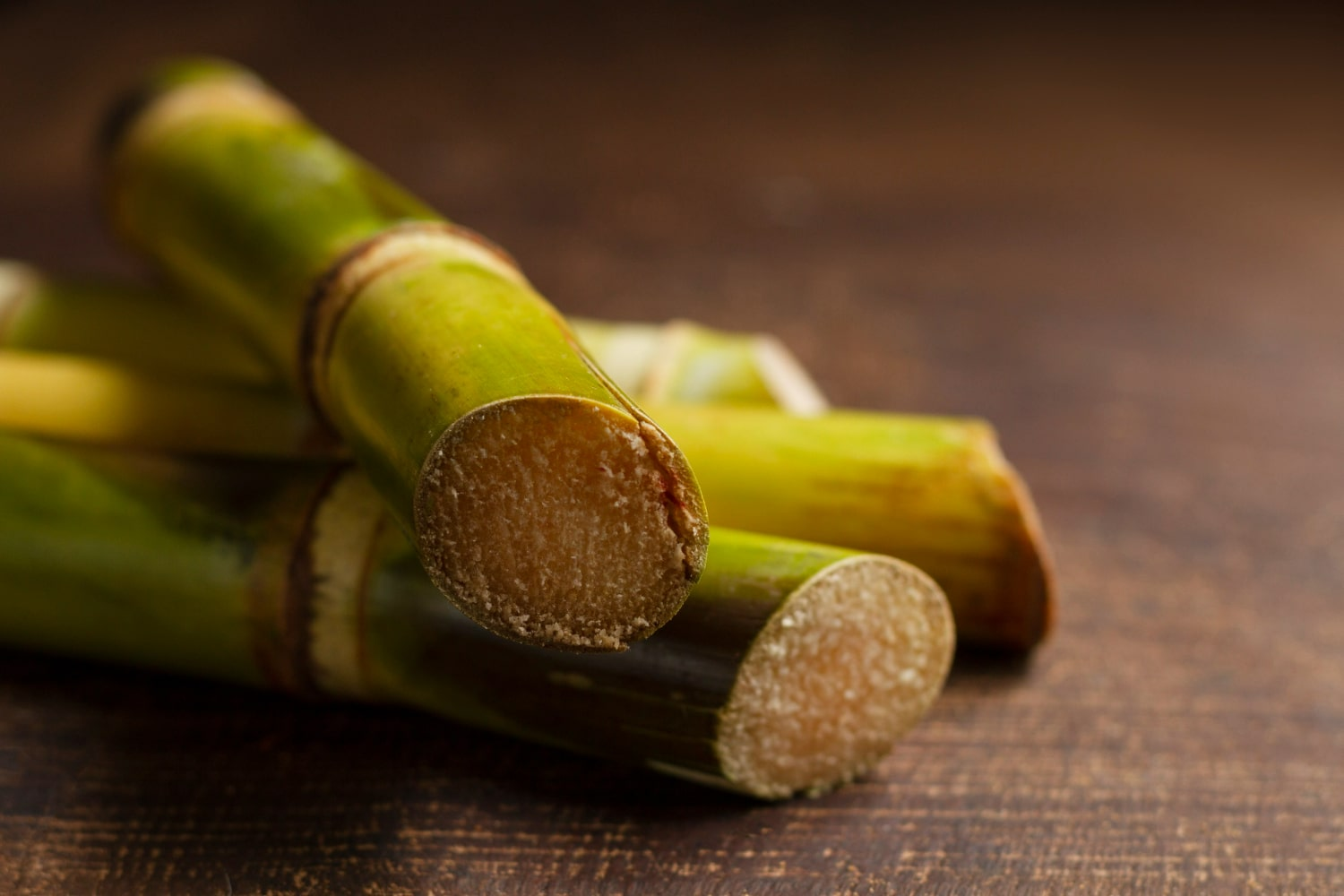
Sugar cane, with its towering stalks and lush green leaves, has been captivating the senses of many with its juicy sweetness and versatility. It's a key ingredient in our favourite beverages, from the classic glass of fresh sugarcane juice to the complex flavours of rum. Yet, when it comes to categorising this tropical plant, a question often arises: Is sugar cane a fruit?
In the world of botanical classification, sugar cane can be somewhat enigmatic. Is it a fruit, a vegetable, or something entirely different? To unlock the sweet mystery behind sugar cane's true nature, we must delve into its origins, structure, and various uses.
What is sugar cane?
Sugar cane, scientifically known as Saccharum officinarum, is a tropical plant that has played a significant role in human history, agriculture, and various industries for centuries. This tall, perennial grass species belongs to the Poaceae family and is known for its extraordinary sugar content, making it a valuable source of sucrose.
History of sugar cane
The historical significance of sugar cane can be traced back to ancient civilisations. It is believed to have originated in Southeast Asia and was cultivated in regions such as India, New Guinea, and Southeast Asia as early as 6,000 years ago. The extraction of sugar from sugar cane was developed in India, and it gradually spread to other parts of the world, including the Middle East and the Mediterranean.
Sugar cane became a symbol of luxury and wealth throughout history, with its journey intertwined with the expansion of trade routes, colonisation, and the transatlantic slave trade. In the 15th century, European explorers introduced sugar cane to the Americas, particularly in the Caribbean and South America, where it became a cornerstone of the sugar industry and had a profound impact on the region's history.
Why is sugar cane so sweet?
The sweet taste of sugar cane is a result of its exceptionally high sugar content, primarily in the form of sucrose.
Sugar cane is primarily valued for its sucrose content, which is the disaccharide composed of glucose and fructose. Sucrose is what makes sugar cane incredibly sweet.
Sugar cane produces and stores sugar through the process of photosynthesis. During photosynthesis, plants use sunlight, carbon dioxide, and water to produce glucose, which is then converted into sucrose and stored in the stalks.
Unlike most fruits, where sugars are found in the flesh or pulp, sugar cane stores its sugars in the stalks, which are thick, fibrous structures that can contain a high concentration of sucrose. The sweet juice of sugar cane is extracted from these stalks.
Importance of Sugar Cane in Various Cuisines
Sugar cane is not typically consumed as a whole fruit or vegetable but rather processed to extract its sweet juice. Its culinary importance lies in the production of sugarcane juice, molasses, and various sugar-based products. Sugarcane juice is a popular beverage in many tropical countries and is enjoyed fresh, often with a dash of lime or ginger for added flavour. It is cherished for its refreshing taste and natural sweetness.
Sugarcane is also used as a flavouring and sweetening agent in a wide range of cuisines. In Asian cuisine, sugarcane is used to add sweetness to dishes and sauces. The tender, raw sugarcane can be chewed for its sweet juice or used as a snack in some cultures.

Nutritional content of sugar cane
Calories: Sugar cane is energy-dense, providing approximately 270-290 calories per 100 grams. The majority of these calories come from sugars.
Sugar: Sugar cane is known for its high sugar content. It primarily contains sucrose, which is composed of glucose and fructose. The sugar content can range from 10% to 15% by weight.
Dietary Fibre: While sugar cane contains some dietary fibre, it is minimal in comparison to many fruits and vegetables. Dietary fibre contributes to digestive health and can help regulate blood sugar levels.
Vitamins: Sugar cane is a source of several vitamins, including vitamin C, which is an antioxidant that supports the immune system, and some B vitamins. However, the levels of these vitamins are not as high as in other fruits and vegetables.
Minerals: Sugar cane contains small amounts of minerals like calcium, magnesium, and iron. These minerals are important for bone health, muscle function, and overall well-being.
Potential health benefits
Hydration: Sugar cane juice is naturally hydrating and can be refreshing, making it a popular drink in hot and tropical regions.
Moderate Source of Energy: Sugar cane provides a quick source of energy due to its sugar content. This can be beneficial for athletes and individuals engaging in strenuous physical activities.
Antioxidants: The presence of vitamin C in sugar cane provides some antioxidant properties, which can help combat free radicals and reduce oxidative stress.
Natural Sweetener: Sugar cane can be used as a natural sweetener in various culinary applications. It's less refined than processed sugars, which can be appealing to those seeking more natural sweetening options.
Drawbacks of consuming sugar cane
High Sugar Content: The most significant drawback of sugar cane is its high sugar content. Excessive sugar consumption is associated with various health issues, including obesity, type 2 diabetes, and dental problems.
Empty Calories: Sugar cane primarily provides empty calories, meaning it lacks essential nutrients and dietary fibre. Consuming it in excess can lead to nutrient imbalances.
Blood Sugar Spikes: The rapid absorption of sugars from sugar cane can cause blood sugar levels to spike, leading to energy crashes and potential long-term issues for individuals with diabetes or insulin resistance.
Dental Health: Frequent consumption of sugary foods and drinks, including sugar cane, can contribute to dental cavities and tooth decay.

Importance of sugar cane in various industries
The sugar cane industry is of paramount importance globally. Sugar cane is primarily grown for the extraction of sucrose, which is used to produce sugar and other sweeteners. The sugar industry plays a crucial role in global agriculture and economies, providing millions of jobs and contributing significantly to national GDPS in countries where it is a major crop.
In addition to the sugar industry, sugar cane also serves as a vital raw material in the production of ethanol, a biofuel used to reduce carbon emissions in the transportation sector. The byproducts of sugar cane processing, such as bagasse (the fibrous residue after juice extraction), are used for electricity generation and in the production of paper and building materials.
Criteria for classifying sugar cane
Botanically speaking, a fruit is the mature ovary of a flowering plant, typically containing seeds. In the case of sugar cane, it does produce seeds, but not in the typical edible sense. However, it fits the botanical definition of a fruit since it's a part of the plant that contains the seeds. In the case of sugar cane, these seeds are not usually used or even noticeable when consuming the plant.
The term "vegetable" is a culinary, not botanical, classification. Vegetables often refer to other plant parts like roots (carrots), stems (celery), leaves (lettuce), or even flower buds (broccoli) that are commonly used in savoury dishes.
Sugar cane is not typically consumed directly as a fruit or a vegetable but is processed for its sugary juice. This makes its classification as a "fruit" or "vegetable" less relevant in a culinary context.
Botanical classification depends on specific traits such as the structure and development of reproductive organs, seed-bearing structures, and other plant anatomy. Sugar cane fits the criteria for a fruit based on these botanical traits.
Common misconceptions and debates surrounding sugar cane
Misconception 1: Sugar Cane is a Fruit
Some people believe that sugar cane is a fruit because it contains seeds. However, this classification is based on botanical criteria, where a fruit is defined as the mature ovary of a flowering plant. In this sense, sugar cane qualifies as a fruit because it does produce seeds. These seeds, however, are typically not consumed and are not the primary reason people cultivate sugar cane.
Debate 1: Culinary vs. Botanical Classification
One of the key debates is the difference between culinary and botanical classifications. While sugar cane may be botanically classified as a fruit, it is not typically consumed as one. In the culinary world, it is rarely regarded as a fruit or vegetable but rather processed for its sugary juice, blurring the lines between these categories.
Misconception 2: Sugar Cane is a Vegetable
Some might consider sugar cane a vegetable due to its appearance as a tall, green, grassy plant. However, vegetables are typically parts of the plant other than the fruit or seed, such as roots (e.g., carrots), stems (e.g., celery), or leaves (e.g., lettuce). Sugar cane doesn't fit these criteria either.
Debate 2: Categorisation Based on Usage
The classification of sugar cane is further complicated by its usage. In many cultures, it is considered neither a fruit nor a vegetable but a unique crop primarily used for its sweet juice. Some might classify it as an "industrial crop" due to its economic importance in sugar and rum production.
Misconception 3: Sugar Cane is a Grass
Sugar cane belongs to the grass family (Poaceae), leading to the misconception that it is merely a type of grass. While it is indeed a member of the grass family, it's a cultivated variety of grass specifically grown for its high sugar content and not the type of grass found in lawns.
Debate 3: Varieties and Cultivation
The debate over sugar cane's classification also arises from the fact that different varieties of sugar cane are used for various purposes. Some are grown for their sugar content, while others are grown for chewing or used as fodder for animals. This diversity in cultivation adds to the confusion.

So, is sugar cane a fruit or a vegetable?
Botanically, sugar cane is classified as a fruit because it contains seeds, which is a defining characteristic of fruits in botanical terms. However, it's important to note that sugar cane is not typically consumed as a fruit. Instead, it is primarily grown for its high sugar content, and its sweet juice is extracted from the stalks for use in beverages and sugar production.
In conclusion, the question of whether sugar cane is a fruit is a captivating exploration of the interplay between botanical classification and real-world usage. While sugar cane does indeed fit the botanical definition of a fruit due to the presence of seeds, it occupies a unique place in the culinary and agricultural landscapes.
Sugar cane is not commonly consumed as a fruit, nor is it a traditional vegetable or grass. Instead, it is cultivated for the sheer sweetness that lies within its fibrous stalks.
This sweet, tall grass stands as a testament to the multifaceted nature of botanical classification, where the division between fruits, vegetables, and other plant categories can blur when the rich tapestry of human culture, agriculture, and cuisine is considered.
Share:
Amazing benefits of Aboniki for pain relief
12 Health benefits of pumpkin leaves