
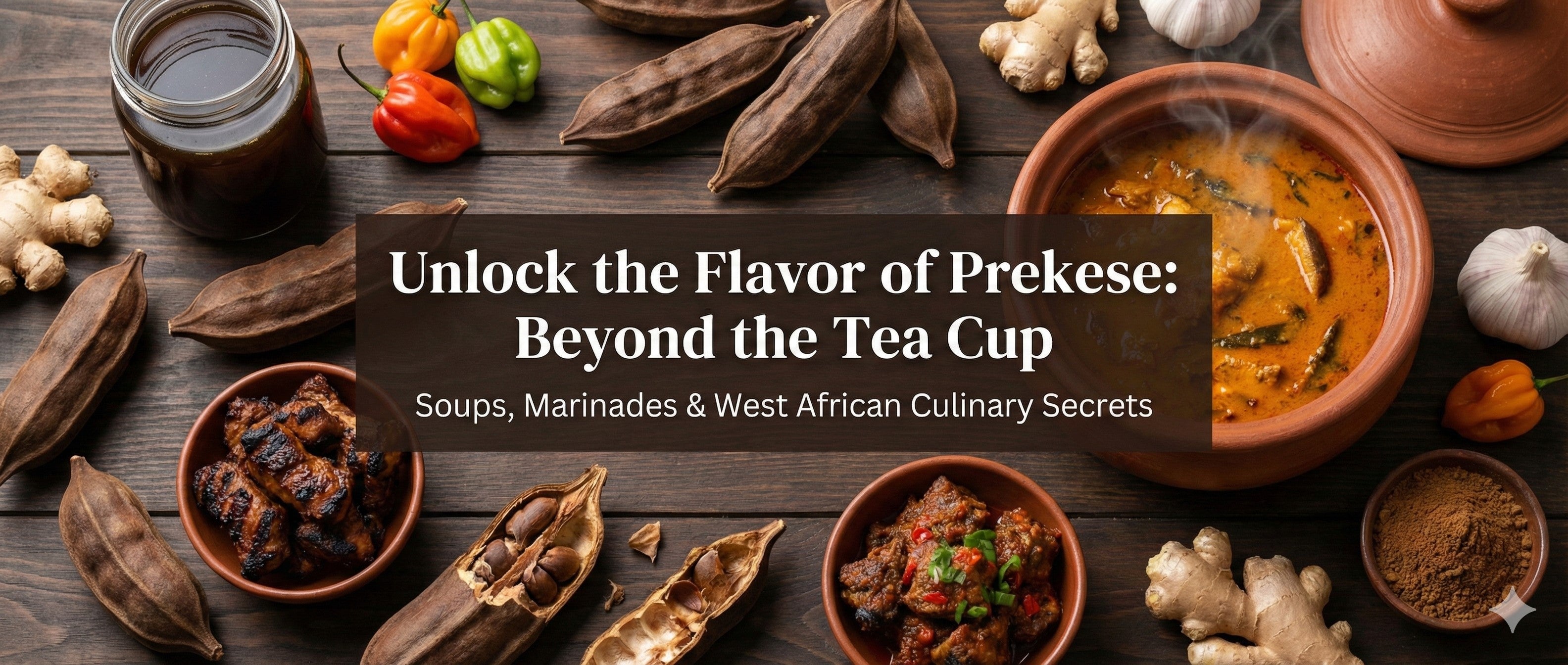
If you’re living in the UK and searching for new ways to use Prekese (Aidan Fruit) beyond the usual tea, you’re not alone. Every week at Niyis, customers order Prekese for one reason: to boil it, sip it as a detox, and enjoy its famous health benefits. And while Prekese tea is powerful, it is also great for digestion, postpartum care, and general wellness which is why this incredible West African spice was never meant to stay limited to a cup.
Prekese is one of the most underrated flavour boosters in African cooking. Long before it became a trending “superfood” online, it was the quiet hero behind some of the richest Nigerian and Ghanaian soups: Banga, Pepper Soup, Light Soup, and even smoked meat marinades. Its sweet-earthy aroma, deep caramel notes, and natural umami make it a culinary treasure that most people in the UK are not using to its full potential.
So if you’ve been wondering “What else can I use Prekese for?”, “Can I cook with Prekese?”, or “How do I add Prekese to soups, meats, or stews? ”, this guide is for you.
At Niyis, we believe ingredients should do more than heal, you should enjoy them. Today, we’re taking Prekese out of the medicine mug and placing it where it truly shines: inside your cooking pot, grill tray, and marinades.
Let’s unlock all the delicious ways to cook with Prekese and transform everyday meals into aromatic West African masterpieces.
What Does Prekese Actually Taste Like?
Before we throw it in the pot, let's understand the flavour profile.
In the UK, we are so used to using powered spices: curry, thyme, nutmeg, that looking at a whole Prekese pod can be intimidating. It looks like a piece of wood! But looks can be deceiving.
Prekese is incredibly aromatic. If you were to burn it slightly (more on that later), it releases a scent that is sweet, almost like caramel or butterscotch, mixed with a deep, earthy smokiness. It is rich. It is heavy. It fills the room.
However, the taste is a complex balance. It has a natural sweetness, but it also carries a slight astringency or bitterness if you leave it in the pot for too long. It is this balance that makes it perfect for rich, fatty soups like Palm Nut Soup (Banga) or light, spicy broths. It cuts through the fat and adds a "savoury sweetness" that sugar or honey could never achieve.
So, how do we harness this flavour without ruining the food? Here are the three best ways to cook with it.
1. The Classic: Elevating Your Nigerian & Ghanaian Soups
Best for: Banga, Pepper Soup, Light Soup, and Black Soup.
This is the home turf of Prekese. You cannot claim to have made an authentic Delta Banga soup without the aroma of Aidan fruit wafting through the kitchen. It’s actually against the rules (okay, not really, but your grandma might disagree!).
The mistake many people make in the UK is simply dropping the whole, raw pod into the pot and hoping for the best. To get the real flavour, you need to wake it up.
The "Wake Up" Method:
-
Roast it: This is the secret. Take your Prekese pod and hold it over an open flame on your gas cooker for about 30-60 seconds. If you have an electric hob, you can toast it in a dry frying pan. You want it to char slightly. You will smell that sugar-caramel scent releasing immediately. This process unlocks the essential oils.

-
Break it: Don't put the whole long pod in. Break it into 2 or 3 pieces. If you want a milder flavour, leave the pieces large. If you want a strong flavour, crush the edges slightly with a pestle.
-
The Timing: Add the Prekese to your soup during the boiling phase, along with your meats and other spices.
-
The Removal: This is crucial. Unlike your meat, you don't eat the Prekese pod (it’s too hard!). Once the soup is done and the flavour has infused, scoop the pods out before serving. They have done their job.
Why do this? Adding Prekese to Pepper Soup isn't just about taste; it’s about texture and feeling. It adds a "body" to the broth that makes it feel more substantial. When you sip that hot, spicy liquid on a cold UK evening, the Prekese is what gives you that warm, comforting hug from the inside.
2. The Twist: The Prekese Meat Marinade

Best for: Grilled Chicken, Suya, Roast Goat, and Fish.
Now, let’s leave tradition behind for a moment and try something new. Did you know Prekese makes an incredible marinade for meats?
Because of its subtle sweet notes, Prekese works very similarly to how Western chefs use brown sugar or molasses in their BBQ rubs, but without the extra calories and with way more earthy depth. It pairs beautifully with heat (pepper) and smoke.
How to make a Prekese Rub: You can’t rub a stick on a chicken, so for this, you need Prekese Powder or you need to grind it yourself.
-
The Grind: If you have whole pods, break them into small pieces (discard the hardest woody spine if your blender isn't industrial strength) and grind them into a fine powder.
-
The Mix: In a bowl, mix:
-
1 tablespoon Prekese powder
-
1 tablespoon Suya spice (or chili powder)
-
1 teaspoon Ginger powder
-
1 Garlic clove (crushed)
-
A pinch of salt
-
A splash of Vegetable Oil
-
-
The Marinade: Rub this paste all over your chicken, goat meat, or fish. Let it sit in the fridge for at least 2 hours, or overnight if you’re organised.
-
The Cook: Grill or roast as normal.
The Result: The sugars in the Prekese caramelize under the heat of the grill, giving your meat a beautiful, dark golden glaze. The taste is smoky, spicy, and has that signature "local" undertone that makes people wonder what secret ingredient you used. It turns a standard Sunday roast into a West African feast.
3. The "Stock" Base: Prekese Liquid Gold

Best for: Jollof Rice base, Risottos, and Stews.
If you don't want to grind it, and you don't want to fish pods out of your soup, there is a third way: The Prekese Stock.
This is essentially making the "tea" you are used to, but making it much, much stronger and using it as a cooking liquid.
How to do it:
-
Take 2-3 Prekese pods. Wash them well (always wash them to remove dust from the market!).
-
Crush them heavily so they split open.
-
Boil them in a pot with about 1 litre of water. Let it boil aggressively for 15-20 minutes until the water turns a deep, dark brown.
-
Strain the liquid.
How to use it:
-
For Jollof Rice: Use this dark, fragrant water instead of plain water or chicken stock when cooking your Rice. It will darken the rice slightly (giving it that Party Jollof colour) and add a deep, aromatic background note.
-
For Stews: Add a cup of this concentrated liquid to your Tomato Stew to thin it out. It adds nutrients and flavour without diluting the taste like plain water does.
This method is fantastic because you get 100% of the health benefits infused directly into your staple food. You don't have to "remember" to drink your tea; you’re eating it in your rice!
A Note on "Less is More"
We love Prekese, but we must respect it. It is a potent spice.
If you use too much, or if you grind the seeds up too finely and add too many, your food can take on a slightly bitter, medicinal taste. Cooking is about balance.
-
Start with half a pod if you are cooking a small pot.
-
Taste as you go.
-
If you find the flavour is getting too strong, remove the pod immediately.
Think of it like bay leaves in English cooking or cloves. You want the essence, not the overpower.
Why You Should Be Cooking With It (Beyond Taste)
We know we said this blog was about flavour, but we can't ignore the elephant in the room. Why is Prekese so good for you? And does cooking kill the nutrients?
The good news is that boiling Prekese actually helps extract the beneficial compounds (flavonoids, tannins, and minerals). It is a water-soluble plant.
By adding it to your soups and stews, you are essentially fortifying your family's meal.
-
Digestion: It is known to help with bloating and constipation (perfect after a heavy meal of Pounded Yam!).
-
Postpartum: For new mothers, it helps contract the uterus and aids milk flow.
-
Anti-inflammatory: It helps soothe the body.
READ MORE: 15 Benefits of Prekese
So, when you serve that Prekese-infused Banga soup, you aren't just feeding your family; you are healing them. That is the African way of cooking. Food is medicine.
Selection & Storage: Getting the Best Pod
When you shop for Prekese at Niyis, you might notice some variation. Here is what to look for:
-
The Colour: You want a dark, chocolate-brown colour. If it looks too pale or grey, it might be old and dry.
-
The Smell: Even through the packaging, a good Prekese should smell fragrant.
-
The Texture: It should be firm but not brittle. It shouldn't crumble to dust when you touch it.
Storage Tips: Prekese is very low maintenance. You don't need to put it in the fridge.
-
Keep it in a cool, dry place (your spice cupboard is perfect).
-
Keep it away from moisture. If it gets wet, it can mould.
-
If you want to keep it for months (or years!), you can cut it into pieces and store it in an airtight jar. It preserves the aroma perfectly.
The Verdict: Stop Drinking, Start Eating
Okay, don't stop drinking the tea. If you enjoy your morning cup of Prekese tea with lemon, please keep doing it! It’s a wonderful habit.
But don't limit this incredible ingredient to just a beverage. It is capable of so much more. It is the soul of our soups, the secret of our marinades, and the flavour of our heritage.
This week, challenge yourself. Take that pod, toast it over the fire, throw it into your Sunday stew, and wait for the aroma to fill the house. When your family asks, "Mmm, what smells so good?" you can just smile.
That’s the smell of home.
Share:
5 Essential Spices You Need for Authentic Nigerian Christmas Cooking
How to Make Crunchy Nigerian Chin Chin (A Step-by-Step Guide)