
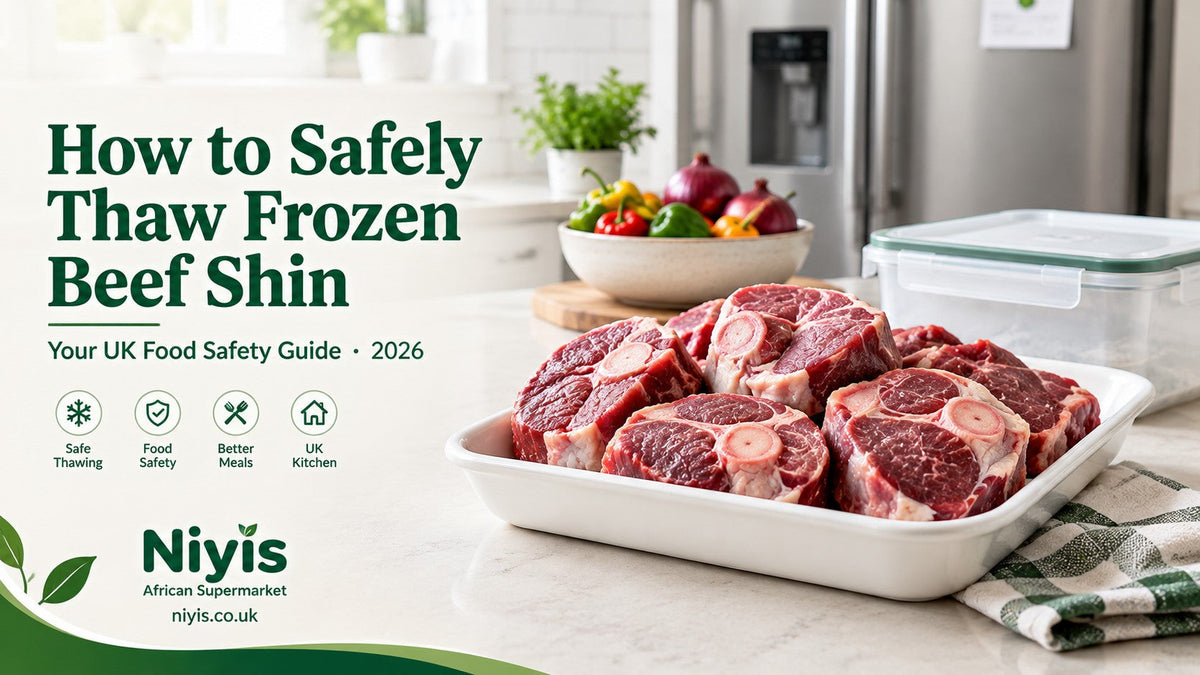
Knowing how to safely thaw 1kg frozen boneless beef shin helps you prepare delicious Nigerian soups, stews and slow-cooked meals while reducing the risk of food poisoning. Whether you bought Niyis Frozen Boneless Beef Shin 1kg for pepper soup, Egusi or a rich beef stew, the safest approach is to defrost it in the fridge rather than on the kitchen counter. This guide explains how to defrost frozen beef in the UK, how long to allow, what to avoid and how to prepare your beef shin for cooking.
How Do You Safely Thaw 1kg Frozen Boneless Beef Shin?
The safest method is to thaw frozen beef shin in the fridge at 0°C to 5°C, inside a leakproof container on the bottom shelf. Allow enough time for the centre to thaw completely. Depending on the thickness, packaging and fridge temperature, this may take around 24 hours or longer.
Once fully thawed, follow the product label and current food safety guidance. UK government guidance advises keeping food at safe temperatures during defrosting and using defrosted food promptly.
1. The Safest Way to Thaw Beef Shin
Thawing beef in the fridge keeps it cold while the ice melts, helping limit the growth of harmful bacteria.
Step-by-step instructions
-
Check the packaging. Read the storage and defrosting instructions on your frozen beef shin.
-
Prepare a container. Place the unopened pack in a clean, leakproof container to catch any meat juices.
-
Position it correctly. Put the container on the bottom shelf of your fridge, away from ready-to-eat food.
-
Allow enough time. A 1kg pack may need approximately 24 hours or longer, depending on its thickness and how tightly the meat is packed.
-
Check the centre. The beef should be fully thawed, with no hard, icy section remaining in the middle.
-
Cook promptly. Once fully defrosted, follow the product instructions and applicable food safety guidance.
Keep your fridge at 5°C or below. Do not leave raw beef uncovered where its juices could drip onto other foods.
If you are planning a family meal with Niyis Frozen Boneless Beef Shin 1kg, transfer it from the freezer to the fridge the day before you intend to cook, allowing extra time if the pack is thick.
2. How Long Does 1kg Frozen Beef Shin Take to Thaw?
The exact time depends on the thickness of the beef, its packaging and your fridge temperature.
|
Defrosting method |
Timing guidance |
Important safety point |
|
Refrigerator |
Allow around 24 hours or longer |
Safest option for planned meals |
|
Microwave defrost setting |
Depends on the appliance and portion |
Cook immediately after defrosting |
|
Cold running water |
Variable |
Use a sealed, watertight package and cook promptly |
|
Kitchen counter |
Not recommended |
The outside may become too warm while the centre remains frozen |
These are planning estimates, not guaranteed thawing times. Always check the centre of the meat and follow the package instructions.
Planning tip: If you want to prepare Nigerian beef stew tomorrow evening, move the frozen beef shin to the fridge the previous day. Start earlier if the pack is thick or frozen into a solid block.
3. Alternative Ways to Defrost Frozen Beef Shin

Can you thaw beef shin in the microwave?
Yes, if your microwave has a defrost setting and the packaging is suitable for microwave use. Remove packaging that is not microwave-safe, follow the appliance instructions and turn or separate pieces as directed.
Microwaves can thaw meat unevenly, so some areas may begin warming while others remain frozen. Cook the beef immediately after microwave defrosting.
Can you thaw beef shin in cold water?
If you cannot use the fridge, follow recognised food safety guidance for cold-water defrosting. Where permitted, keep the meat in a sealed, watertight package and use cold water, never warm or hot water. Cook the beef promptly after this method.
Do not allow raw meat juices to leak into the sink or onto nearby surfaces. Clean and disinfect the sink and worktop after handling raw meat.
Can you thaw beef shin on the kitchen counter?
No. Room-temperature thawing is not recommended because the surface can warm into conditions that allow bacteria to multiply while the centre remains frozen. Do not leave frozen beef in a sink or beside a cooker to speed things up.
4. Food Safety Mistakes to Avoid When Defrosting Beef

Avoid these common mistakes when preparing frozen beef shin:
-
Thawing at room temperature: Use the fridge or a suitable alternative method.
-
Leaving meat uncovered: Keep it in a leakproof container to contain juices.
-
Putting raw beef above cooked food: Store it on the bottom shelf to prevent drips contaminating other food.
-
Washing raw beef: Washing can splash bacteria onto the sink, taps and worktops. It is safer not to wash raw meat.
-
Cooking while the centre is still frozen: Unless the packaging specifically allows cooking from frozen, thaw fully so the beef can cook evenly.
-
Ignoring the use-by date: Follow the product's storage instructions and use-by date.
-
Refreezing without checking the guidance: Follow the product label and official guidance. When in doubt, cook the thawed beef first, then cool and freeze the cooked dish safely.
Wash your hands, utensils, chopping boards and worktops thoroughly after handling raw beef. Keep raw meat separate from ready-to-eat foods.
5. What Can You Cook With Boneless Beef Shin?
Beef shin is well suited to slow cooking because its connective tissue softens over time, helping produce tender meat and a rich cooking liquid.
Nigerian beef stew
Cook the thawed beef with onions, tomatoes, peppers and your preferred seasonings. For a meal with different textures, you could combine beef shin with other cuts from the Niyis Meat and Seafood Collection. Check each product's storage instructions before use.
Egusi soup
Add tender beef pieces to a soup made with ground melon seeds, vegetables and other traditional ingredients. You can shop for meat and other Nigerian cooking ingredients through the Niyis African grocery collection.
Efo Riro
Use beef shin to give this Yoruba vegetable soup a hearty, savoury flavour. For an alternative texture,Frozen Beef Kidney 1kg is another option for traditional stews and meat dishes, provided it is handled and cooked according to its own instructions.
Pepper soup
Simmer beef with pepper soup spices, aromatics and enough liquid to create a flavourful broth. If you enjoy mixed meat dishes,the Niyis Meat and Seafood Collection is a convenient place to explore other cuts that may suit your recipe.
Slow-cooked beef sauce
Serve tender beef and its cooking juices with rice, yam or another favourite staple. For a different beef texture,consider Frozen Beef Mask 1kg, or explore the collection for Frozen Beef Tail Cuts 1kg, depending on availability.
Important: Do not assume different meat cuts have identical cooking times. Follow each product's instructions and cook until safely done and tender.
6. Where to Buy Frozen Boneless Beef Shin in the UK
If you are searching for 1kg frozen boneless beef shin in the UK, Niyis African Supermarket lists Frozen Boneless Beef Shin 1kg as a cleaned, trimmed and vacuum-packed product intended for cooking.
The listing describes it as suitable for stews, jollof, Egusi, Efo Riro and pepper soup. Check the live page for the latest price, stock status, storage instructions and delivery terms.
You can also browse the Niyis Meat and Seafood Collection for other frozen meats and fish,including Frozen Beef Kidney 1kg, or explore the wider African grocery collection for Nigerian cooking ingredients.
7. Frequently Asked Questions
How long does 1kg frozen boneless beef shin take to thaw?
Allow around 24 hours or longer in the fridge, depending on thickness and packaging. Check that the centre is fully thawed before cooking.
Is it safe to thaw beef shin overnight?
Yes, provided it stays in a properly functioning fridge at 5°C or below in a leakproof container. A thick pack may need more time than one night.
Can I cook beef shin while it is still frozen?
Follow the product instructions. Unless they specifically allow cooking from frozen, thaw the beef fully first to help it cook evenly.
Should I wash beef shin after thawing?
No. Washing raw beef can spread bacteria through splashes. Handle it carefully and cook it properly.
Can I refreeze beef shin after thawing?
Follow the product label and official food safety guidance. A practical option is to cook the beef after thawing, then cool and freeze the cooked dish safely if needed.
How should I store thawing beef shin?
Keep it in a leakproof container on the bottom shelf of the fridge, separate from ready-to-eat food.
Can I use thawed beef shin for Nigerian pepper soup?
Yes. Once safely thawed, beef shin can be used in pepper soup, stews and other slow-cooked dishes. Cook it thoroughly and follow the recipe and product instructions.
Where can I buy frozen boneless beef shin online in the UK?
You can check sizes, availability and delivery information on the Niyis Frozen Boneless Beef Shin 1kg product page.
8. Related Products and Cooking Inspiration
If you are planning a wider Nigerian meal, these Niyis pages can help you explore suitable ingredients and alternative cuts:
-
Frozen Boneless Beef Shin 1kg, the main product featured in this guide.
-
Frozen Beef Kidney 1kg, another beef cut for traditional stews and soups.
-
Frozen Beef Mask 1kg, for another beef option, subject to current availability.
-
Frozen Beef Tail Cuts 1kg, for slow-cooked dishes.
-
Niyis Meat and Seafood Collection, for browsing the wider selection.
-
Niyis African grocery collection, for other Nigerian pantry ingredients.
Final Takeaway
The safest way to thaw 1kg frozen boneless beef shin is to plan ahead and let it defrost in the fridge in a leakproof container. Allow around 24 hours or longer, confirm the centre has thawed fully, keep raw meat separate from other foods and follow the product's cooking and storage instructions.
Once ready, use your beef shin in Nigerian beef stew, Egusi, Efo Riro or pepper soup. For your next meal,visit Niyis Frozen Boneless Beef Shin 1kg and explore thewider Niyis range of African meats and cooking ingredients.
Share:
Niyis Poundo Yam: How to Make Smooth, Lump-Free Pounded Yam in the UK (2026)
How to Properly Thaw a 2.5kg Frozen Catfish Safely in the UK (2026)