
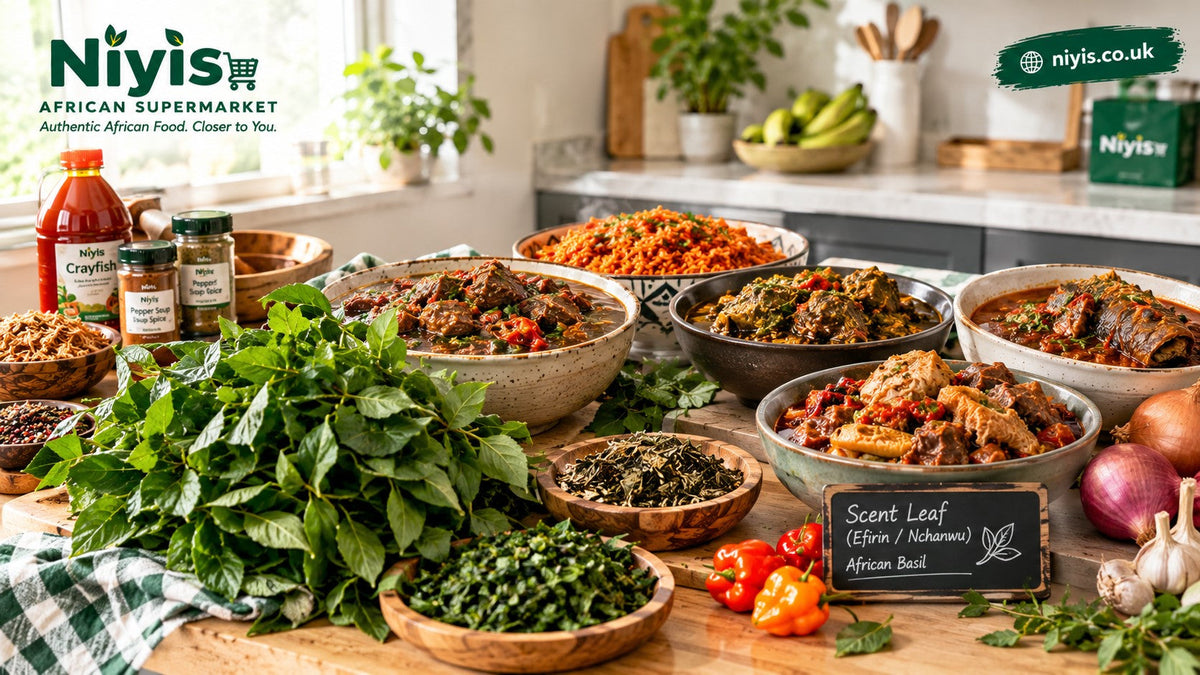
Scent leaf is one of the most aromatic Nigerian herbs used in traditional cooking. Also called efirin, nchanwu, African basil or Ocimum gratissimum, it has a distinctive basil-like, slightly peppery and clove-like aroma. If you are wondering how to use scent leaf in the UK, it can transform pepper soup, stews, rice and native Nigerian dishes with just a small handful. Scent leaf also contains plant compounds such as essential oils and polyphenols, making it an interesting ingredient from both a culinary and nutritional perspective.
What Is Scent Leaf Used For?
Scent leaf is primarily used to add fresh aroma, herbal flavour and depth to Nigerian soups, pepper soup, stews, sauces and rice dishes.
The most popular uses include:
-
Scent leaf in pepper soup
-
Ofe Akwu and native soups
-
Nkwobi-style dishes
-
Nigerian stews
-
Jollof rice
-
Fish and meat dishes
-
Traditional herbal infusions
For UK cooks, you can use Fresh Scent Leaves (Efirin) when available or keep Dried Efirin in your pantry for convenient everyday cooking.
What Is Scent Leaf?
Scent leaf is an aromatic herb belonging to the basil family. In Nigeria, it is known by different names depending on the region and language.
|
Name |
Common description |
|
Scent leaf |
Common English name |
|
Efirin |
Yoruba name |
|
Nchanwu |
Igbo name |
|
African basil |
Common alternative name |
|
Ocimum gratissimum |
Botanical name |
Its flavour is stronger than ordinary sweet basil, with herbal, clove-like, peppery and slightly minty notes.
That intensity is why scent leaf recipes often require only a small quantity.
It is particularly effective when added towards the end of cooking, allowing its aroma to remain noticeable instead of becoming lost during prolonged cooking. Niyis' pepper soup guide similarly recommends adding chopped scent leaves at the finishing stage.
Scent Leaf Nutritional Profile

Scent leaf is primarily valued in Nigerian cooking for its aroma and flavour. Like other fresh herbs and leafy plants, it can contribute small amounts of nutrients and plant compounds to meals.
|
Component |
Culinary relevance |
|
Essential oils |
Responsible for its distinctive aroma |
|
Plant polyphenols |
Naturally occurring plant compounds |
|
Vitamins |
Contribute to overall dietary variety |
|
Minerals |
Present in varying amounts |
|
Fibre |
Contributes to a varied plant-based diet |
|
Aromatic compounds |
Help create its characteristic flavour |
Research has identified compounds including eugenol and thymol in scent leaf, although laboratory findings should not automatically be interpreted as proven medical benefits in humans. Niyis also notes that more human research is needed before concentrated scent leaf preparations can be associated with specific health outcomes.
For everyday cooking, the simplest approach is to treat scent leaf as a flavourful culinary herb rather than as a medicine.
How to Use Scent Leaf: 7 Traditional Nigerian Dishes
1. Nigerian Pepper Soup
If you want to understand how to use scent leaf, start with pepper soup.
Scent leaf is one of the classic finishing herbs for Nigerian pepper soup. Whether you are preparing goat meat, assorted meat, fish or chicken pepper soup, the leaves provide a fresh aromatic contrast to hot pepper and traditional spices.
For an easy version:
-
Cook your meat or fish until tender.
-
Add onions, pepper and Pepper Soup Spice
-
Simmer so the spices infuse the broth.
-
Add roughly chopped scent leaf near the end.
-
Cook for about one minute before turning off the heat.
Pairing the soup with Niyis Ground Crayfish can add another layer of savoury flavour.
2. Ofe Akwu
Ofe Akwu, also known as palm fruit soup, is another traditional dish where aromatic herbs can make a noticeable difference.
The rich palm-fruit base benefits from fragrant ingredients, especially when combined with meat, fish, crayfish and traditional seasonings.
Try adding a small handful of chopped scent leaf towards the end of cooking.
For authentic flavour, use quality Palm Oil and Nigerian cooking oils alongside your traditional ingredients.
3. Nkwobi
Nkwobi is a popular Igbo-style spicy cow foot dish traditionally prepared with palm oil, peppers and aromatic seasonings.
Scent leaf can be used as a finishing herb when preparing a variation of this rich dish.
The important thing is restraint. Because scent leaf has such a strong aroma, too much can overpower the palm oil, pepper and protein.
Use finely sliced leaves towards the end and stir them through just before serving.
If you enjoy traditional Nigerian offal dishes, Niyis also has guides covering Nigerian goat meat recipes and how to cook shaki.
4. Nigerian Jollof Rice
Can you put scent leaf in jollof rice?
Yes, although it is not essential to every traditional jollof recipe.
A small amount can give your rice a fresh herbal aroma, particularly in versions made with meat or other strongly seasoned ingredients.
Add finely chopped scent leaf towards the final stages rather than cooking it for the entire duration.
This works particularly well if you enjoy experimenting with African basil recipes while keeping the familiar tomato, pepper and seasoning base of Nigerian jollof.
For busy cooks,Jollof Rice Seasoning can also complement your pantry.
5. Fish Pepper Soup
Scent leaf works exceptionally well with fish because its aromatic character helps balance the rich flavour of the broth.
Use a firm fish that holds its shape during cooking, then add your pepper soup spices and chopped scent leaf towards the end.
This is one of the simplest Nigerian scent leaf recipes because the herb does not need complicated preparation.
For a deeper traditional flavour, combine it with Ground Crayfish,fresh peppers and your preferred Nigerian pepper soup spices.
6. Native Nigerian Stews and Sauces
One of the easiest answers to what is scent leaf used for is everyday Nigerian sauces.
Finely chopped leaves can be stirred into certain native stews and sauces where a strong herbal aroma is welcome.
Try it with tomato and pepper-based sauces, meat sauces or dishes containing palm oil.
It can also be combined with other Nigerian herbs, such as uziza, depending on the recipe.
The key is balance. Scent leaf should enhance the dish rather than dominate it.
7. Assorted Meat Pepper Soup
For a hearty family meal, combine assorted meat with traditional pepper soup spices, crayfish, chilli and scent leaf.
Niyis' assorted meat pepper soup recipe recommends a generous handful of fresh scent leaves as the finishing ingredient.
You can use beef, shaki, cow foot, tripe or other suitable cuts.
For UK cooks, this is particularly useful because specialist African supermarkets can provide ingredients that are difficult to find in mainstream supermarkets.
Fresh vs Dried Scent Leaf: Which Should You Use?

|
Feature |
Fresh scent leaf |
Dried scent leaf |
|
Aroma |
Very fresh and vibrant |
Concentrated |
|
Texture |
Soft, leafy |
Dry and crumbly |
|
Best for |
Pepper soup, fresh dishes |
Soups, stews and sauces |
|
Storage |
Refrigerate |
Airtight pantry storage |
|
Convenience |
Requires washing/chopping |
Ready to use |
Fresh scent leaf is excellent when you want maximum freshness. However, dried efirin is extremely useful for UK kitchens because it can be stored and used whenever you need an aromatic Nigerian herb. Niyis describes its dried efirin as suitable for soups, stews and sauces.
Is Scent Leaf Healthy?
Scent leaf contains various plant compounds, including essential oils and polyphenols. Research has investigated compounds such as eugenol and thymol, as well as antioxidant and other biological activities.
However, most evidence around medicinal effects should not be confused with proof that eating scent leaf in normal culinary quantities treats or prevents disease. Human research is still developing.
For everyday cooking, the simplest approach is to enjoy scent leaf as part of a varied, balanced diet.
Niyis' wider guide to Nigerian vegetables and their benefits also explains how traditional leafy ingredients contribute to varied Nigerian meals.
How to Prepare Scent Leaf for Cooking

Fresh scent leaf
-
Remove damaged leaves.
-
Wash thoroughly under clean running water.
-
Drain well.
-
Remove tough stems if necessary.
-
Chop or tear the leaves.
-
Add towards the end of cooking.
Dried scent leaf
Simply measure the quantity required and add it to your soup, stew or sauce.
Because dried herbs are concentrated, start with a modest amount and adjust according to taste.
Where to Buy Scent Leaf in the UK
Finding authentic Nigerian herbs can be difficult when you live outside Nigeria. Specialist African supermarkets make it much easier to recreate traditional meals at home.
Niyis currently lists Fresh Scent Leaves Efirin, although availability can vary, as well as African Sun Dried Efirin.
You can also browse the wider African Vegetables Collection for complementary Nigerian leafy vegetables and the African Grocery Collection for pantry essentials. For UK shoppers preparing traditional soups, keeping scent leaf alongside ingredients such as crayfish, palm oil, pepper soup spices and Nigerian vegetables makes authentic cooking much easier.
Scent Leaf FAQs
What is scent leaf used for?
Scent leaf is primarily used as an aromatic herb in Nigerian soups, pepper soup, stews, sauces, rice dishes and traditional recipes.
Is scent leaf the same as basil?
Not exactly. Scent leaf is a type of African basil, but its flavour is considerably stronger and more distinctive than common sweet basil.
What is scent leaf called in Yoruba?
Scent leaf is commonly called efirin in Yoruba.
What is scent leaf called in Igbo?
It is commonly called nchanwu in Igbo.
Can I put scent leaf in pepper soup?
Yes. Scent leaf is commonly added towards the end of Nigerian pepper soup preparation to provide a fresh aromatic finish.
Can I use dried scent leaf instead of fresh?
Yes. Dried scent leaf can be used in soups, stews and sauces. Start with a small quantity because the flavour can be concentrated.
Can scent leaf be used in jollof rice?
Yes. Although not required in every traditional jollof recipe, a small amount can add an aromatic herbal note.
How should I store fresh scent leaf?
Keep fresh leaves refrigerated and use them relatively quickly. If you cannot use them soon, drying or freezing can provide a longer-term option.
Is scent leaf a Nigerian herb?
Yes. Scent leaf is widely used in Nigerian cuisine and traditional food practices and is one of the better-known aromatic African herbs.
Where can I buy scent leaf in the UK?
Niyis African Supermarket lists fresh and dried efirin, alongside other Nigerian vegetables, spices and cooking ingredients.
Related Nigerian Recipes to Try
Once you know how to use scent leaf, explore these traditional dishes and ingredients:
Final Takeaway
Scent leaf is a small ingredient with a big impact. Whether you know it as efirin, nchanwu or African basil, its distinctive aroma can transform Nigerian pepper soup, Ofe Akwu, Nkwobi, jollof rice, fish dishes, stews and assorted meat recipes.
The secret to using it well is simple: use a modest amount and add it towards the end of cooking when you want its fresh aroma to stand out.
For Nigerians and other African food lovers living in the UK, keeping fresh or dried scent leaf in your kitchen is an easy way to bring authentic West African flavour back to the dinner table.
Share:
African-Caribbean Pantry Essentials: 20 Must-Have Local Pantry Staples for Your UK Kitchen (2026)
Is Pangasius Fish Healthy? Nutrition, Benefits and Safety Explained in the UK (2026)