
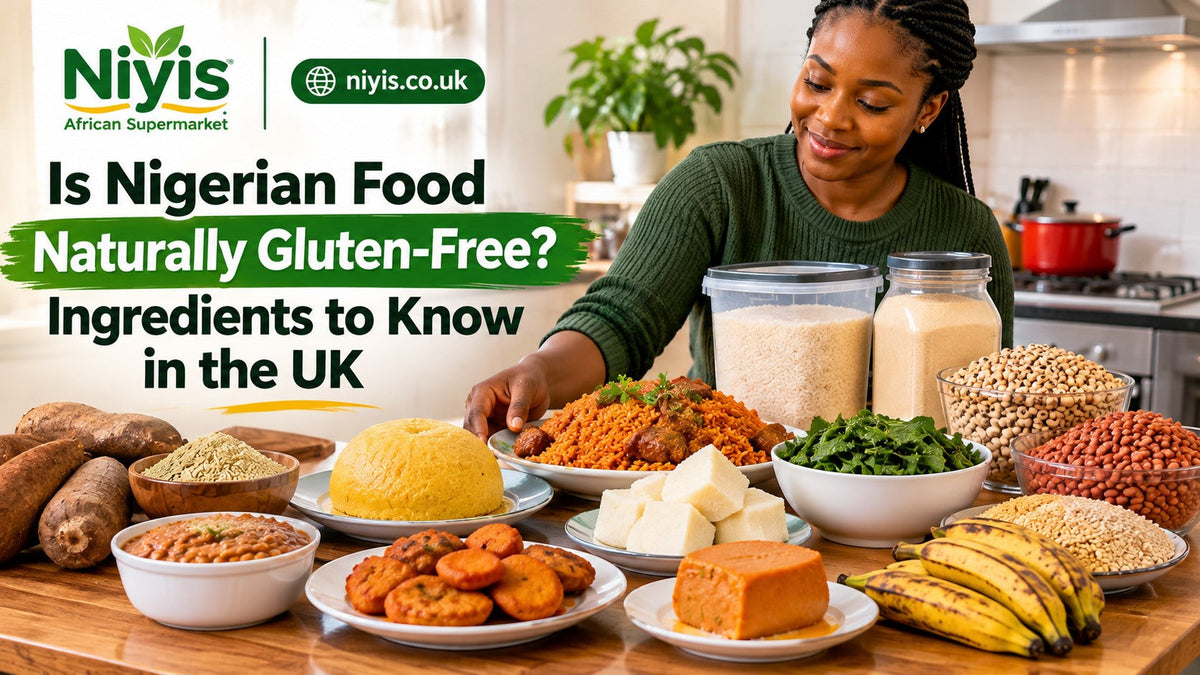
Is Nigerian food naturally gluten-free? Many traditional Nigerian foods are naturally gluten-free because they are prepared with cassava, yam, rice, beans, plantain and other ingredients that do not contain wheat, barley or rye. For Nigerians living in the UK, these foods can provide variety when following a gluten-free diet. From eba and jollof rice to moi moi and beans porridge, there are plenty of Nigerian meals to explore. However, sauces, seasonings, processed flours and packaged ingredients require careful checking, particularly for people with coeliac disease or gluten sensitivity.
Is Nigerian Food Naturally Gluten-Free?
Yes. Many traditional Nigerian foods are naturally gluten-free because their main ingredients come from rice, cassava, yam, beans, maize and plantain.
However, not every Nigerian dish is gluten-free. Wheat-based foods, certain seasonings, stock cubes, processed products and cross-contaminated cooking equipment can introduce gluten.
Can you eat Nigerian food on a gluten-free diet?
Yes. You can enjoy many Nigerian meals by choosing naturally gluten-free ingredients, checking product labels and avoiding wheat-based additions.
Can you get enough protein without meat?
Yes. Beans, lentils, groundnuts, soybeans and other legumes can provide plant-based protein for satisfying African meals without meat.
1. Is Nigerian Food Naturally Gluten-Free?
Many Nigerian meals can fit naturally into a gluten-free diet. Traditional ingredients such as cassava, rice, yam, beans, maize, plantain and vegetables do not naturally contain gluten.
Gluten is a protein found in wheat, barley and rye. People with coeliac disease must avoid it because it triggers an immune reaction that damages the small intestine.
|
Nigerian food |
Naturally gluten-free? |
|
Eba (pure cassava garri) |
Yes |
|
Jollof rice |
Yes, if ingredients are suitable |
|
Boiled yam |
Yes |
|
Moi moi |
Yes |
|
Akara |
Yes |
|
Beans porridge |
Yes |
|
Amala (pure yam flour) |
Yes |
|
Semovita |
No, usually wheat-based |
|
Wheat swallow |
No |
|
Plantain |
Yes |
The important distinction is between naturally gluten-free ingredients and finished products. Seasonings, sauces, flour mixtures and food processing can introduce gluten or cross-contact.
2. Nutritional Profile of Nigerian Gluten-Free Ingredients

Nigerian gluten-free staples offer different nutritional benefits. Combining carbohydrates, plant proteins, vegetables and healthy fats can help create balanced meals.
|
Ingredient |
Nutritional contribution |
|
Beans |
Plant protein, fibre, iron and folate |
|
Cassava |
Carbohydrates and energy |
|
Yam |
Carbohydrates, potassium and fibre |
|
Rice |
Carbohydrates and energy |
|
Plantain |
Carbohydrates, potassium and fibre |
|
Groundnuts |
Protein, unsaturated fats and magnesium |
|
Egusi seeds |
Protein, fats and minerals |
|
Leafy vegetables |
Vitamins, minerals and fibre |
|
Maize |
Carbohydrates and some fibre |
For a more balanced Nigerian diet, combine staples such as rice and cassava with beans, groundnuts, vegetables and seeds.
3. Nigerian Foods That Are Naturally Gluten-Free

Here are some familiar Nigerian ingredients to consider when shopping for gluten-free food in the UK.
Cassava and garri: Pure cassava products are naturally gluten-free. Garri can be prepared into eba or soaked with water and enjoyed with suitable accompaniments. Explore Niyis Ijebu Garri.
Rice: Rice is naturally gluten-free and works for jollof rice, fried rice, coconut rice and rice and beans. Browse the Niyis Rice and Grains Collection.
Yam: Boiled, roasted or pounded yam can be part of a gluten-free meal. Check that packaged yam flour and poundo products contain no wheat-based additions.
Beans: Black-eyed beans, brown beans and honey beans are naturally gluten-free. They are useful for moi moi, akara and beans porridge. Shop Niyis Blackeye Beans.
Plantain: Boiled, grilled or fried plantain is naturally gluten-free when prepared with suitable ingredients and uncontaminated equipment.
Vegetables: Ugu, okra, waterleaf, spinach and other vegetables can add fibre and micronutrients to traditional Nigerian soups. Explore the Niyis African Vegetables Collection.
4. African High-Protein Meals Without Meat
Following a gluten-free diet does not mean you have to depend on meat for protein. Nigerian and other African cuisines have several satisfying plant-based protein ingredients.
Here are five meal ideas:
-
Moi moi: Made from blended beans, peppers and onions. It provides plant protein and can be served with suitable rice or vegetables. Use Niyis Peeled Beans to simplify preparation.
-
Akara: Nigerian bean cakes made from blended black-eyed beans. Serve with pap or a vegetable accompaniment. See the Nigerian akara recipe.
-
Beans porridge: Cook beans with tomatoes, peppers, onions and palm oil. Add vegetables for variety and fibre.
-
Groundnut soup: Groundnuts provide plant protein and unsaturated fats. Combine groundnut paste with vegetables and suitable seasonings. Try Niyis Roasted Peanut (Groundnut) as a pantry ingredient.
-
Egusi and vegetable soup: Egusi seeds contain protein and fats. Prepare the soup with vegetables and omit meat or fish for a plant-based version. Explore Niyis Ground Egusi Seeds.
Other useful options include lentils, chickpeas, soybeans and seeds.
5. Traditional Nigerian Uses of Gluten-Free Ingredients
Many naturally gluten-free foods are deeply established in Nigerian cooking.
-
In southwestern Nigeria, beans are used to prepare akara and moi moi.
-
Across Nigerian households, cassava is processed into garri and prepared as eba.
-
Yam is boiled, roasted, pounded or made into yam porridge.
-
Rice is prepared as jollof, fried rice and coconut rice.
-
Egusi seeds are ground into a traditional soup base.
-
Plantain is enjoyed boiled, roasted or fried.
These dishes demonstrate that gluten-free eating does not require abandoning familiar African meals.
6. Ingredients to Avoid or Check
Not every traditional African food is automatically gluten-free.
|
Ingredient |
What to know |
|
Wheat flour |
Contains gluten |
|
Semolina and semovita |
Usually contain wheat |
|
Couscous |
Usually made from wheat |
|
Bread |
Usually contains wheat |
|
Malt extract |
Can contain gluten |
|
Stock cubes |
Check ingredients and allergen information |
|
Packaged seasonings |
Check for wheat-based additives |
|
Oats |
Only choose products labelled gluten-free |
Coeliac UK also advises checking flour products for cross-contamination during milling and processing.
For people with coeliac disease, check labels carefully and choose products with reliable gluten-free information.
7. Possible Side Effects and Who Should Be Careful
Gluten-free Nigerian foods are not automatically suitable for everyone.
Digestive sensitivity: Beans, cassava and other high-fibre foods can cause bloating or gas in some people, particularly when eaten in large quantities.
Food allergies: Groundnuts are a major allergen. Egusi and other seeds can also cause allergic reactions in susceptible individuals.
Cross-contamination: Shared cooking utensils, frying oil, blenders and preparation surfaces can transfer gluten into otherwise suitable foods.
Who should take extra care?
-
People diagnosed with coeliac disease.
-
People with a diagnosed wheat allergy.
-
People with gluten sensitivity.
-
Anyone with known allergies to peanuts, seeds or other ingredients.
If you suspect coeliac disease, seek medical advice before removing gluten from your diet, as testing can be affected by avoiding gluten beforehand.
8. Where to Buy Gluten-Free Nigerian Ingredients in the UK
Finding familiar African ingredients in the UK is easier when you shop with a specialist African supermarket.
Niyis African Supermarket offers Nigerian and African-Caribbean groceries, including rice, beans, garri, groundnuts, vegetables, seeds and traditional cooking ingredients.
Useful starting points include:
-
Blackeye Beans for moi moi, akara and beans porridge.
-
Peeled Beans for convenient bean-based cooking.
-
Roasted Groundnuts for snacks and groundnut recipes.
-
Rice and Grains for everyday rice dishes.
-
African Vegetables for traditional soups and vegetable meals.
Important: These are ingredient suggestions, not confirmation that every listed product is certified gluten-free. Check individual packaging, allergen declarations and manufacturer information, particularly if you have coeliac disease.
9. Frequently Asked Questions
1. Is Nigerian food naturally gluten-free?
Many Nigerian dishes are naturally gluten-free because they use cassava, rice, yam, beans and vegetables. However, some processed ingredients and wheat-based foods contain gluten.
2. Can I eat eba if I have coeliac disease?
Pure cassava garri is naturally gluten-free. However, check packaging and processing information to avoid cross-contamination.
3. Is Nigerian jollof rice gluten-free?
Jollof rice can be gluten-free when made with plain rice, tomatoes, peppers, onions and suitable seasonings. Check stock cubes and packaged seasoning blends.
4. Is amala gluten-free?
Traditional amala made from pure yam flour is naturally gluten-free. Avoid confusing it with wheat-based or mixed-flour alternatives.
5. Which Nigerian foods are high in protein without meat?
Moi moi, akara, beans porridge, groundnut soup and egusi-based vegetable soup are useful options.
6. Is garri safe for a gluten-free diet?
Pure cassava garri does not naturally contain gluten. Check the packaging and processing conditions.
7. Is semovita gluten-free?
No. Most semovita products are made from wheat semolina and contain gluten.
8. Can I eat Nigerian soups on a gluten-free diet?
Many traditional soups can be suitable, including egusi, okra and vegetable soups. Check thickeners, stock cubes, seasonings and preparation methods.
10. Related Recipes and Reading
Explore more Nigerian food inspiration and ingredient guides:
Conclusion
Nigerian food offers plenty of naturally gluten-free options, from eba and jollof rice to moi moi, akara, yam and beans porridge. You can also enjoy African high-protein meals without meat by making beans, groundnuts, egusi and other plant-based ingredients part of your regular cooking.
The key is to understand which ingredients are naturally gluten-free, check packaged products and prevent cross-contamination. With the right ingredients, you can continue enjoying authentic Nigerian meals while making informed choices about your diet.
Share:
Best Nigerian Foods to Buy in Bulk as an International Student in the UK: Save Money and Cook 7 Easy Meals (2026)
What Is Afang Soup? Ingredients, Health Benefits and How to Make It in the UK (2026)