
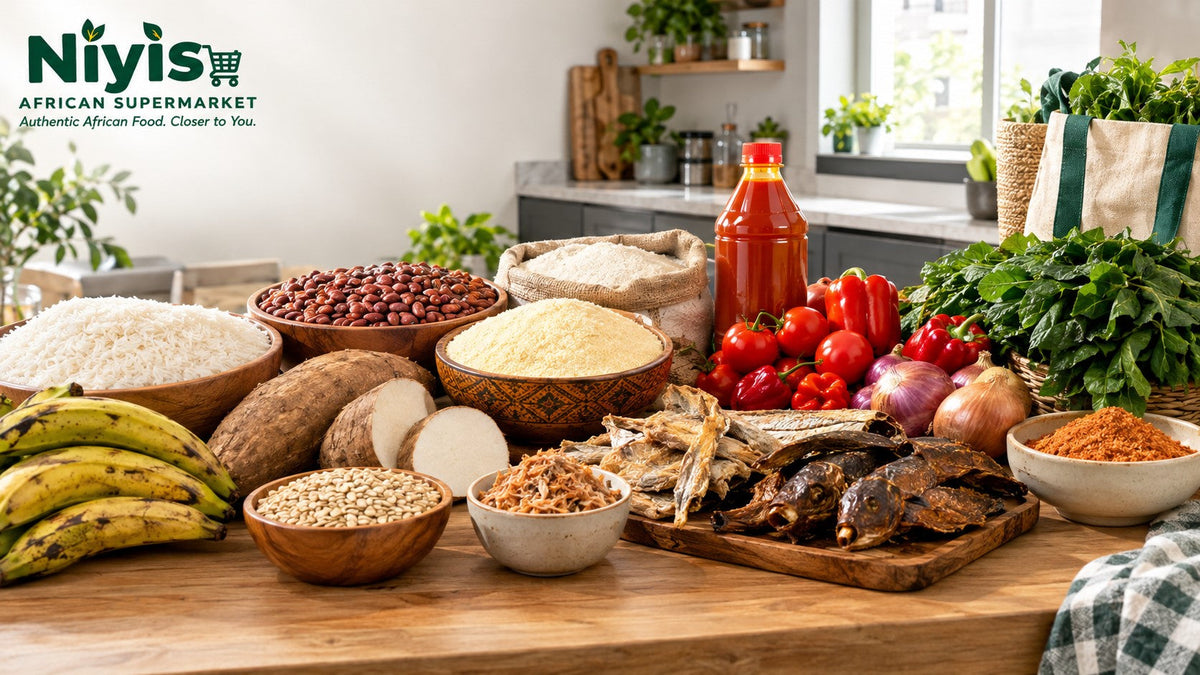
A practical Nigerian food shopping list UK students and families can rely on makes it easier to prepare familiar meals, organise a monthly grocery shop and keep essential ingredients available. From rice, beans and garri to palm oil, egusi, Nigerian spices and frozen vegetables, the right African grocery essentials help you prepare jollof rice, soups, stews and quick student meals at home.
Whether you are a university student cooking for one, a busy parent feeding a family or a Nigerian household settling into life in Britain, this guide explains what to buy, how to organise your pantry and freezer, and where to find Nigerian groceries online through Niyis African Supermarket.
What Should Be on a Nigerian Food Shopping List?
A well-organised Nigerian grocery list should include:
-
Pantry staples: Rice, beans, garri, yam flour and other swallow ingredients.
-
Soup ingredients: Egusi, palm oil, crayfish, stockfish and dried fish.
-
Seasonings: Curry powder, thyme, ginger, garlic and traditional Nigerian spices.
-
Fresh produce: Tomatoes, peppers, onions, plantain and leafy vegetables.
-
Freezer essentials: Fish, chicken, meat and suitable frozen vegetables.
-
Breakfast foods: Ogi, custard, oats and bread.
Buy quantities according to your household size, storage space, meal plan and how frequently you cook.
1. Essential Nigerian Pantry Staples
Your pantry is the foundation of your Nigerian kitchen. Start with ingredients that can be used across several dishes rather than buying something new for every recipe.
Rice, beans and everyday carbohydrates
Niyis Rice and Grains Collection is a useful starting point for everyday staples.
Add these ingredients to your list:
-
Long-grain rice or golden sella basmati rice for jollof and fried rice.
-
Brown beans, black-eyed beans or honey beans for beans porridge and moi moi.
-
Ijebu garri and other garri varieties for eba and other traditional meals.
-
Poundo yam and yam flour for convenient swallow options.
-
Fresh yam for yam porridge, boiled yam and other family favourites.
Students may prefer versatile ingredients that work in several meals. Families can choose pack sizes according to how quickly their household uses each staple.
Soup and stew essentials
For traditional Nigerian soups, keep a selection of ingredients that can be combined in different ways.
-
Ground egusi seeds for Egusi Soup.
-
Palm oil and cooking oils for soups, stews and frying.
-
Ground crayfish and dried seafood ingredients for added savoury flavour.
-
Stockfish and smoked fish for Egusi, Ogbono and other traditional soups.
-
Nigerian spices and seasonings for rice dishes, stews and pepper soup.
You do not need every ingredient at once. Choose the ones required for the meals you plan to cook that month.

2. Fresh and Frozen Foods for Everyday Nigerian Cooking
Fresh and frozen ingredients help you prepare balanced meals and enjoy Nigerian dishes throughout the year.
Fresh vegetables and produce
Add tomatoes, onions, peppers, carrots, plantain and suitable leafy vegetables to your shopping list. Ugu, Ewedu, bitter leaf and other African vegetables can help you prepare traditional soups and vegetable dishes.
Browse the Niyis African Vegetables Collection for available fresh and frozen options.
Fresh produce is best purchased according to your meal plan and storage capacity. Check product descriptions for dispatch schedules, particularly for pre-order vegetables.
Meat, fish and freezer essentials
A useful freezer list includes chicken, fish, beef or goat meat, depending on your household's preferences.
Explore the Niyis Meat and Seafood Collection for options to use in stews, soups, rice dishes and pepper soup.
Frozen vegetables can also be practical when fresh African produce is not readily available. The Niyis grocery collection provides a starting point for browsing pantry and produce options.
Storage tip: Divide meat and fish into meal-sized portions before freezing. Follow the packaging instructions, defrost safely and cook thoroughly.
3. The Complete Nigerian Food Shopping Checklist
Use this checklist before your next weekly or monthly grocery shop.
|
Category |
Shopping checklist |
|
Grains |
Rice, beans, black-eyed beans |
|
Swallow |
Garri, poundo yam, yam flour |
|
Tubers |
Fresh yam, plantain |
|
Soup ingredients |
Egusi, palm oil, crayfish, stockfish, dried fish |
|
Seasonings |
Curry powder, thyme, ginger, garlic, pepper, seasoning cubes |
|
Fresh produce |
Tomatoes, onions, peppers, leafy vegetables |
|
Protein |
Chicken, fish, beef or goat meat |
|
Breakfast |
Ogi, custard, oats, bread |
|
Optional extras |
Groundnuts, snacks, drinks and additional traditional spices |
Tick off what you already have before placing an order. You can browse Niyis African groceries to find products across these categories.
4. Monthly Nigerian Grocery Shopping Tips for Students and Families

A monthly grocery shop works best when you separate long-lasting pantry items from ingredients you need to replenish more frequently.
Step 1: Plan your meals first
Choose the main dishes you intend to prepare over the next week or month. For example, rice can serve as the base for jollof rice, fried rice and rice with stew.
Step 2: Check your cupboards and freezer
Write down what you already own. This helps prevent buying duplicate ingredients and makes it easier to use food before it expires.
Step 3: Buy pantry staples in suitable quantities
Rice, dried beans, garri and flour can be useful pantry staples when stored according to their packaging instructions. Choose pack sizes that suit your household and available storage space.
Step 4: Separate monthly and weekly shopping
Purchase suitable long-lasting staples during your main shop. Replenish fresh vegetables, bread and other short-lived ingredients as needed.
Step 5: Prepare ingredients ahead
Blend peppers for suitable stews, portion proteins and cook selected dishes in batches. Refrigerate or freeze food promptly and follow safe food-storage guidance.
For more meal-planning inspiration,read What to Cook This Week: A 7-Day Nigerian Meal Plan.
5. A Simple Seven-Day Nigerian Meal Plan {#weekly-meal-plan}
This sample plan shows how a manageable selection of groceries can be used across several meals.
|
Day |
Main meal |
Key shopping ingredients |
|
Monday |
Jollof rice and chicken |
Rice, tomatoes, peppers, chicken |
|
Tuesday |
Beans and plantain |
Beans, plantain, onions |
|
Wednesday |
Egusi Soup and eba |
Egusi, palm oil, crayfish, garri |
|
Thursday |
Fried rice and fish |
Rice, mixed vegetables, fish |
|
Friday |
Yam porridge |
Yam, peppers, onions, leafy vegetables |
|
Saturday |
Efo Riro and swallow |
Leafy vegetables, palm oil, protein, swallow |
|
Sunday |
Nigerian pepper soup |
Fish or meat, pepper soup seasoning |
This plan is flexible. Students can cook smaller portions or freeze suitable leftovers, while families can adjust quantities to accommodate everyone.
Explore the African-Caribbean pantry essentials guide for more ideas on stocking a versatile kitchen.
6. Where to Buy Nigerian Groceries in the UK
If you are looking for an online Nigerian supermarket in the UK, Niyis African Supermarket offers a range of African and Caribbean groceries, including pantry staples, grains, vegetables, meat, seafood and cooking ingredients.
Start with these collections:
-
Rice and grains for rice and other everyday staples.
-
African grocery staples for beans, garri, flour and related essentials.
-
African vegetables for suitable fresh and frozen produce.
-
Meat and seafood for proteins used in traditional meals.
-
Dried fish and seasoning ingredients for traditional soups and stews.
Check current product availability, pack sizes, prices and delivery conditions before ordering. Fresh and frozen items may have different dispatch arrangements from dry groceries.
7. Frequently Asked Questions
What should a Nigerian student buy for the first time in the UK?
Start with rice, beans, garri, palm oil, onions, seasonings and a few ingredients for your favourite soups. Add fresh produce and proteins according to your cooking routine and storage facilities.
What Nigerian foods should families keep at home?
Rice, beans, garri, yam flour, palm oil, egusi, crayfish and common seasonings form a useful starting pantry. Add vegetables and proteins according to the meals your family enjoys.
How often should I buy Nigerian groceries?
Many households combine a monthly shop for suitable pantry staples with smaller weekly shops for fresh produce and other perishable items. The right schedule depends on storage space and consumption.
Can I buy Nigerian food online in the UK?
Yes. You canbrowse Niyis African Supermarket for Nigerian groceries, grains, traditional ingredients, vegetables and meat and seafood products.
Which Nigerian ingredients last longest?
Unopened dried staples such as rice, dried beans and garri can have a relatively long shelf life when stored correctly. Always check the packaging and storage instructions.
What is the best way to organise a monthly Nigerian food shop?
Plan meals, check existing supplies, group items by category and distinguish long-lasting groceries from perishable foods. Compare current prices and pack sizes before purchasing.
How can students prepare Nigerian meals with limited kitchen space?
Choose versatile ingredients, prepare simple one-pot dishes and purchase quantities that fit your available storage. Batch-cook when practical and freeze portions only if you have suitable freezer space.
Where can I buy Nigerian vegetables and frozen foods?
Browse the Niyis African Vegetables Collection and check individual product listings for current availability and storage instructions.
8. Related Nigerian Recipes and Shopping Guides
Use these Niyis guides to plan meals around your shopping list:
Final Thoughts
The best Nigerian food shopping list for students and families in the UK is one built around the meals you actually cook. Start with versatile pantry staples, add the vegetables and proteins you enjoy, and organise your shopping around a realistic meal plan.
With a little preparation, you can keep essential Nigerian ingredients within reach, make better use of what you already own and spend less time deciding what to cook. Explore Niyis African Supermarket to build your grocery list and find ingredients for your next week of Nigerian home cooking.
Share:
Stockfish vs Dried Fish vs Smoked Fish: Differences, Uses and Where to Buy in the UK (2026)