
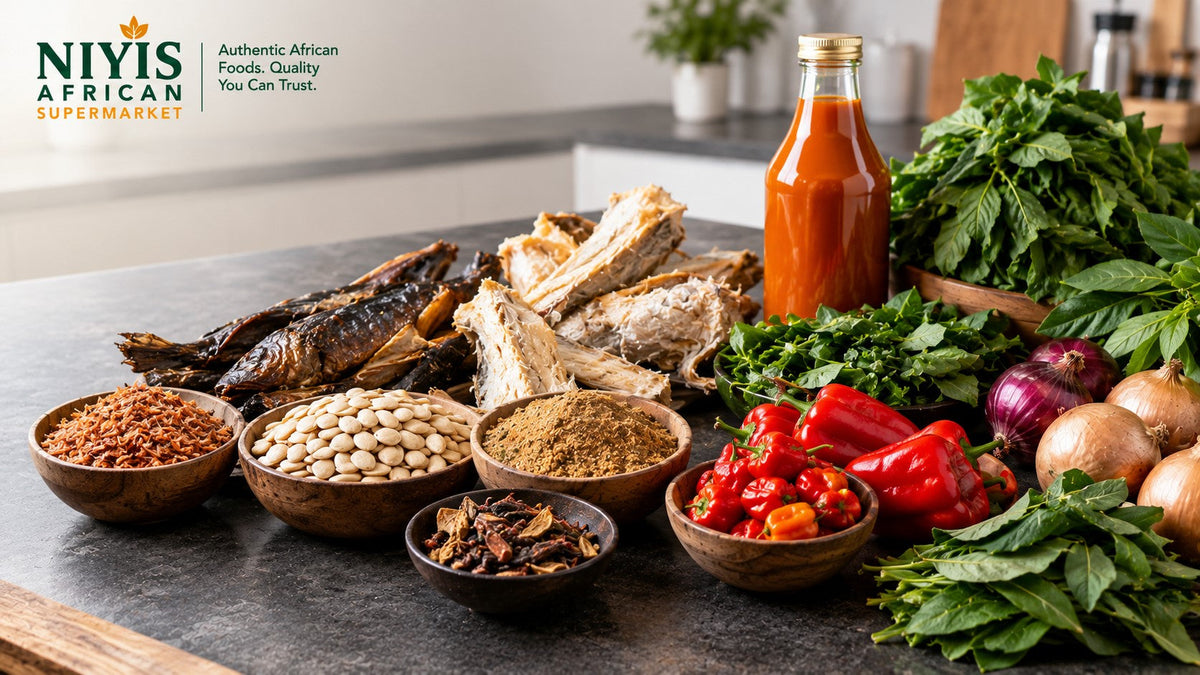
The right Nigerian soup ingredients can transform a simple pot of soup into a rich, flavourful meal. Whether you are making egusi, ogbono, okra, bitter leaf or Oha soup, understanding the purpose of each ingredient helps you choose the right products, balance flavours and achieve the texture you want. For Nigerian households, students and African food lovers living in the UK, finding authentic soup ingredients can sometimes be challenging. This guide explains the essential Nigerian soup staples, how to prepare them, which soups use them and how to store them properly.
What Are the Essential Nigerian Soup Ingredients?
The most common Nigerian soup ingredients include crayfish, egusi melon seeds, ogbono seeds, stockfish, dried fish, palm oil, leafy vegetables, pepper and seasonings. Some soups also require a thickener, such as cocoyam or achi. Each ingredient has a different role: crayfish adds seafood flavour, egusi creates a rich texture, ogbono produces a characteristic draw, stockfish adds savoury depth, and vegetables contribute colour and distinctive flavours.
1. Essential Nigerian Soup Ingredients Explained
Understanding what each ingredient contributes makes it easier to follow recipes and adjust them to your taste.
1. Crayfish: A Rich Seafood Flavour
Ground crayfish is a staple in many Nigerian soups. It adds a distinctive savoury seafood taste to egusi, ogbono, okra, vegetable and bitter leaf soups. Because it is concentrated, start with a small amount and add more if necessary.
For convenience, use Niyis Ground Crayfish. It can be added directly to the pot, although the quantity should depend on the recipe and the strength of the flavour you prefer.
Preparation tip: If using whole dried crayfish, inspect it for debris and grind it before adding it to the soup.
2. Egusi: The Ingredient Behind Rich Melon Seed Soup
Egusi consists of melon seeds that are ground and cooked to create a thick, hearty soup. It is especially popular in Nigerian egusi soup, often combined with palm oil, pepper, leafy vegetables, meat, fish and crayfish.
You can use whole seeds and grind them yourself or choose ground egusi seeds for convenience. The collection also includes other Nigerian vegetables and soup ingredients.
Preparation tip: Depending on the recipe, mix ground egusi with a little water to form a paste before adding it to the soup. Some cooking methods fry or cook the paste differently, so follow the instructions for your chosen regional style.
3. Ogbono: For Traditional Draw Soup
Ogbono is made from the seeds of African wild mango, which are ground and used as a thickener. Its defining characteristic is the slippery, stretchy texture often called draw. Ogbono soup commonly includes meat or fish, crayfish, pepper, palm oil and vegetables.
For a convenient option, try Niyis Ground Ogbono, which is ready to use without grinding whole seeds.
Preparation tip: Stir the ground ogbono into the pot carefully to help it distribute evenly and develop its characteristic texture.
4. Stockfish: Deep, Savoury Flavour
Stockfish is traditionally dried fish, often made from cod, that is used in Nigerian soups and stews. It adds a concentrated savoury taste and a firm texture. Depending on the cut and dryness, it may need soaking and prolonged cooking to soften.
Choose Niyis Stockfish Fillet for soups such as egusi, ogbono and Oha. You can also explore the widerdried fish and seasoning collection for other dried seafood options.
Preparation tip: Rinse stockfish, soak it if needed, then simmer until tender. Cooking it with meat can help its flavour season the broth.
5. Palm Oil: Colour and Traditional Flavour
Palm oil contributes the characteristic red-orange colour and rich flavour found in many Nigerian soups. It is commonly used in egusi, ogbono, bitter leaf and other traditional recipes, although quantities and methods vary.
Niyis Palm Oil is one option for your soup cupboard.
Preparation tip: Measure the oil according to the recipe. Adding more does not automatically improve the flavour, and the right amount depends on the soup style and serving size.
6. Leafy Vegetables: Ugu, Bitter Leaf, Oha and More
Vegetables contribute flavour, texture and colour. Ugu, also known as fluted pumpkin leaves, is popular in egusi and vegetable soups. Bitter leaf is essential in bitter leaf soup and is also used in other regional recipes. Oha leaves give Oha soup its distinctive character.
Explore the Niyis African and Caribbean vegetable collection for leafy vegetables and other produce. For a convenient cupboard option, Niyis Dried Bitter Leaves can be used in traditional soups after suitable preparation.
Preparation tip: Wash fresh leaves thoroughly. Dried bitter leaves may need rinsing or soaking, depending on the product and recipe. If they are particularly bitter, follow the recipe's instructions for washing or blanching.
7. Pepper, Seasonings and Other Thickeners
Fresh pepper, dried pepper, salt, seasoning cubes and traditional spices help create the desired balance of heat and savoury flavour. Ingredients such as cocoyam or achi are used in certain soups to thicken the broth, while iru or ogiri can add a distinctive fermented flavour.
For background on other useful pantry staples, read Niyis' guide to essential African food ingredients in the UK.
2. Which Ingredients Go into Different Nigerian Soups?
|
Soup |
Main ingredients |
What gives it its character? |
|
Egusi soup |
Egusi, palm oil, crayfish, meat or fish, leafy vegetables |
Rich, thick melon-seed base |
|
Ogbono soup |
Ogbono, crayfish, meat or fish, pepper, vegetables |
Slippery, stretchy texture |
|
Okra soup |
Okra, crayfish, fish or meat, pepper |
Naturally thick, sometimes draw-like texture |
|
Bitter leaf soup |
Bitter leaf, meat or fish, crayfish, palm oil, thickener |
Distinctive bitter, earthy flavour |
|
Oha soup |
Oha leaves, cocoyam or another suitable thickener, meat or fish, crayfish |
Tender leaves and a smooth, hearty base |
|
Nsala soup |
Fish or meat, pepper, spices and a suitable thickener where required |
Light-coloured broth with a bold savoury taste |
Recipes differ across Nigerian regions and households, so these are typical combinations rather than fixed rules.
3. How to Prepare Nigerian Soup Ingredients

Good preparation improves flavour, texture and cooking time. Use these steps as a general guide:
-
Sort and inspect dried ingredients. Remove visible debris or damaged pieces.
-
Rinse ingredients when appropriate. Wash stockfish, dried fish and vegetables according to the product instructions.
-
Soak or simmer tough ingredients. Stockfish and some dried fish need extra time to soften. Do not assume every product needs the same soaking time.
-
Prepare seeds and thickeners. Grind whole egusi or ogbono if necessary, or use a ready-ground option.
-
Cook the protein and build the broth. Simmer meat or fish with suitable seasonings, then add the soup's main ingredients in the order required by the recipe.
-
Add vegetables at the right time. Many leafy vegetables are added near the end to preserve their texture.
-
Taste before serving. Check salt, pepper and seasoning, especially if dried seafood or stock cubes have already contributed salt.
For a full walkthrough, follow Niyis' guides to cooking egusi soup in the UK and preparing traditional Igbo soups.
4. How to Store Nigerian Soup Ingredients

Proper storage helps preserve quality and reduce food waste.
-
Ground crayfish, egusi and ogbono: Keep in clean, airtight containers in a cool, dry cupboard. Follow the package instructions and refrigerate or freeze after opening if advised.
-
Stockfish and dried fish: Store sealed in a dry place, away from moisture. Refrigerate or freeze after opening if the label recommends it.
-
Palm oil: Keep tightly closed and away from direct sunlight and heat.
-
Fresh vegetables: Refrigerate and use promptly. Wash and prepare them as appropriate before cooking.
-
Frozen vegetables: Keep frozen until needed and follow the package's cooking instructions.
Discard ingredients that show mould, unusual odours, signs of insect infestation or other spoilage. Always follow the use-by date and storage directions on the packaging.
5. Where to Buy Nigerian Soup Ingredients in the UK
Finding every ingredient in one place can make preparing Nigerian soups more convenient. Niyis African Supermarket offers a range of African and Caribbean groceries, including ground crayfish, ogbono, stockfish, palm oil and vegetables.
You can browse the vegetable collection for soup leaves and seed-based ingredients, or explore the palm oil collection when replenishing your cooking oils. For dried seafood, the dedicated fish collection makes it easier to compare available options.
Before ordering fresh or frozen items, check the individual product page for current availability, dispatch details and storage instructions.
6. Frequently Asked Questions
What are the most important Nigerian soup ingredients?
Crayfish, egusi, ogbono, stockfish, palm oil, pepper, seasonings and vegetables are common essentials. The exact list depends on the soup you are preparing.
Can I use ground crayfish instead of whole crayfish?
Yes. Ground crayfish is convenient and can be added directly to many soups. Start with a small quantity and adjust to taste.
What is the difference between egusi and ogbono?
Egusi is ground melon seed used to create a rich, hearty soup. Ogbono is ground African wild mango seed, known for producing a slippery, stretchy texture.
Does stockfish need to be soaked before cooking?
Some stockfish cuts need soaking or extended simmering to soften, while other products may require different preparation. Follow the package instructions and cook until tender.
Can I make Nigerian soup without palm oil?
Some recipes can be adapted to use another oil or a different cooking method, but the flavour, colour and texture may change. Choose a recipe designed for the alternative you want to use.
How do I stop ogbono soup from becoming too thick?
Add liquid gradually while cooking and stir thoroughly. The amount needed depends on how much ogbono you use and the consistency you prefer.
How long can I store dried Nigerian soup ingredients?
Shelf life varies by ingredient, packaging and storage conditions. Keep dried ingredients sealed and dry, check the label, and discard anything showing signs of spoilage.
Where can I buy Nigerian soup ingredients online in the UK?
You can browse Nigerian soup staples through Niyis African Supermarket, including ground crayfish, ogbono, stockfish, palm oil and selected vegetables. Check product pages for current stock and delivery information.
7. Related Nigerian Soup Recipes
Ready to put your ingredients to use? Explore these Niyis recipe guides:
Conclusion
Knowing your Nigerian soup ingredients makes shopping and cooking easier. Crayfish adds savoury seafood flavour, egusi creates a rich base, ogbono provides its distinctive draw, stockfish deepens the broth, and vegetables and seasonings bring each recipe together. Start with the ingredients for one soup, learn how each behaves in the pot, then build a versatile pantry over time.
Browse Niyis African Supermarket to find Nigerian groceries and soup staples for preparing familiar favourites in the UK.
Share:
The Essential Nigerian Food Shopping List for Students and Families Living in the UK (2026)