
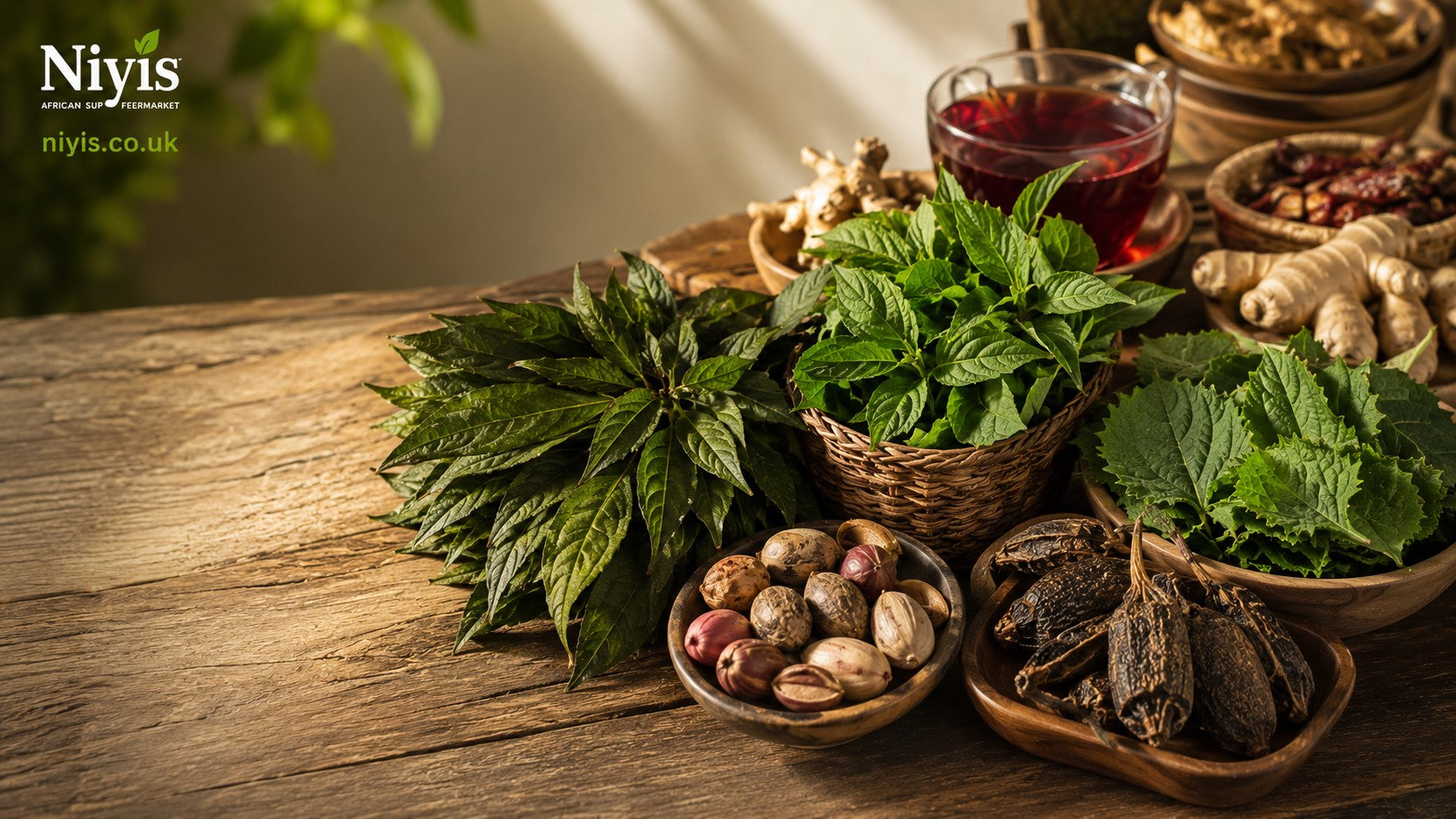
Traditional African herbs for natural detox and cleansing have become increasingly popular in the UK as people explore African ingredients for everyday wellness, digestion and balanced eating. Popular choices include bitter leaf, scent leaf, uziza leaf, bitter kola and Prekese, all of which have long histories in West African food and traditional practices. These African herbs contain various plant compounds, but "detox" should not be understood as a medical cleanse. Your liver and kidneys naturally remove waste from the body. Instead, these ingredients can be enjoyed as part of a varied diet and traditional wellness routine.
What are traditional African detox herbs?
Traditional African herbs are leaves, fruits, seeds and aromatic plants used historically in African cooking, drinks and traditional wellness practices. Examples include bitter leaf, scent leaf, uziza, bitter kola and Prekese.
Which African herbs are commonly used for cleansing?
Bitter leaf, scent leaf, uziza leaf, bitter kola and Prekese are among the ingredients traditionally associated with digestive, warming, antioxidant or general wellness uses.
Do African herbs detox the body?
There is not enough clinical evidence to claim that these herbs "flush toxins" from the body. A better description is that they can provide plant compounds and flavour while forming part of traditional dietary practices.
What Does Natural Detox Really Mean?
The word "detox" is used heavily in wellness marketing, but it is important to separate traditional terminology from established science.
Your body already has sophisticated systems for processing and eliminating waste, particularly the liver, kidneys, lungs and digestive system. Drinking an herbal infusion or eating a particular leaf does not replace these organs.
What these African ingredients can do is add flavour, plant compounds and variety to your diet. Several have been investigated for antioxidant, antimicrobial or anti-inflammatory activity in laboratory and animal studies. Human evidence varies considerably.
That distinction is important for trustworthy SEO content too. Instead of claiming that bitter leaf detoxes the liver or bitter kola removes toxins, it is more accurate to discuss their traditional uses and the plant compounds researchers have investigated.
Nutritional and Phytochemical Profile
These five ingredients are very different botanically, so there is no single nutritional profile.
|
African ingredient |
Botanical name |
Key characteristics |
Common traditional use |
|
Bitter leaf |
Vernonia amygdalina |
Bitter compounds, polyphenols and other phytochemicals |
Soups, vegetables, herbal preparations |
|
Scent leaf |
Ocimum gratissimum |
Aromatic essential oils and polyphenols |
Soups, pepper soup, herbal infusions |
|
Uziza leaf |
Piper guineense |
Peppery aromatic plant compounds |
Pepper soup, native soups, stews |
|
Bitter kola |
Garcinia kola |
Bitter compounds and flavonoid-related phytochemicals |
Chewed fresh, traditional preparations |
|
Prekese |
Tetrapleura tetraptera |
Aromatic compounds and phytochemicals |
Tea, soups, drinks and spice blends |
Research on bitter leaf has identified numerous chemical constituents and investigated antioxidant, anti-inflammatory and other biological activities, although more clinical research is needed.
Similarly, recent research reviewing scent leaf, also known as African basil, describes compounds including polyphenols and essential oils such as thymol and eugenol.
5 Traditional African Herbs for Natural Detox and Cleansing

1. Bitter Leaf: The Classic Nigerian Wellness Vegetable
Bitter leaf, known as onugbu in Igbo, is arguably one of the most recognisable African leafy vegetables associated with traditional wellness.
It is widely used in Nigerian cooking, particularly bitter leaf soup, where the leaves are washed to reduce their intense bitterness before being cooked with ingredients such as palm oil, meat, fish and stockfish.
Research into Vernonia amygdalina has identified flavonoids, steroids, terpenoids and other bioactive constituents. Studies have investigated antioxidant, anti-inflammatory and metabolic effects, but laboratory and animal findings should not be presented as proven treatments for human disease.
For UK households, Niyis Dried Bitter Leaves offer a convenient option for soups and traditional dishes. Niyis currently lists dried bitter leaves as ready to use and suitable for bitter leaf soup and stews.
You can also explore fresh bitter leaves when available.
Best use: Bitter leaf soup, vegetable dishes and traditional bitter leaf preparations.
2. Scent Leaf: Aromatic African Basil
Scent leaf, commonly called efirin in Nigeria and also known as African basil, is prized for its powerful aroma.
Its botanical name is Ocimum gratissimum. Research has identified numerous phytochemicals and essential oils in the plant, including eugenol and thymol. Studies have investigated antioxidant, antimicrobial and anti-inflammatory properties, although researchers continue to call for more human clinical trials to establish effective doses and safety.
Scent leaf is particularly valuable because it can transform a simple meal without requiring large quantities.
In Nigerian cooking, it is commonly used in pepper soup, stews, native soups and herbal infusions. Niyis' Nigerian pepper soup guide describes scent leaves as a finishing ingredient that contributes a basil-like aroma with a subtle minty character. Niyis currently lists Fresh Scent Leaves, Efirin among its African ingredients. Best use: Pepper soup, fish dishes, stews and aromatic herbal preparations.
3. Uziza Leaf: Peppery and Naturally Aromatic
If you enjoy bold Nigerian flavours, uziza leaf deserves a place in your kitchen.
Uziza comes from Piper guineense and has a distinctly peppery, slightly bitter and aromatic flavour. It is commonly used in Nigerian pepper soup, native soups, fish dishes and meat preparations.
Niyis describes fresh uziza leaves as particularly suitable for nsala, ogbono and pepper soup, while its dried uziza product is designed to add depth to soups, stews and sauces.
Niyis also has a dedicated guide to Uziza Leaf Benefits and Traditional Uses, covering its role in Nigerian cooking and traditional wellness practices. (Niyis African Supermarket)
The practical advantage of uziza is that you do not need much. A small quantity can give an entire pot of soup a distinctive peppery aroma.
Best use: Pepper soup, nsala soup, ogbono soup and fish dishes.
4. Bitter Kola: A Traditional West African Seed

Bitter kola, or Garcinia kola, is different from the leafy herbs on this list. It is a fruit seed traditionally chewed fresh or incorporated into traditional preparations.
It has a famously bitter taste that gradually changes as it is chewed. Bitter kola has a long history in West and Central African cultural and traditional practices. A recent study documenting bitter kola use in Nigeria found that respondents commonly reported using fresh seeds for respiratory symptoms, stomach discomfort and general wellbeing. The researchers also noted that further research is needed to establish standardised doses and safety.
Scientific reviews have identified flavonoids and other compounds and investigated antioxidant, anti-inflammatory and other biological effects. However, these findings do not prove that bitter kola is a medical detox treatment.
You can find Niyis Bitter Kola 200g, currently listed by Niyis among its products. Best use: Traditional chewing, infusions and cultural wellness practices.
5. Prekese: The Aromatic West African Aidan Fruit
Prekese, scientifically known as Tetrapleura tetraptera, is one of West Africa's most recognisable aromatic fruits.
It is particularly popular in Ghana and Nigeria, where it is used in drinks, soups, stews and traditional preparations. Its fragrance has been described as warm, sweet and spicy, making it particularly suitable for infusions.
Niyis currently sells Fresh Prekese, describing it as suitable for soups, stews and sauces.
Niyis also has a guide explaining how to use Prekese for more than tea, including soups and marinades.
Research into Tetrapleura tetraptera has identified various phytochemicals and investigated antioxidants and other biological activities. However, further human research is required before strong medicinal claims can be made.
Best use: Prekese tea, soups, stews, marinades and traditional drinks.
How Africans Traditionally Use These Herbs

The biggest mistake is to treat African herbs as modern "detox products" disconnected from their cultural context.
In West African households, these ingredients are often simply part of everyday food.
Bitter leaf becomes a major soup ingredient.
Scent leaf adds aroma to pepper soup and native dishes.
Uziza provides peppery depth to soups.
Bitter kola may be offered to guests, chewed socially or used in traditional wellness practices.
Prekese can flavour drinks, soups and stews.
This food-first approach is particularly relevant for Africans living in the UK. Niyis notes that African households often struggle to find authentic vegetables and herbs, which is why specialist African grocery suppliers can make traditional cooking easier. (Niyis African Supermarket)
How to Use African Herbs for Everyday Wellness
You do not need complicated detox programmes.
Try these simple approaches:
1. Add bitter leaf to soup
Use fresh or dried bitter leaf in traditional Nigerian soup recipes.
2. Add scent leaf to pepper soup
Add the leaves towards the end of cooking to preserve their distinctive aroma.
3. Use uziza in native soups
A small amount can dramatically increase peppery flavour.
4. Make a Prekese infusion
Simmer a piece of Prekese in water, strain and enjoy warm.
5. Chew bitter kola traditionally
Start with a small piece because the flavour can be extremely bitter.
For more authentic ingredients, browse the Niyis African Vegetables Collection.
Possible Side Effects and Safety

Natural does not automatically mean risk-free.
Potential concerns include:
-
Digestive discomfort
-
Allergic reactions
-
Interactions with medicines
-
Excessive consumption of concentrated preparations
-
Poor-quality or contaminated products
-
Unknown effects from long-term high-dose use
Research into bitter kola specifically highlights the need for better evidence around standardised doses and safety.
Similarly, research on scent leaf identifies many promising biological activities but notes that further human clinical research is needed to establish safe and effective doses.
Do not use these ingredients as substitutes for prescribed medicines or medical treatment.
Who Should Be Cautious With African Herbal Ingredients?
Speak to a doctor, pharmacist or registered dietitian before using concentrated herbal preparations if you:
-
Are pregnant or breastfeeding
-
Take prescription medicines
-
Have liver or kidney disease
-
Have diabetes or blood pressure concerns
-
Have known plant allergies
-
Have a chronic medical condition
-
Are considering large doses or concentrated extracts
Culinary quantities used in ordinary meals are different from concentrated herbal extracts, so do not assume that research involving extracts directly applies to a cup of tea or a serving of soup.
Where to Buy Traditional African Herbs in the UK
For people searching for African herbs in the UK, Niyis provides access to a range of authentic ingredients.
You can shop Dried Bitter Leaves, Fresh Uziza Leaves, Fresh Scent Leaves, Bitter Kola and Fresh Prekese.
Niyis also offers an African vegetables collection featuring ingredients such as bitter leaf, uziza and other traditional African vegetables.
The store currently states that fresh leaves are dispatched on Wednesdays and fresh vegetables and fruits on Mondays, while next-working-day delivery is available for qualifying orders. Delivery conditions can change, so check the individual product page before ordering.
FAQs About Traditional African Detox Herbs
1. What is the best African herb for detox?
There is no scientifically established "best" African detox herb. Bitter leaf, scent leaf, uziza, bitter kola and Prekese all have different traditional uses and plant compounds.
2. Does bitter leaf cleanse the liver?
Bitter leaf has been investigated for antioxidant and hepatoprotective effects, but there is insufficient human evidence to say that bitter leaf cleanses or detoxifies the liver.
3. What is scent leaf used for?
Scent leaf is traditionally used in Nigerian soups, pepper soup, sauces and herbal preparations. It is also valued for its aromatic essential oils and plant compounds.
4. What does uziza leaf do?
Uziza mainly contributes a distinctive peppery aroma and flavour to Nigerian soups. It has also been used traditionally in herbal preparations.
5. Can you drink bitter kola tea?
Bitter kola can be sliced or crushed and infused in hot water, although the resulting drink can be strongly bitter. Niyis also describes bitter kola tea as one traditional preparation.
6. Is Prekese good for cleansing?
Prekese has a long history of traditional use and contains various plant compounds, but there is insufficient evidence to claim that it "cleanses toxins" from the body.
7. Can I use African herbs every day?
Culinary use can form part of a varied diet, but frequent high-dose herbal preparations have different safety considerations. If you have a medical condition or take medication, seek professional advice.
8. Are these African herbs safe during pregnancy?
Do not assume that traditional use means a concentrated herbal preparation is safe during pregnancy. Speak with a midwife, doctor or pharmacist before using herbal products medicinally.
9. Where can I buy African herbs in the UK?
Niyis sells a range of authentic African herbs, vegetables, spices and traditional ingredients with UK delivery.
10. What is the healthiest way to use African herbs?
Using them as part of balanced meals, soups and ordinary food preparations is generally more appropriate than relying on concentrated "detox" drinks or supplements.
Related African Recipes and Wellness Guides
Explore more ways to use these ingredients:
-
How Africans Use Bitter Leaf Traditionally, covering traditional Nigerian uses and wellness practices.
-
Bitterleaf in the UK: Fresh vs Dried, useful for choosing the right form for cooking.
-
Authentic Nigerian Pepper Soup Recipe, featuring uziza and scent leaf.
-
How to Use Prekese for More Than Just Tea, including soups and marinades.
-
15 Benefits of Prekese, covering traditional uses and preparation.
-
Nigerian Vegetables and Their Benefits, covering bitter leaf, scent leaf, ugu and other vegetables.
Final Takeaway
The strongest reason to explore traditional African herbs for natural detox and cleansing is not the promise of a miracle cleanse. It is the combination of culinary heritage, plant diversity, distinctive flavours and traditional knowledge.
Bitter leaf brings characteristic bitterness to Nigerian soups. Scent leaf adds an unmistakable aromatic finish. Uziza delivers peppery depth. Bitter kola represents an important West African traditional seed, while Prekese adds a warm, fragrant character to teas, soups and drinks.
For UK shoppers, the easiest approach is to incorporate these ingredients into normal meals and beverages rather than relying on extreme detox programmes. Start with authentic bitter leaf, scent leaf, uziza, bitter kola or Prekese, and let traditional African food do what it has always done best: make healthy eating flavourful, culturally meaningful and enjoyable.
Share:
Prekese Tea vs. Soursop Tea: Benefits, Taste & How to Choose in the UK (2026)
The Ultimate Guide to West African Spices: Health Benefits & UK Pantry Essentials (2026)