
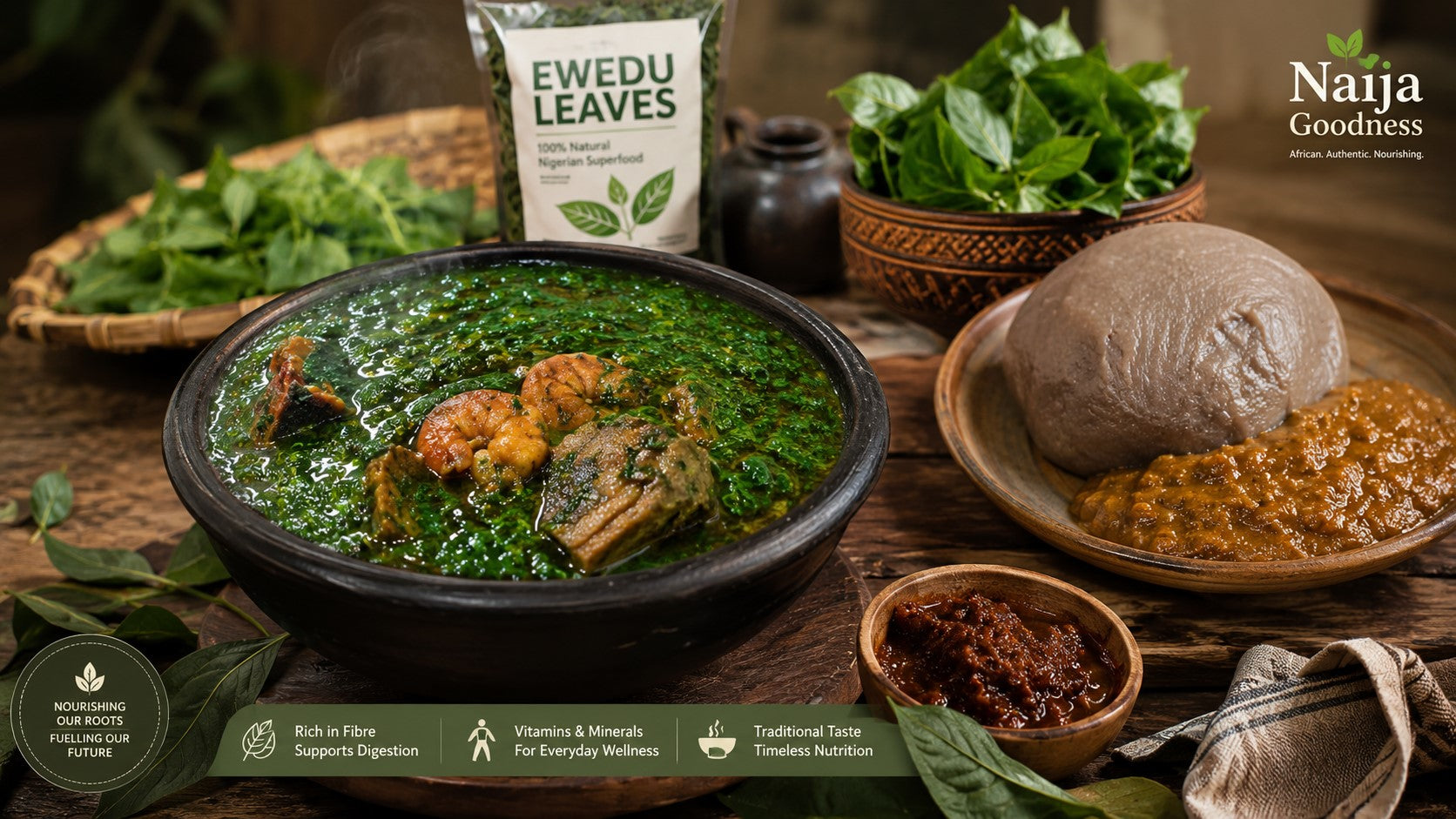
Ewedu leaves, also known as jute leaves or molokhia, are nutrient-rich leafy vegetables widely consumed across Nigeria and increasingly popular in the UK for their fibre, vitamins, antioxidants, and digestive health benefits. In Yoruba cuisine, ewedu soup is a staple comfort food commonly served with amala, gbegiri, and stew. Many people now use ewedu leaves for gut health, immunity support, heart wellness, and traditional African nutrition.
Quick Answer
What Are Ewedu Leaves?
Ewedu leaves are edible green leaves from the jute plant commonly used in Nigerian and Middle Eastern cooking. They are rich in fibre, vitamins A and C, calcium, iron, and antioxidants.
What Are Ewedu Leaves Good For?
Ewedu leaves may support digestion, immune health, healthy skin, hydration, and heart wellness due to their nutrient density and antioxidant content.
Table of Contents

Nutritional Profile of Ewedu Leaves
Ewedu leaves are low in calories but packed with essential nutrients.
|
Nutrient |
Potential Benefit |
|
Fibre |
Supports digestion and gut health |
|
Vitamin A |
Supports vision and skin health |
|
Vitamin C |
Supports immunity |
|
Iron |
Supports healthy blood circulation |
|
Calcium |
Supports bone health |
|
Antioxidants |
Helps combat oxidative stress |
|
Magnesium |
Supports muscle and nerve function |
Research suggests leafy green vegetables rich in antioxidants and fibre may contribute to better digestive and cardiovascular health. (Duaba Afro)

Top Health Benefits of Ewedu Leaves
1. May Support Digestive Health
One of the most talked about ewedu leaves benefits is digestive support. Ewedu contains natural soluble fibre and a mucilaginous texture similar to okra, which may help support smoother digestion.
In Nigerian homes, ewedu soup is often eaten with amala because it feels light yet satisfying. Many people also find it soothing after heavy meals.
You can prepare authentic ewedu soup using Frozen Ewedu 400g from Niyis UK.
2. Rich in Antioxidants
Leafy green vegetables naturally contain antioxidants that help protect cells against oxidative stress. Ewedu leaves contain compounds linked to immune and skin health.
Vitamin C and carotenoids found in green vegetables may also support healthy ageing and collagen production.
Pair ewedu dishes with Nigerian staples like:
3. May Support Heart Health
Ewedu leaves are naturally low in fat and contain fibre, which may contribute to healthy cholesterol balance when combined with a balanced diet.
The potassium and magnesium content in leafy greens are also associated with cardiovascular wellness.
Many UK Nigerians now include ewedu in weekly meal prep as a lighter alternative to heavier soups.
4. Naturally Hydrating
Traditional ewedu soup contains a high water content, making it useful for hydration, especially during warm weather or fasting periods.
In Yoruba households, ewedu is commonly served as a comforting soup because of its smooth consistency and easy digestibility.
5. May Support Healthy Weight Management
Ewedu leaves are low calorie but filling due to their fibre content. Meals containing fibre-rich vegetables may help improve satiety.
For healthier Nigerian meals in the UK, combine ewedu with:
-
lean proteins
-
grilled fish
-
whole grain swallows in moderation
6. Supports Traditional African Wellness Diets
Ewedu has been used in West African cooking for generations. Unlike trendy imported superfoods, ewedu is deeply rooted in Nigerian culinary heritage.
This cultural relevance increases its value in modern wellness conversations, especially among Africans in the UK looking for authentic nutrition.
Traditional Nigerian Uses of Ewedu
Ewedu soup is especially popular among the Yoruba people of southwestern Nigeria.
Traditionally:
-
Fresh ewedu leaves are washed thoroughly
-
The leaves are boiled briefly
-
They are blended using an ijabe whisk or blender
-
The soup is seasoned with locust beans, crayfish, and seasoning
It is commonly paired with:
-
amala
-
gbegiri
-
eba
-
pounded yam
Many Nigerians abroad continue preparing ewedu because it represents comfort food and cultural identity. Reddit food communities frequently discuss amala and ewedu combinations as nostalgic Nigerian meals. (Reddit)
How to Use Ewedu Leaves
Popular Ways to Use Ewedu
1. Traditional Ewedu Soup
The most common preparation.
2. Smoothies
Some health-conscious users blend small amounts of leafy greens into smoothies.
3. Vegetable Broths
Molokhia-style broths are common across Middle Eastern and African cuisines.
4. Nigerian Wellness Meals
Serve with fish, turkey, or beans for a balanced meal.
Recommended ingredients:
Possible Side Effects of Ewedu Leaves

Ewedu is generally considered safe when eaten as food, but moderation is important.
Possible concerns include:
-
digestive discomfort from excess fibre
-
allergies to leafy vegetables
-
contamination if improperly washed
Always cook vegetables properly and buy from trusted UK African grocery stores.
Who Should Avoid Ewedu Leaves?
Some individuals should speak with a healthcare professional before major dietary changes, especially:
-
people with severe digestive conditions
-
individuals with vegetable allergies
-
those on medically restricted diets
Pregnant women and individuals with chronic conditions should seek personalised medical advice where necessary.

Where to Buy Ewedu Leaves in the UK
You can buy authentic Nigerian ewedu leaves and African vegetables from Niyis African Supermarket UK with UK-wide delivery. (Niyis African Supermarket)
Recommended products:
Niyis offers frozen and fresh African vegetables with delivery across the UK. (Niyis African Supermarket)
FAQs About Ewedu Leaves
Is ewedu healthy?
Yes. Ewedu contains fibre, vitamins, minerals, and antioxidants that may support overall wellness.
Are ewedu leaves good for digestion?
Many people consume ewedu for digestive support because of its fibre and mucilaginous texture.
Is ewedu the same as molokhia?
Yes. Ewedu is commonly called jute leaves or molokhia in other regions.
Can you eat ewedu leaves raw?
They are typically cooked before consumption.
Is ewedu good for weight loss?
It may support healthy weight management because it is low calorie and fibre-rich.
How do Nigerians eat ewedu?
Most commonly as ewedu soup with amala, gbegiri, and stew.
Where can I buy ewedu in the UK?
You can buy fresh and frozen ewedu from Niyis UK.
Share:
How to Cook Egusi Soup in the UK (Ingredients + Where to Buy Them)
15 Proven Waterleaf Benefits + How Nigerians Use It in the UK (2026)