
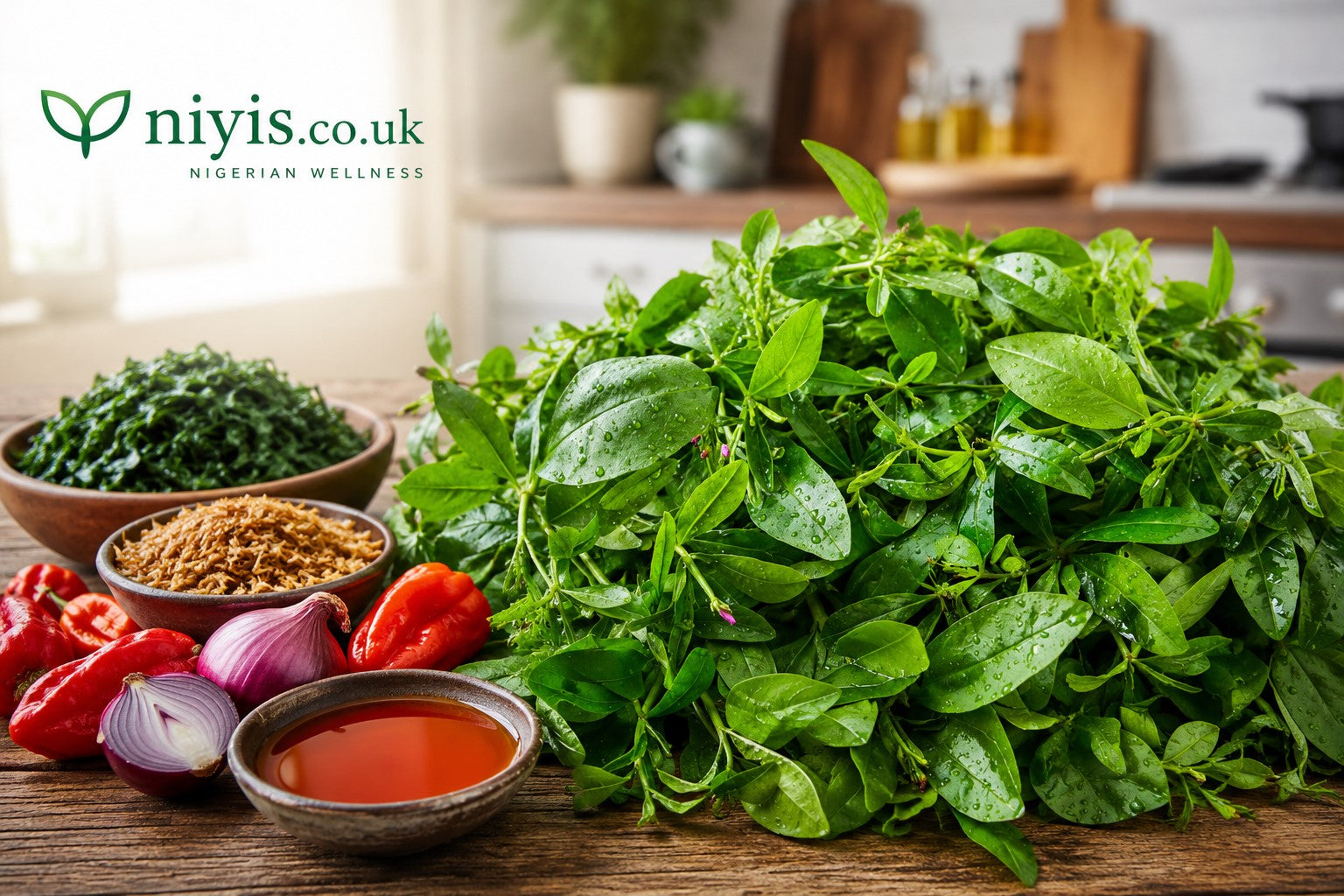
Waterleaf is one of the most nutritious leafy vegetables commonly used in Nigerian cooking and is becoming increasingly popular across the UK. Known for its soft texture, high water content, vitamins, minerals, and antioxidant properties, waterleaf is widely used in soups such as Edikang Ikong, Afang soup, and vegetable stews.
For Nigerians living in the UK, waterleaf offers a familiar taste of home while providing important nutrients that may support hydration, digestion, bone health, and overall wellness.

Quick Answer: What Is Waterleaf?
Waterleaf is a leafy green vegetable commonly grown across West Africa. It contains vitamins A, C, and E, calcium, magnesium, potassium, iron, fibre, and antioxidants.
What Is Waterleaf Good For?
Waterleaf may help support:
-
Hydration
-
Digestive health
-
Bone strength
-
Healthy blood pressure
-
Immune function
-
Eye health
-
Skin health
-
Healthy weight management

Nutritional Profile of Waterleaf
Waterleaf is naturally low in calories while providing important vitamins and minerals.
|
Nutrient |
Potential Benefit |
|
Vitamin A |
Supports eye health |
|
Vitamin C |
Supports immunity |
|
Vitamin E |
Antioxidant protection |
|
Calcium |
Supports bones and teeth |
|
Magnesium |
Supports muscles and nerves |
|
Potassium |
Supports heart health |
|
Iron |
Supports healthy blood cells |
|
Fibre |
Supports digestion |
|
Water Content |
Supports hydration |
Waterleaf is also valued for its antioxidant compounds, which may help protect cells from oxidative stress.
15 Proven Waterleaf Benefits
1. May Support Hydration
Waterleaf contains a very high percentage of water, making it one of the most hydrating vegetables used in Nigerian cuisine.
Including waterleaf in soups and stews may contribute to daily fluid intake, especially during warmer months in the UK.
2. Rich in Antioxidants
Studies suggest that leafy vegetables rich in vitamins A, C, and E help combat oxidative stress.
Antioxidants may support healthy ageing and overall wellness.
3. May Support Digestive Health
Waterleaf contains dietary fibre that may help promote regular bowel movements and support gut health.
Many Nigerian households traditionally include vegetable-rich soups as part of a balanced diet for digestive comfort.
4. May Help Maintain Healthy Blood Pressure
Waterleaf contains potassium and magnesium, two minerals associated with healthy blood pressure regulation when consumed as part of a balanced diet.
5. Supports Bone Health
The calcium and phosphorus content of waterleaf may contribute to strong bones and teeth.
This is particularly important for older adults and women concerned about bone density.
6. May Support Eye Health
Vitamin A is essential for maintaining healthy vision.
Regular consumption of green leafy vegetables such as waterleaf may help support long-term eye health.
7. May Strengthen Immune Function
Waterleaf contains vitamin C, a nutrient widely known for supporting the immune system.
This makes it a valuable addition during colder UK seasons.
8. May Support Healthy Skin
The antioxidants found in waterleaf may help support skin health by reducing oxidative damage.
Many traditional diets rich in leafy vegetables are associated with healthier skin appearance.
9. Naturally Low in Calories
Waterleaf is nutrient-dense while remaining low in calories.
This makes it useful for people trying to manage weight without sacrificing nutrition.
10. May Support Healthy Blood Formation
Waterleaf contains iron, which contributes to normal red blood cell production.
It is often combined with other nutrient-rich vegetables in traditional Nigerian soups.
11. May Support Heart Health
The combination of fibre, potassium, and antioxidants may contribute to cardiovascular wellness when consumed regularly.
12. May Help Reduce Nutrient Deficiencies
Many African vegetables contain micronutrients that can help diversify dietary intake.
Adding waterleaf to meals increases nutritional variety.
13. Supports Traditional Plant-Based Eating
Waterleaf is suitable for vegetarian and plant-focused diets while still providing valuable nutrients.
14. Easy to Add to Everyday Meals
Unlike some vegetables, waterleaf cooks quickly and blends easily into soups, stews, smoothies, and sauces.
15. A Staple of Traditional Nigerian Wellness
For generations, waterleaf has been valued in Nigerian food culture for nourishment, recovery meals, and vegetable-rich soups.
Its continued popularity reflects both its nutritional value and culinary versatility.

Traditional Nigerian Uses of Waterleaf
Waterleaf plays a major role in many Nigerian dishes.
In Cross River and Akwa Ibom cuisine, waterleaf is one of the primary ingredients in Edikang Ikong soup.
It is also commonly used in:
-
Afang soup
-
Vegetable soup
-
Ofe Akwu
-
Native stews
-
Healthy vegetable blends
Many Nigerians living in the UK buy waterleaf specifically to recreate authentic home-cooked meals.
Fresh waterleaf is often combined with ugu leaves, which remain one of the most popular Nigerian vegetables. For storage tips and cooking ideas, see the Niyi's guide to fresh ugu leaves in the UK.
How to Use Waterleaf
Here are some practical ways to enjoy waterleaf:
1. Edikang Ikong Soup
Combine waterleaf with ugu leaves, palm oil, assorted meat, stockfish, and crayfish.
2. Afang Soup
Mix waterleaf with afang leaves for a rich and traditional soup.
3. Vegetable Smoothies
Blend small amounts with cucumber, pineapple, and ginger.
4. Stir-Fried Vegetables
Lightly sauté with onions, peppers, and seasoning.
5. Healthy Stews
Add chopped waterleaf towards the end of cooking.
For authentic ingredients, shop:

Possible Side Effects of Waterleaf
Waterleaf is generally considered safe when consumed as food.
However:
-
Excessive consumption may cause digestive discomfort in sensitive individuals.
-
Individuals with specific dietary restrictions should consult a healthcare professional.
-
Always wash fresh vegetables thoroughly before cooking.
-
Waterleaf should not replace prescribed medical treatments.
Who Should Avoid Waterleaf?
You should speak with a healthcare professional before making major dietary changes if you:
-
Have kidney-related dietary restrictions
-
Follow a medically prescribed low-potassium diet
-
Have known allergies to leafy vegetables
-
Are managing a complex medical condition

Where to Buy Waterleaf in the UK
Authentic Nigerian waterleaf can be difficult to find in mainstream supermarkets.
You can buy premium-quality waterleaf and African groceries from Niyi's UK with nationwide delivery.
Recommended products:
Niyis supplies fresh and frozen Nigerian vegetables, African ingredients, meat, seafood, grains, and traditional cooking essentials throughout the UK.

FAQs
Is waterleaf healthy?
Yes. Waterleaf contains vitamins, minerals, fibre, antioxidants, and a high water content.
Can waterleaf help with weight loss?
Waterleaf is low in calories and may support healthy weight management as part of a balanced diet.
Is waterleaf good for digestion?
Its fibre content may help support digestive health and regular bowel movements.
Can you eat waterleaf raw?
Small amounts may be eaten raw, although it is most commonly cooked in soups and stews.
What soup uses waterleaf?
Edikang Ikong and Afang soup are two of the most popular Nigerian soups made with waterleaf.
Is waterleaf available in the UK?
Yes. Fresh and frozen waterleaf can be purchased from Niyi's UK.
Is waterleaf good for blood pressure?
Waterleaf contains potassium and magnesium, nutrients associated with healthy blood pressure regulation.
How do Nigerians traditionally use waterleaf?
It is commonly cooked in vegetable soups, stews, and wellness-focused traditional meals.
Related Recipes
-
Edikang Ikong Soup
-
Afang Soup
-
Nigerian Vegetable Soup
-
Ugu and Waterleaf Stir Fry
-
Healthy Green Smoothie with Waterleaf
-
Native Nigerian Vegetable Stew
References
-
National Institutes of Health (NIH)
-
PubMed
-
NHS UK
-
Harvard Health
-
Cleveland Clinic
-
Healthline
-
Peer-reviewed nutrition journals
Waterleaf remains one of the most valuable African vegetables available in the UK today. Whether you are preparing Edikang Ikong, Afang soup, or simply looking for a nutrient-rich leafy green, waterleaf offers a combination of nutrition, tradition, and versatility that continues to make it a staple in Nigerian kitchens worldwide.
Share:
15 Proven Ewedu Leaves Benefits + How Nigerians Use Them in the UK (2026)
How Africans Use Bitter Leaf Traditionally for Wellness in the UK (2026)