
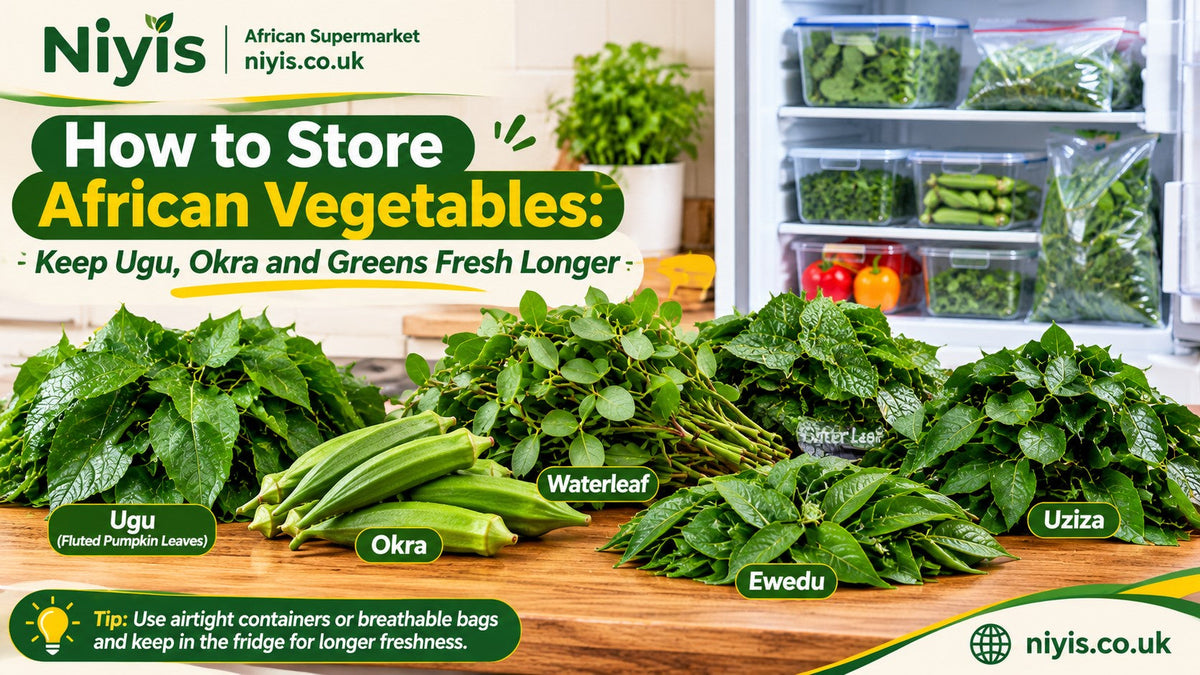
Knowing how to store African vegetables properly can help UK households keep fresh produce for longer, reduce food waste and enjoy traditional Nigerian meals throughout the week. Vegetables such as ugu (fluted pumpkin leaves), okra, waterleaf, bitter leaf, ewedu and uziza require different storage methods depending on whether they are fresh, frozen or dried.
The best way to preserve African vegetables is to control moisture, maintain appropriate refrigeration temperatures and use airtight packaging where suitable. Proper storage also helps protect their nutritional value, including vitamins, minerals, fibre and naturally occurring antioxidants. Whether you buy fresh vegetables in bulk or prefer convenient frozen alternatives, understanding the right storage techniques makes weekly Nigerian meal preparation easier.
How Do You Store African Vegetables?
-
Ugu: Refrigerate in a clean container or breathable bag with dry paper towels, or freeze for longer storage.
-
Okra: Keep dry and unwashed in a breathable bag in the refrigerator.
-
Waterleaf: Refrigerate promptly in a container lined with dry paper towels. Use quickly because of its delicate texture.
-
Bitter leaf: Refrigerate fresh leaves after draining and drying, or freeze prepared portions.
-
Ewedu and Uziza: Keep fresh leaves refrigerated and dry, or freeze properly prepared portions.
-
Dried vegetables: Store in airtight containers in a cool, dry cupboard.
-
Frozen vegetables: Keep at approximately -18°C and follow the packaging instructions.
For food safety, keep your fridge between 0°C and 5°C and your freezer at approximately -18°C.
1. Why Proper Vegetable Storage Matters
African vegetables are essential ingredients in many traditional meals. Ugu is used in egusi and vegetable soup, okra is popular in draw soups, while waterleaf features in Edikang Ikong and other Nigerian vegetable dishes.
However, fresh leafy vegetables contain considerable moisture and can wilt, become slimy or deteriorate when stored incorrectly.
Proper storage helps:
-
Reduce food waste and unnecessary grocery spending.
-
Maintain vegetable texture, colour and flavour.
-
Preserve nutrients by reducing unnecessary deterioration.
-
Make weekly meal preparation more convenient.
-
Keep ingredients available for traditional African recipes.
Vegetables also provide important nutrients, including vitamin C, vitamin K, folate, potassium and dietary fibre, although the exact nutritional composition varies by vegetable.
2. How to Store Different African Vegetables
Not every African vegetable should be stored in exactly the same way.
Here is a practical guide for popular Nigerian vegetables.
|
Vegetable |
Best storage method |
Practical guidance |
|
Ugu |
Refrigeration or freezing |
Dry thoroughly and store in a breathable bag or sealed container |
|
Okra |
Refrigeration |
Keep dry and unwashed until preparation |
|
Waterleaf |
Refrigeration or freezing |
Remove damaged leaves and control excess moisture |
|
Bitter leaf |
Refrigeration or freezing |
Drain thoroughly after washing |
|
Ewedu |
Refrigeration or freezing |
Remove damaged leaves and dry before packing |
|
Uziza |
Refrigeration or freezing |
Keep leaves dry and protected |
|
Okazi |
Refrigeration or freezing |
Keep fresh leaves dry and use promptly |
|
Dried Ugu |
Airtight cupboard storage |
Protect from moisture and direct sunlight |
How to Store Ugu Leaves
Ugu, also called fluted pumpkin leaves, is widely used in Nigerian soups, including Egusi, Oha and Edikang Ikong.
To store fresh ugu:
-
Remove yellow, damaged or slimy leaves.
-
Separate the leaves from excess stems if necessary.
-
Wash if needed, then drain and dry thoroughly.
-
Place the leaves in a clean container lined with dry kitchen paper.
-
Refrigerate and check regularly for excess moisture.
Replace damp kitchen paper when necessary.
If you have purchased more ugu than you can use within a few days, freezing is a practical alternative.
For convenience, Niyis offers Fresh Ugu Leaves and Frozen Ugu Leaves 500g.
How to Store Fresh Okra
Okra can become soft or slimy when exposed to excess moisture.
Follow these steps:
-
Keep fresh okra unwashed until you are ready to prepare it.
-
Remove damaged pods.
-
Place the okra in a paper bag or breathable food-storage bag.
-
Refrigerate in the vegetable drawer.
-
Wash and cut immediately before cooking.
Niyis' Fresh Okro 1kg is suitable for Nigerian okra soup, seafood okra and other traditional dishes.
How to Store Waterleaf
Waterleaf is particularly delicate because of its high moisture content.
Remove damaged leaves, drain excess water and place the vegetables in a container lined with dry paper towels. Keep refrigerated and use promptly.
For a convenient alternative, try Frozen Waterleaf 500g, which is ready to cook without additional washing or chopping.
How to Store Bitter Leaf and Uziza
Fresh bitter leaf and uziza should be protected from excess moisture and refrigerated promptly.
If you wash bitter leaf to remove dirt or reduce bitterness, drain it thoroughly before refrigeration or freezing.
You can also choose convenient alternatives such as Frozen Bitter Leaves, Fresh Uziza Leaves and Dried Uziza Leaves.
3. How to Prepare Vegetables Before Storage

Preparation plays an important role in preserving African vegetables.
Follow these steps:
-
Sort your vegetables and remove damaged or spoiled leaves.
-
Separate different vegetable varieties.
-
Wash fresh produce when appropriate, using clean running water or a clean bowl of water.
-
Drain thoroughly and remove excess moisture.
-
Cut vegetables into suitable cooking sizes if preparing them for freezing.
-
Divide into meal-sized portions.
-
Pack in suitable food-safe containers or freezer bags.
-
Label each portion with the vegetable name and storage date.
One important distinction: okra and many other whole vegetables are best kept unwashed until use. Leafy greens can be washed before storage, provided they are dried thoroughly. Avoid sealing wet vegetables in airtight containers because trapped moisture encourages deterioration.
4. How to Freeze African Vegetables
Freezing is one of the most useful ways to preserve African vegetables when you buy in larger quantities.
For leafy vegetables such as ugu, ewedu and bitter leaf, blanching before freezing can help preserve colour and quality.
Step-by-Step Freezing Method
-
Remove damaged leaves and unwanted stems.
-
Wash thoroughly and drain.
-
Cut into the sizes required for your recipes.
-
Blanch suitable leafy vegetables briefly in boiling water.
-
Transfer immediately into ice-cold water to stop the cooking process.
-
Drain and dry thoroughly.
-
Divide into small meal-sized portions.
-
Place in airtight freezer bags or containers.
-
Remove excess air, label and freeze.
Blanching times vary according to the vegetable and cut size, so follow a reliable vegetable-specific freezing guide.
Important: Not all vegetables require the same preparation. Okra can be frozen whole or sliced after washing and drying, while waterleaf may soften considerably after freezing. This makes frozen vegetables particularly suitable for soups and cooked dishes rather than fresh salads.
Keep your freezer at approximately -18°C. For best quality, aim to use frozen vegetables within around 3–4 months, although packaging instructions and individual vegetable requirements take priority.
5. Fresh vs Frozen vs Dried Vegetables
Which type should you buy?

|
Type |
Advantages |
Best use |
|
Fresh |
Natural texture and flexibility |
Immediate cooking |
|
Frozen |
Convenient and portion-friendly |
Soups, stews and batch cooking |
|
Dried |
Long storage when kept dry |
Traditional soups and seasoning |
Fresh vegetables are excellent when you plan to cook immediately. Frozen vegetables are useful for busy households, while dried leaves are practical when fresh produce is unavailable.
Niyis stocks Dried Ugu Leaves and Dried Bitter Leaves, alongside fresh and frozen African vegetables.
6. Common Storage Mistakes
Avoid these common mistakes when storing Nigerian vegetables:
-
Storing wet leaves in sealed containers.
-
Leaving fresh vegetables at room temperature for extended periods.
-
Keeping vegetables beside leaking raw meat or fish.
-
Freezing large quantities in one container instead of meal-sized portions.
-
Repeatedly thawing and refreezing vegetables.
-
Ignoring product storage instructions.
-
Keeping damaged or spoiled leaves with fresh produce.
A simple weekly vegetable organisation routine can help prevent these problems.
7. Food Safety and Possible Spoilage
Always inspect vegetables before cooking.
Signs that vegetables may have spoiled include:
-
Unusual or unpleasant smells.
-
Slimy surfaces.
-
Extensive discolouration.
-
Visible mould.
-
Soft, deteriorating or leaking produce.
Discard mouldy or spoiled vegetables rather than trying to remove only the affected section.
Keep raw vegetables separate from raw meat, fish and poultry to reduce cross-contamination. Wash your hands, utensils and preparation surfaces before and after handling produce.
Remember that freezing does not sterilise food. Harmful microorganisms may survive freezing and become active again after thawing.
For food safety, follow the Food Standards Agency's guidance on refrigeration, freezing and defrosting.
8. Where to Buy African Vegetables in the UK
Finding fresh Nigerian vegetables in mainstream UK supermarkets can sometimes be difficult, particularly when looking for ingredients such as ugu, uziza, waterleaf, bitter leaf and okra.
Niyis African Supermarket offers a range of fresh, frozen and dried African vegetables for households across the UK.
Popular options include:
You can also browse the complete African and Caribbean Vegetables Collection and African Grocery Collection to find complementary ingredients for Nigerian cooking.
Niyis lists scheduled dispatch arrangements for fresh produce. Fresh leaves are generally dispatched on Wednesdays, while fresh vegetables and fruits are generally dispatched on Mondays. Check individual product descriptions and the current delivery information before ordering.
9. Frequently Asked Questions
1. How long can African vegetables last in the fridge?
Storage life varies by vegetable, freshness and moisture level. Delicate vegetables such as waterleaf should be used promptly, while properly stored ugu and other leafy greens may last several days. Inspect produce regularly.
2. Can I freeze fresh ugu leaves?
Yes. Wash, drain, dry and portion the leaves before freezing. Blanching can help preserve quality. Alternatively, buy ready-to-cook frozen ugu.
3. Should I wash vegetables before refrigerating them?
It depends on the vegetable. Many whole vegetables, including okra, keep better when stored dry and unwashed. Leafy greens can be washed before storage if thoroughly dried.
4. Can I freeze okra without cutting it?
Yes. You can freeze whole okra or slice it into cooking portions. Wash and dry it thoroughly before packing.
5. How do I stop ugu leaves from becoming slimy?
Remove damaged leaves, control moisture, use clean storage containers and refrigerate promptly. Avoid packing wet leaves tightly.
6. Is frozen ugu as nutritious as fresh ugu?
Frozen vegetables can retain much of their nutritional value when properly processed and stored. Nutrient levels vary according to handling, storage time and preparation.
7. Can I freeze waterleaf?
Yes. Waterleaf can be frozen for cooked dishes, although its texture may become softer after thawing.
8. Can I refreeze thawed African vegetables?
Avoid refreezing vegetables that have been thawed unless they have first been safely cooked and handled according to food-safety guidance. Follow the product's instructions.
9. How should I store dried African vegetables?
Keep dried vegetables in airtight containers in a cool, dry cupboard, away from sunlight and moisture. Follow the product's storage instructions.
10. What temperature should my fridge and freezer be?
Keep your refrigerator between 0°C and 5°C and your freezer at approximately -18°C.
10. Related Nigerian Recipes and Guides
Make the most of your stored vegetables with these Niyis cooking guides:
Final Thoughts
Knowing how to store African vegetables correctly makes it easier to enjoy traditional Nigerian cooking without constantly shopping for fresh ingredients.
Keep ugu and other leafy greens clean and dry, refrigerate fresh okra, freeze suitable vegetables in convenient portions and store dried leaves away from moisture.
Most importantly, choose storage methods that match the vegetable you are buying.
Whether you prefer fresh ugu for egusi soup, frozen waterleaf for Edikang Ikong or dried bitter leaf for traditional soups, Niyis African Supermarket makes it easier to find authentic African vegetables in the UK and keep your kitchen ready for everyday Nigerian meals.
Share:
How to Make Amala: A Complete Guide to Yam Flour, Preparation and Serving in the UK (2026)
How to Cook Turkey Midwings: 5 Delicious Nigerian Recipes to Try at Home (2026)