
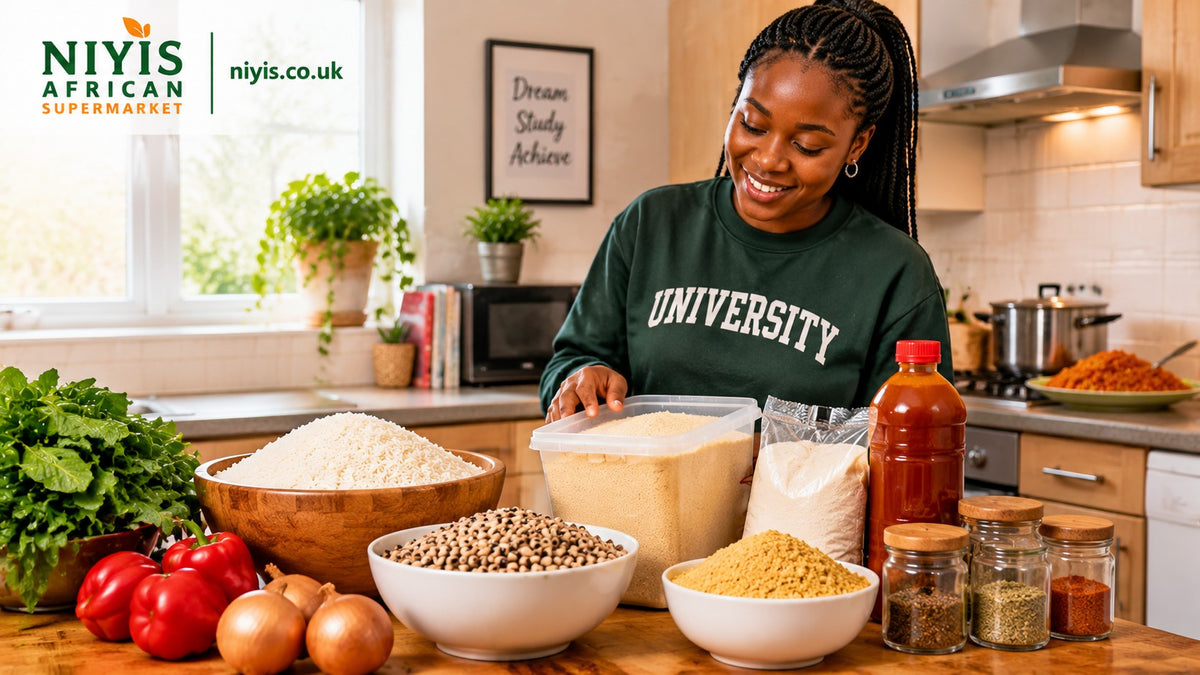
Finding affordable Nigerian foods to buy in bulk as an international student in the UK can make student life easier, especially when you want familiar home-cooked meals without spending too much on groceries. Rice, beans, garri, yam flour, palm oil and seasonings are versatile Nigerian food staples that can help you prepare several meals from a relatively small shopping list. With limited cupboard space, a student budget and a shared kitchen to consider, buying the right quantities matters. This guide covers the best Nigerian groceries to stock up on, how to store them and seven easy Nigerian meals you can prepare in a student kitchen.
What Nigerian Foods Should Students Buy in Bulk?
The best Nigerian foods to buy in bulk as a student include:
-
Rice for jollof rice, fried rice and rice with stew.
-
Beans for beans porridge, akara and moi moi.
-
Garri for eba and quick garri soakings.
-
Yam flour or poundo yam for convenient swallow meals.
-
Palm oil for traditional soups, stews and beans.
-
Egusi and crayfish for flavourful Nigerian soups.
-
Dried spices and seasonings for everyday cooking.
Prioritise dry, long-lasting ingredients that can be used in several recipes. Buy fresh vegetables, meat and other perishable foods in smaller quantities according to your freezer and refrigerator space.
1. Why Buying Nigerian Food in Bulk Makes Sense for Students
International students often balance tuition, accommodation, transport and everyday expenses. Cooking at home can help manage food costs, especially when you choose ingredients that work across several meals.
Buying selected Nigerian food staples in larger packs can offer convenience and reduce how frequently you need to shop. For example, one bag of rice can provide the base for jollof rice, fried rice and rice with stew.
However, buying in bulk does not mean purchasing everything in large quantities. A 20kg bag of rice may be useful for a shared student household, but it could take up too much space for someone living in a small studio.
The best strategy is to buy long-lasting staples in suitable quantities and purchase fresh ingredients when needed.
2. Best Nigerian Foods to Buy in Bulk as a Student
These are useful ingredients to prioritise when building an affordable Nigerian student pantry.
|
Food staple |
Suggested quantity for one student |
Meals you can prepare |
|
Rice |
2kg to 5kg |
Jollof, fried rice, rice and stew |
|
Beans |
1kg to 2kg |
Beans porridge, akara, moi moi |
|
Garri |
2kg to 5kg |
Eba, garri soaking |
|
Yam flour |
1kg to 2kg |
Amala |
|
Palm oil |
1 litre to 2 litres |
Soups, beans and stews |
|
Egusi |
200g to 500g |
Egusi soup |
|
Ground crayfish |
100g to 250g |
Soups, stews and beans |
|
Seasonings |
Small or medium packs |
Rice, soups and sauces |
Adjust these quantities depending on your appetite, cooking frequency, sharing arrangements and storage space.
Rice and Grains
Rice is one of the most useful foods for Nigerian students because it can become several different meals. Consider Niyis Ofada Rice 5kg for Ofada-style meals or explore the Rice and Grains collection for other options.
Beans
Beans are versatile and can provide plant-based protein and fibre. They are useful for making porridge, akara and moi moi.
TryNiyis Blackeye Beans, available in different pack sizes, or consider Niyis Peeled Beans to reduce preparation time.
Garri and Yam Flour
Garri is useful for preparing eba, while Ijebu garri can also be enjoyed as a quick soaking with milk, sugar or groundnuts.
Niyis Ijebu Garri is available in different pack sizes. For students who enjoy amala, Niyis Yam Flour is another useful pantry staple.
Palm Oil and Soup Ingredients
A small bottle of Niyis Palm Oil can be used for beans, traditional soups and stews. Keep Niyis Ground Egusi available for a convenient homemade soup.
3. How to Shop on a Student Budget
Buying groceries wisely is more important than buying the largest available pack.
Follow these tips:
-
Set a weekly or monthly food budget. Decide how much you can spend before browsing.
-
Check your cupboards first. Avoid buying another bag of rice or beans when you already have enough.
-
Compare unit prices. Check the cost per kilogram rather than assuming a larger pack is cheaper.
-
Plan meals around shared ingredients. Tomatoes, onions, peppers and seasonings can be used in several recipes.
-
Share bulk purchases. If you have trusted flatmates who cook Nigerian food, splitting a larger pack can reduce individual costs.
-
Avoid food waste. Buy fresh vegetables and meat in quantities you can use or freeze safely.
-
Allow for delivery costs. Include shipping and any minimum order requirements when comparing online grocery shops.
For more ideas, read The Essential Nigerian Food Shopping List for Students and Families in the UK.
4. Seven Nigerian Meals You Can Prepare in a Student Kitchen

You do not need a large kitchen or expensive equipment to enjoy Nigerian food at university. A basic hob, saucepan, frying pan and a few storage containers can help you prepare these meals.
|
Meal |
Main ingredients |
Why it works for students |
|
Jollof rice |
Rice, tomatoes, pepper, seasoning |
Can provide several portions |
|
Beans porridge |
Beans, palm oil, onion, pepper |
Uses affordable pantry staples |
|
Akara |
Black-eyed beans, onion, pepper |
Good for breakfast or snacks |
|
Moi moi |
Peeled beans, pepper, oil |
Can be prepared in batches |
|
Yam porridge |
Yam, palm oil, pepper, vegetables |
One-pot meal |
|
Egusi soup and eba |
Egusi, palm oil, crayfish, garri |
Soup can serve multiple meals |
|
Spaghetti jollof |
Spaghetti, tomatoes, pepper, seasoning |
Quick alternative to rice |
1. Nigerian Jollof Rice
Cook rice with a tomato and pepper sauce, onions, seasoning, curry powder and thyme. Make a few portions and refrigerate or freeze what you will not eat immediately. Serve with eggs, vegetables or chicken.
2. Beans Porridge
Cook beans until tender, then add onion, pepper, palm oil and seasoning. Allow everything to simmer until the flavours combine. You can eat it on its own or serve it with plantain.
3. Akara
Blend peeled black-eyed beans with a little water, onion and pepper. Beat the mixture until fluffy, then fry spoonfuls in hot oil until cooked through. For easier preparation, use Niyis Peeled Beans.
Follow the full Nigerian Akara recipe for detailed preparation instructions.
4. Moi Moi
Blend peeled beans with pepper, onion, water and seasoning. Add a little oil, transfer into suitable heatproof containers and steam until firm and cooked through. Prepare several portions to make weekday meals easier.
5. Yam Porridge
Cut yam into small chunks and cook with water, pepper, onion, palm oil and seasoning. Add vegetables towards the end. This is a practical one-pot meal for a busy student.
6. Egusi Soup and Eba
Prepare egusi with palm oil, pepper, crayfish and your preferred vegetables and protein. Serve with eba made from Niyis Ijebu Garri. Make enough soup for more than one serving and portion it safely.
7. Spaghetti Jollof
Cook a tomato and pepper sauce with onions and seasoning. Add spaghetti and enough water or stock to cook it until tender. Stir occasionally and serve with eggs, fish or vegetables.
For more Nigerian meal inspiration, explore Niyis' 7-Day Nigerian Meal Plan and 15 Nigerian Lunch Ideas.
5. How to Store Bulk Nigerian Groceries in Student Accommodation
Storage is important when buying larger grocery packs, especially if you share a kitchen or have limited cupboard space.
|
Food |
Storage advice |
|
Rice |
Keep sealed in a cool, dry cupboard |
|
Beans |
Store in airtight containers |
|
Garri |
Keep dry and tightly covered |
|
Yam flour |
Store in a cool, dry place |
|
Egusi |
Keep sealed; refrigerate or freeze if advised on packaging |
|
Palm oil |
Follow the label and keep away from excessive heat |
|
Cooked meals |
Cool promptly, refrigerate or freeze in portions |
Label containers with the contents and date. Follow the manufacturer's storage instructions and avoid keeping cooked food at room temperature for extended periods.
For meal preparation, divide large batches into individual portions before freezing. Defrost safely and reheat thoroughly.
6. Where to Buy Nigerian Groceries in the UK

Finding familiar Nigerian ingredients can be difficult when you are new to the UK. Niyis African Supermarket offers a range of African groceries, rice, grains, beans, flours, oils, spices, vegetables and other Nigerian cooking essentials.
Useful shopping categories include:
-
African Grocery Collection for everyday Nigerian pantry ingredients.
-
Rice and Grains for rice and other staples.
-
African Grocery Staples for beans, garri and flours.
-
Meat and Seafood for proteins and seafood.
-
Best Sellers for popular grocery choices.
You can also read African-Caribbean Pantry Essentials: 20 Must-Have Staples for more ideas on building a practical student pantry.
Check individual product pages for current prices, pack sizes, availability and delivery information before ordering.
7. Frequently Asked Questions
1. What Nigerian foods should international students buy in bulk?
Rice, beans, garri, yam flour, palm oil, egusi and dried seasonings are useful choices because they can be used in several traditional meals.
2. What is the cheapest Nigerian food to cook as a student?
Beans porridge, rice with stew, garri and eba with soup, and spaghetti jollof can be practical options. Actual costs depend on ingredient prices, portions and where you shop.
3. How much rice should one student buy?
A 2kg to 5kg bag can be a reasonable starting point, depending on how often you eat rice and whether you share meals with other students.
4. Can I cook Nigerian food in a university accommodation kitchen?
Yes. Meals such as jollof rice, beans porridge, spaghetti jollof and yam porridge can be prepared with basic cooking equipment. Always follow your accommodation's kitchen rules.
5. Where can I buy Nigerian food online in the UK?
Niyis African Supermarket offers Nigerian and African groceries online, including rice, beans, garri, oils, spices and soup ingredients.
6. Is buying Nigerian groceries in bulk cheaper?
It can be, particularly when the unit price is lower and you can use the quantity before it expires. Compare pack prices and account for storage and delivery costs.
7. What Nigerian foods can I meal prep as a student?
Beans porridge, jollof rice, moi moi and soups can be prepared in batches. Divide them into meal-sized portions and refrigerate or freeze safely.
8. What should I buy first when moving to the UK as a Nigerian student?
Start with rice, beans, garri, palm oil, onions, basic seasonings and ingredients for one or two favourite meals. Add other products as you learn your cooking routine and storage capacity.
Final Thoughts
Being an international student in the UK does not mean giving up the Nigerian meals you enjoy. With a practical shopping list, a few versatile pantry staples and some simple meal preparation, you can cook familiar food while keeping your grocery spending organised.
Start with rice, beans, garri, palm oil, seasonings and a few soup ingredients. Buy larger packs only when they offer genuine value and you have enough storage space.
From jollof rice and beans porridge to akara, moi moi and egusi soup, these seven meals show how far a small collection of Nigerian ingredients can go in a student kitchen.
Explore Niyis African Supermarket to find Nigerian groceries and stock up on the ingredients that make your student kitchen feel more like home.
Share:
Black Friday Kitchen Shopping Guide: Save on Nigerian Groceries and Kitchen Essentials in the UK (2026)
Is Nigerian Food Naturally Gluten-Free? Ingredients to Know in the UK (2026)