
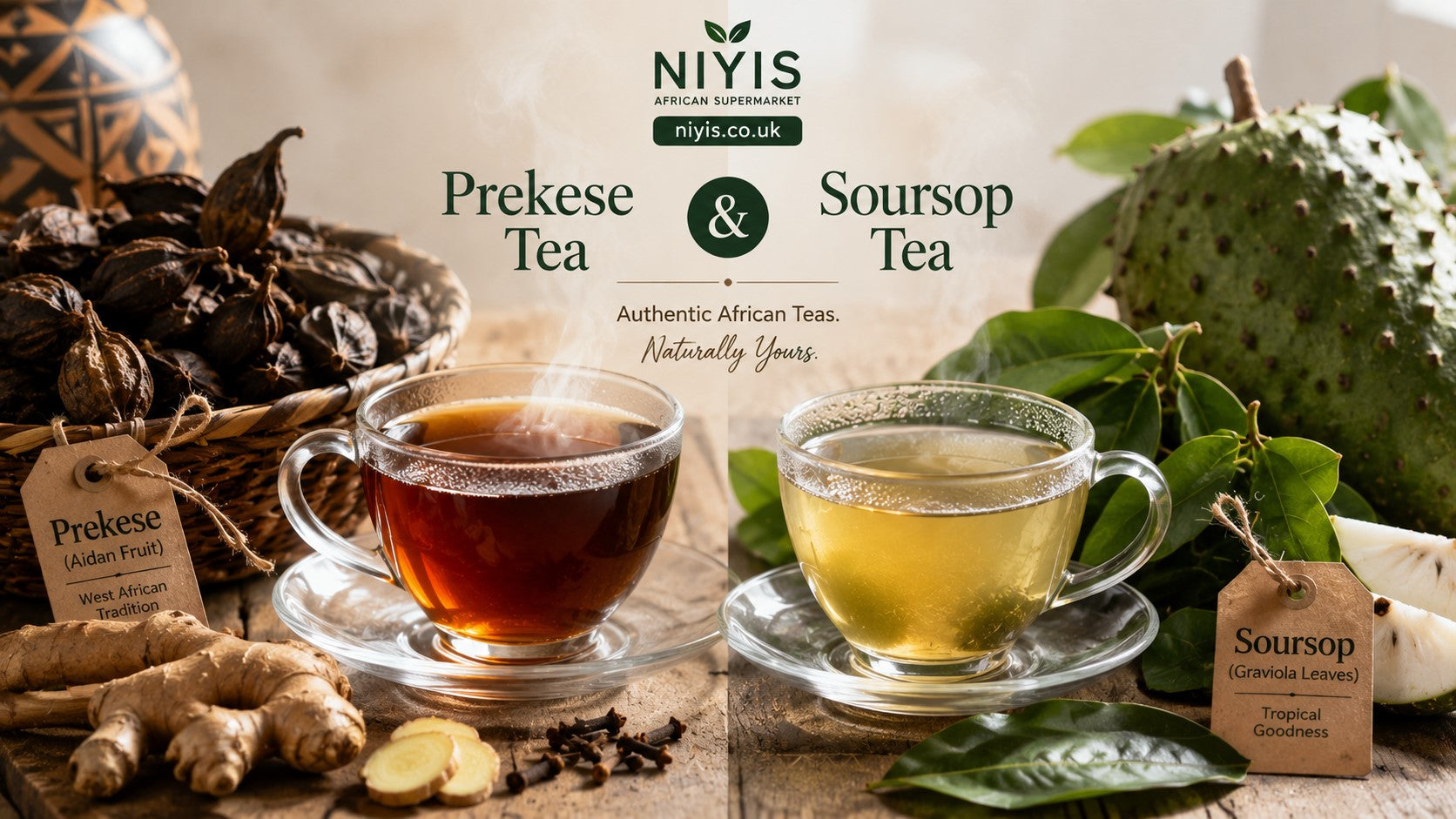
Prekese Tea vs. Soursop Tea: Which Wellness Brew Is Right for You?
Prekese tea vs soursop tea is a growing search for people in the UK looking for traditional African herbal teas with distinctive flavours and cultural roots. Prekese, also called Aidan fruit or Tetrapleura tetraptera, is an aromatic West African fruit traditionally infused in water or used in soups and drinks. Soursop tea is usually made from soursop leaves, Annona muricata, and has a lighter, tropical herbal profile. Both are naturally caffeine-free when prepared from the plant ingredients themselves, but they are not interchangeable. Their taste, traditional uses, preparation and safety considerations are different.
If you are exploring African ingredients for the first time, you can browse the wider Niyis African grocery collection, including traditional foods, spices, drinks and pantry staples from across Africa.
What is Prekese tea?
Prekese tea is an infusion made by simmering or steeping pieces of the aromatic Prekese pod in hot water. It has a sweet, earthy, warm and slightly spicy flavour. Prekese has a long history of culinary and traditional use in West Africa. Research has identified minerals and phytochemicals in Tetrapleura tetraptera, although much of the evidence for health effects remains preclinical.
You can use Fresh Prekese to prepare tea, or add the aromatic pod to soups, stews, marinades and other traditional recipes. For more ideas, see this guide to cooking with Prekese.
What is soursop tea?
Soursop tea is commonly prepared from the leaves of the soursop tree. It has a mild, herbal, tropical flavour and can be enjoyed hot or chilled. Niyis describes its soursop tea as smooth and aromatic with floral undertones.
For a convenient option, try Tropical Sun Soursop Tea, or compare it with Shavuot Soursop Leaf Herbal Tea.
Which is better?
There is no scientifically established winner. Choose Prekese tea if you prefer a stronger, warming, aromatic infusion. Choose soursop tea if you prefer a lighter, smoother tropical herbal tea. Neither should be treated as a replacement for medical treatment.
If you enjoy experimenting with caffeine-free drinks, explore the Niyis drinks collection, which includes African teas, herbal infusions, sorrel, ginger drinks and other traditional beverages.
Prekese Tea vs Soursop Tea at a Glance

|
Feature |
Prekese Tea |
Soursop Tea |
|
Main ingredient |
Prekese/Aidan fruit |
Soursop leaves |
|
Botanical name |
Tetrapleura tetraptera |
Annona muricata |
|
Flavour |
Sweet, earthy, aromatic, warm |
Mild, tropical, herbal, floral |
|
Caffeine |
Naturally caffeine-free |
Naturally caffeine-free |
|
Traditional use |
Drinks, soups, spices and herbal preparations |
Herbal tea and traditional preparations |
|
Preparation |
Simmer pod pieces in water |
Steep tea bag or leaves |
|
Best for |
Stronger aromatic flavour |
Lighter tropical herbal flavour |
|
UK availability |
Whole Prekese pods |
Soursop leaf tea bags |
The biggest difference is simple: Prekese is a fruit pod used widely as a culinary spice as well as an infusion, while soursop tea is generally made from leaves.
Prekese is especially useful if you want one ingredient for both drinks and cooking. Alongside Fresh Prekese, you can explore African spices for ingredients that complement its warm, aromatic flavour.
Nutritional and Wellness Profile

Neither drink should be judged like a conventional nutrient-rich food because the amount of nutrients extracted into a cup of tea varies with the ingredient, preparation method and serving size.
Research on Prekese has identified carbohydrates, minerals and phytochemicals including phenols, flavonoids, saponins and tannins. A 2024 review also discusses antioxidant and other biological activities, while emphasising the need for further research.
Soursop leaves contain biologically active compounds including acetogenins. However, laboratory findings should not automatically be interpreted as proven health benefits in humans. A systematic review of Annona muricata leaf extracts found that evidence on safety and tolerability remains important when considering dose and duration.
If you are interested in adding more plant-based ingredients to your routine, Niyis also stocks ginger products, turmeric products and other traditional African food ingredients.
|
Area |
Prekese |
Soursop |
|
Plant compounds |
Phenols, flavonoids and other phytochemicals |
Acetogenins and other plant compounds |
|
Antioxidant research |
Yes, mainly laboratory/preclinical |
Yes, mainly laboratory/preclinical |
|
Human clinical evidence |
Limited |
Limited |
|
Caffeine |
None naturally |
None naturally |
|
Main reason to drink |
Traditional flavour and cultural use |
Traditional flavour and herbal tea experience |
Potential Traditional Wellness Benefits
1. Prekese: Traditionally Used for Warming and Aromatic Herbal Drinks
Prekese has deep roots in West African food culture. It is traditionally used as a spice, infusion and ingredient in herbal preparations. Research has identified several phytochemicals in the fruit and investigated antioxidant, antimicrobial and anti-inflammatory activities. However, these findings do not establish that drinking Prekese tea prevents or treats disease.
One practical advantage is versatility. You can enjoy Niyis Fresh Prekese as a tea or use the pod in soups, stews and marinades. Niyis describes its Prekese as aromatic and suitable for adding depth to African dishes.
For more background, read 15 Benefits of Prekese, which explains its traditional uses, flavour and preparation methods. You can also learn how to cook with Prekese beyond making tea.
Prekese pairs well with other warming ingredients. Try it alongside ginger, cloves or selected African herbs and spices when preparing a fragrant infusion or stock.
2. Soursop Tea: A Caffeine-Free Tropical Herbal Option
Soursop leaf tea appeals to people who want a caffeine-free herbal drink with a distinctive tropical character. Niyis describes its soursop tea as smooth, creamy and floral, while its wellness guide notes traditional interest in digestion, relaxation and other uses.
You can read more in Niyis' guide to the benefits and side effects of soursop tea. If you are unfamiliar with the fruit itself, this guide to soursop explains its flavour, culinary uses and tropical origins.
However, be careful with exaggerated online claims about soursop tea. Laboratory research into soursop compounds does not mean that soursop tea has been proven to cure cancer, cause weight loss or treat chronic disease in humans. A systematic review specifically examined the safety of Annona muricata leaf extracts, highlighting why responsible consumption matters.
For a simple introduction, choose Tropical Sun Soursop Tea. If you want to compare brands, Shavuot Soursop Leaf Herbal Tea is another option listed by Niyis.
Taste Comparison: Which Tea Tastes Better?

Taste is probably the easiest way to decide between them.
Prekese tea has a stronger personality. Expect sweet, woody, earthy and aromatic notes, with a warm fragrance that can become more intense when the pod is crushed or simmered. Niyis describes Prekese as having sweet-earth and caramel-like notes with a deep aroma.
If you enjoy bold flavours, you may also like other ingredients from the Niyis spices collection, including aromatic seasonings used in African soups, stews and drinks.
Soursop tea is gentler. Niyis describes its tea as smooth with tropical, creamy and floral characteristics. The prepared tea bags make it easy to enjoy the flavour without cutting or simmering whole fruit pods.
If you normally enjoy ginger tea, cloves and strongly aromatic herbal infusions, Prekese may be more appealing. If you prefer subtle fruit-inspired herbal drinks, soursop may be the better starting point. You can compare both with other options in the Niyis African drinks range.
How to Make Prekese Tea and Soursop Tea
How to Make Prekese Tea
-
Rinse a small piece of Prekese pod.
-
Break or crush it slightly to release its aroma.
-
Add it to approximately 500 ml to 1 litre of water.
-
Simmer for around 10 to 20 minutes.
-
Strain before drinking.
-
Add ginger, cloves, lemon or a small amount of honey if desired.
Niyis also recommends making a concentrated Prekese liquid that can be used as a cooking stock for soups, stews and rice. For recipe inspiration, read How to Use Prekese for More Than Just Tea.
You can also use Prekese with ingredients from the African grocery collection, including soup ingredients, grains, sauces and traditional seasonings.
How to Make Soursop Tea
If using a prepared tea bag:
-
Boil approximately 240 ml of water.
-
Place one soursop tea bag into a cup.
-
Pour over the hot water.
-
Steep for approximately 5 to 7 minutes.
-
Remove the tea bag.
-
Enjoy hot or chill over ice.
Niyis suggests lemon, mint or a preferred sweetener as optional additions. You can also compare Tropical Sun Soursop Tea with Shavuot Soursop Tea when choosing a product.
For more caffeine-free drink ideas, browse African teas and drinks at Niyis.
Traditional African Uses

Prekese has particularly strong cultural roots in West Africa. It is used in Ghanaian and Nigerian culinary traditions as an aromatic ingredient in soups, stews and drinks. Niyis notes its use in dishes including Banga, pepper soup and light soup.
The fruit has also been documented in scientific literature as having cultural significance in West African traditional medicine and postpartum food practices.
You can explore more traditional cooking ingredients through the Niyis African food collection, including products suitable for soups, stews, rice dishes and family meals. The African spices collection is also useful for recreating familiar flavours at home.
Soursop has a different geographical history. Annona muricata originated in tropical regions of the Americas and is now cultivated and consumed across tropical regions, including parts of Africa. Its fruit is enjoyed fresh and in drinks, while its leaves are traditionally prepared as tea in various cultures.
For a closer look at the fruit, read Get to Know the Exotic Soursop Fruit. For the leaf infusion, see 7 Benefits and Side Effects of Soursop Tea.
This distinction matters because traditional use is not the same as clinical proof. Cultural knowledge can explain how an ingredient has been enjoyed for generations, but it should not be presented as evidence that the ingredient treats a disease.
Possible Side Effects and Safety
Moderation matters with both herbal beverages.
Prekese has been studied for its phytochemicals and toxicological profile, but research into medicinal effects and appropriate human dosing remains incomplete. If you are using Prekese as part of a recipe, follow the preparation guidance in Niyis' Prekese cooking guide rather than making highly concentrated preparations.
Soursop deserves particular caution. Research has identified annonacin and other compounds in Annona muricata, and product quality can vary. A study assessing commercially available soursop leaf products found differences in bioactive constituents and highlighted the importance of quality control.
Before buying, check the product description and preparation instructions for Tropical Sun Soursop Tea or Shavuot Soursop Tea.
Do not assume that "natural" means risk-free. Avoid excessive or prolonged consumption, particularly of concentrated herbal extracts. For additional information, read Niyis' soursop tea safety guide.
Who Should Be Cautious?
Speak to a doctor or pharmacist before regularly consuming herbal teas if you:
-
Are pregnant or breastfeeding
-
Take prescription medication
-
Have liver or kidney problems
-
Have a chronic medical condition
-
Are considering concentrated herbal extracts rather than ordinary tea
-
Have experienced allergies to herbal products
Niyis specifically advises caution with soursop tea during pregnancy and breastfeeding and with certain medications. Read the full guidance in 7 Benefits and Side Effects of Soursop Tea.
If you are looking for everyday food ingredients rather than concentrated herbal products, browse the African grocery range and follow the preparation instructions supplied with each product.
This article is for food and educational purposes and is not medical advice.
Where to Buy Prekese and Soursop Tea in the UK
For UK shoppers looking for authentic African ingredients, Niyis currently lists both products.
For a traditional West African infusion, try Niyis Fresh Prekese, currently listed as a 200g pack. It can be simmered for tea or used in soups, stews and marinades. The Prekese recipe guide includes practical ideas for using the pod in everyday cooking.
For convenient preparation, Tropical Sun Soursop Tea is currently listed as a 30g tea product made from soursop leaves.
Niyis also lists Shavuot Soursop Leaf Herbal Tea, giving shoppers another soursop tea option, although availability can change.
You can browse the wider Niyis drinks collection for other African teas and traditional beverages. The store currently lists products including soursop tea, sorrel and ginger tea, turmeric tea and other herbal-style drinks.
If you enjoy ginger-based infusions, explore Niyis ginger products. For warming flavours to use with Prekese, browse African spices. You can also shop the wider African food collection for complementary ingredients.
FAQs
Is Prekese tea better than soursop tea?
Neither has been proven to be universally better. Prekese offers a stronger aromatic flavour and deeper West African culinary tradition, while soursop provides a milder tropical herbal taste. You can compare Fresh Prekese with Tropical Sun Soursop Tea based on your preferred flavour and preparation method.
Does Prekese tea contain caffeine?
Pure Prekese does not naturally contain caffeine. You can prepare it from Fresh Prekese pods and enjoy it as a caffeine-free infusion.
Does soursop tea contain caffeine?
Pure soursop leaf tea is naturally caffeine-free unless it has been blended with another caffeinated ingredient. Check the product details for Tropical Sun Soursop Tea or Shavuot Soursop Tea before brewing.
Can I drink Prekese tea every day?
There is limited evidence establishing an optimal long-term daily amount. Moderate food-style use is more appropriate than consuming concentrated preparations. For preparation ideas, see How to Use Prekese for More Than Just Tea.
Can I drink soursop tea every day?
Long-term safety of frequent soursop leaf tea consumption is not well established. Avoid excessive use and consult a healthcare professional if you take medication or have an underlying condition. Niyis provides additional information in its soursop tea safety guide.
Can Prekese tea help with blood pressure?
Prekese has been investigated in preclinical research for cardiovascular and other biological effects, but this does not establish that Prekese tea treats high blood pressure in humans. It should not replace prescribed treatment or medical advice. You can read about traditional uses in 15 Benefits of Prekese.
Can soursop tea cure cancer?
No. There is currently insufficient clinical evidence to claim that soursop tea cures or treats cancer. Laboratory findings should not be confused with proven human treatments. Read Niyis' guide to soursop tea benefits and side effects for a balanced overview.
Which tastes sweeter, Prekese or soursop tea?
Prekese generally has a stronger sweet-earthy and aromatic character, while soursop tea is typically lighter, smoother and more tropical. Compare Fresh Prekese with Tropical Sun Soursop Tea if you want to try both.
Can I drink both?
You can enjoy them as separate herbal beverages, but there is no established health advantage to combining them. If you are taking medication or have a medical condition, ask a healthcare professional first. You can find both options in the Niyis drinks collection.
Which one should I buy?
Choose Prekese if you want a traditional West African ingredient with a strong aromatic flavour. Choose soursop tea if you want a convenient, lighter tropical herbal tea.
Final Verdict: Prekese Tea or Soursop Tea?
The answer comes down to flavour, tradition and convenience rather than a proven health winner.
Choose Prekese tea if you want a bold, aromatic West African infusion that can also double as a culinary ingredient. Its sweet-earthy character makes it particularly interesting with ginger, cloves and other warming ingredients. You can also use the pod in recipes from the African grocery collection.
Choose soursop tea if you prefer a smoother, lighter tropical herbal drink that is easy to prepare from tea bags. Start with Tropical Sun Soursop Tea or compare it with Shavuot Soursop Leaf Herbal Tea.
For UK shoppers wanting to explore both, Niyis makes the comparison easy. Try Fresh Prekese for a traditional West African preparation and Tropical Sun Soursop Tea for a convenient soursop leaf infusion. You can then discover more options through the Niyis African drinks collection.
The smartest approach is not to chase exaggerated "detox", "cure" or weight-loss claims. Enjoy these traditional drinks for their distinctive flavours and cultural heritage, and treat wellness claims with the same standard you would apply to any herbal product.
Share:
How to Cook with Garden Eggs: 5 Delicious West African Recipes in the UK (2026)
5 Traditional African Herbs for Natural Detox and Cleansing in the UK (2026)