
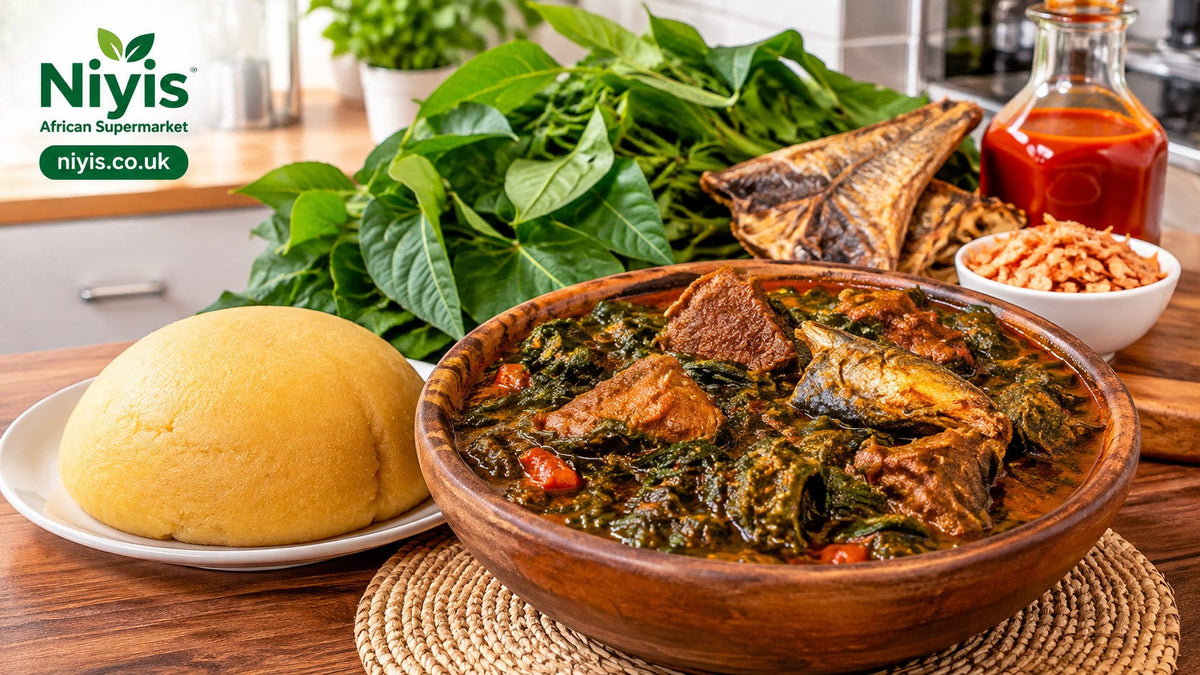
What is Afang soup? Afang soup is a traditional Nigerian vegetable soup associated with the Efik and Ibibio people of Cross River and Akwa Ibom States in southern Nigeria. It is prepared mainly with shredded Afang leaves, also known as Okazi or Ukazi, waterleaf, palm oil, crayfish, fish and assorted meat. This rich, flavourful Nigerian soup is popular for its distinctive leafy texture and combination of vegetables and protein. For Nigerians living in the UK, Afang soup is also a delicious way to enjoy traditional African cooking using fresh, frozen or dried ingredients.
What Is Afang Soup?
Afang soup is a traditional Nigerian vegetable soup made with Afang leaves (Gnetum africanum), waterleaf, palm oil, crayfish, fish and assorted meat or seafood.
It originates from the Efik and Ibibio culinary traditions of southern Nigeria and is commonly enjoyed with eba, fufu, pounded yam or other Nigerian swallows.
What makes Afang soup special?
Its signature ingredient is finely shredded Afang or Okazi leaves, which provide a distinctive texture and earthy flavour. Waterleaf adds moisture and helps create the soup's characteristic consistency.
1. Where Does Afang Soup Come From?
Afang soup is deeply rooted in the food culture of the Efik and Ibibio communities in southern Nigeria, particularly Akwa Ibom and Cross River States.
The name comes from Afang, the local leafy vegetable used to prepare the soup. It is also widely known as Okazi or Ukazi in Nigerian food markets and households.
Traditionally, Afang soup is prepared for family meals, celebrations and special occasions. Its ingredients reflect the region's rich culinary heritage, particularly the use of indigenous vegetables, seafood and palm oil.
Although recipes differ between households, the essential combination remains similar: Afang leaves, waterleaf, crayfish, palm oil and a selection of meat or seafood.
Today, Afang soup is enjoyed throughout Nigeria and by Nigerians living abroad, including households in the UK looking to recreate authentic southern Nigerian meals.
2. What Are the Main Afang Soup Ingredients?

The secret to delicious Afang soup is using the right vegetables and balancing the ingredients properly.
|
Ingredient |
Purpose in Afang soup |
|
Afang/Okazi leaves |
Provides the signature texture and flavour |
|
Waterleaf |
Adds moisture and softens the vegetable mixture |
|
Palm oil |
Gives the soup its rich colour and flavour |
|
Ground crayfish |
Adds savoury seafood flavour |
|
Stockfish |
Provides depth and traditional taste |
|
Dried fish |
Adds distinctive smoky seafood flavour |
|
Beef or goat meat |
Provides protein and a rich meat stock |
|
Periwinkle |
Adds traditional coastal flavour and texture |
|
Fresh pepper |
Provides heat |
|
Onions and seasoning |
Build the overall flavour |
Understanding the two essential vegetables
Afang leaves (Okazi or Ukazi)
Afang leaves come from the plant Gnetum africanum. They are relatively firm and are traditionally shredded or finely pounded before cooking. Their distinctive texture is an important part of authentic Afang soup.
You can use Niyis Dried Okazi Leaves when fresh leaves are unavailable.
Waterleaf (Gbure)
Waterleaf is softer and contains considerable moisture. It helps create the characteristic consistency of Afang soup while balancing the firmer Afang leaves.
For UK cooking, Niyis Fresh Waterleaf is an option specifically described for Afang and other traditional vegetable soups.
3. Nutritional Profile and Health Benefits of Afang Soup

Afang soup combines leafy vegetables, seafood, seeds and other ingredients that contribute different nutrients.
|
Nutrient |
Main food sources |
|
Protein |
Beef, fish, crayfish and seafood |
|
Fibre |
Afang leaves and waterleaf |
|
Vitamins |
Leafy vegetables |
|
Minerals |
Vegetables, fish and meat |
|
Healthy fats |
Palm oil and certain seafood |
|
Energy |
Palm oil and protein ingredients |
A 2018 study published in Food Chemistry examined the nutrient composition of traditional Afang soup recipes consumed in southern Nigeria. The researchers reported that the standardised soup contained protein and other nutrients, although the nutritional composition varied according to ingredients and preparation methods.
1. Provides Protein
Afang soup can contribute protein through beef, goat meat, stockfish, dried fish, crayfish and other seafood.
Protein is important for muscle maintenance, tissue repair and normal body functions. You can adjust the protein combination depending on your household's preferences.
2. Contains Fibre-Rich Vegetables
Afang leaves and waterleaf contribute dietary fibre. Fibre is important for normal digestion and maintaining bowel regularity.
Including vegetable-based soups in a varied diet can help increase vegetable intake.
3. Supplies Vitamins and Minerals
Leafy vegetables contribute vitamins and minerals, while seafood and meat provide additional nutrients.
The precise nutritional content depends on the quantities used, the ingredients selected and cooking methods.
4. Offers a Variety of Food Groups
Afang soup brings together vegetables, protein sources and fats in one dish. When served with a suitable swallow, it can form part of a satisfying and varied meal.
These are nutritional contributions rather than claims that Afang soup treats or prevents medical conditions.
4. How to Make Nigerian Afang Soup {#recipe}
Making authentic Nigerian Afang soup at home is straightforward when the ingredients are properly prepared.
Ingredients
For approximately 4 to 6 servings:
-
200g shredded Afang or Okazi leaves
-
300g waterleaf
-
500g assorted meat
-
200g stockfish or dried fish
-
100g ground crayfish
-
150ml palm oil, adjusted to preference
-
1 onion
-
Fresh pepper to taste
-
Periwinkle (optional)
-
Seasoning and salt to taste
-
Meat stock or water as required
Step-by-step preparation
Step 1: Prepare the meat and seafood
Wash the assorted meat and cook with onions, seasoning and salt until tender. Prepare the stockfish and dried fish according to their requirements. Reserve the meat stock.
Step 2: Prepare the vegetables
Wash the waterleaf thoroughly and chop it. Rinse the Afang leaves and shred or pound them finely. If using dried Afang leaves, rehydrate according to the product instructions.
Step 3: Build the soup base
Place the cooked meat and seafood in a pot. Add palm oil, pepper, crayfish and some of the reserved stock. Stir and allow the ingredients to combine.
Step 4: Add the waterleaf
Add the chopped waterleaf and cook until it softens and releases some of its moisture.
Step 5: Add the Afang leaves
Introduce the finely shredded Afang leaves. Stir thoroughly so the leaves combine evenly with the other ingredients.
Step 6: Adjust the seasoning
Add salt and seasoning where necessary. Allow the soup to cook until the vegetables reach your preferred texture and the ingredients are well combined.
Avoid adding excessive water because Afang soup is generally thicker than ordinary vegetable broth.
Step 7: Serve
Serve hot with eba, fufu, pounded yam or another preferred Nigerian swallow.
For convenient preparation, stock your kitchen with Niyis Ground Crayfish and Niyis Palm Oil.
5. What Is the Difference Between Afang Soup and Edikang Ikong? {#comparison}
Afang soup and Edikang Ikong are both popular vegetable soups from southern Nigeria. However, they use different signature vegetables.
|
Feature |
Afang soup |
Edikang Ikong |
|
Main vegetable |
Afang/Okazi |
Ugu |
|
Supporting vegetable |
Waterleaf |
Waterleaf |
|
Texture |
Distinctive shredded leafy texture |
Rich vegetable texture |
|
Common proteins |
Meat, fish, crayfish and seafood |
Meat, fish, crayfish and seafood |
|
Origin |
Efik and Ibibio traditions |
Efik and Ibibio traditions |
|
Common swallow |
Eba, fufu, pounded yam |
Eba, fufu, pounded yam |
The most important difference is the primary vegetable. Afang uses Okazi leaves, while Edikang Ikong is traditionally associated with ugu and waterleaf.
You can read more in Niyis' guide to Ugu vs Uziza vs Ukazi.
6. Possible Side Effects and Who Should Be Careful {#side-effects}
Afang soup is a traditional vegetable-based meal, but some ingredients may not suit everyone.
High sodium intake: Stockfish, dried fish, seasoning cubes and added salt can increase sodium levels. Adjust seasoning to suit your dietary requirements.
Food allergies: Crayfish, prawns, fish and other seafood can trigger allergic reactions. Anyone with a known seafood allergy should avoid the relevant ingredients.
Digestive sensitivity: Beans are not a typical Afang ingredient, but the vegetable and fibre content may cause digestive discomfort in some people, particularly when eaten in large quantities.
High energy content: Palm oil contributes considerably to the energy content of the soup. Adjust the quantity according to your dietary needs.
People managing medical conditions such as high blood pressure or kidney disease should follow individual dietary advice from their healthcare professional.
7. Where to Buy Afang Soup Ingredients in the UK {#where-to-buy}
Finding authentic Nigerian vegetables in the UK can be challenging, particularly when looking for Afang leaves and waterleaf.
Niyis African Supermarket offers African and Caribbean groceries, including vegetables, meat, seafood, palm oil and traditional Nigerian soup ingredients.
Here are some useful ingredients to explore:
-
Dried Okazi (Afang) Leaves for the essential vegetable.
-
Fresh Waterleaf for traditional Afang soup preparation.
-
Ground Crayfish for savoury flavour.
-
Palm Oil for colour and richness.
-
Meat and Seafood Collection for suitable meat and seafood options.
-
African Vegetables Collection for additional Nigerian leafy vegetables.
You can also explore theAfrican grocery collection for other pantry essentials.
Check product pages for current availability, fresh-produce dispatch arrangements and delivery information before ordering.
8. Frequently Asked Questions About Afang Soup
1. What is Afang soup made of?
Afang soup is made with Afang or Okazi leaves, waterleaf, palm oil, crayfish, fish, assorted meat, pepper and seasonings.
2. Which tribe does Afang soup come from?
Afang soup is traditionally associated with the Efik and Ibibio people of southern Nigeria, particularly Akwa Ibom and Cross River States.
3. Is Afang the same as Okazi?
Yes. Afang and Okazi are commonly used names for Gnetum africanum, the leafy vegetable that gives the soup its distinctive character.
4. Can I make Afang soup without waterleaf?
Waterleaf is a traditional ingredient that contributes moisture and texture. You can experiment with alternatives, but the final taste and consistency will differ.
5. Can I use dried Afang leaves?
Yes. Dried Afang leaves can be used when fresh leaves are unavailable. Rehydrate and prepare them according to the packaging instructions.
6. What swallow goes best with Afang soup?
Popular options include eba, pounded yam, fufu and other Nigerian cassava-based swallows.
7. Is Afang soup healthy?
Afang soup contains vegetables, protein sources and other nutrients. Its overall nutritional value depends on the ingredients, palm oil quantity, portion size and preparation method.
8. What is the difference between Afang and Edikang Ikong?
Afang soup uses Afang or Okazi leaves as its defining vegetable, while Edikang Ikong traditionally uses ugu and waterleaf.
9. Can I cook Afang soup without meat?
Yes. You can prepare a meat-free version using vegetables, crayfish or suitable plant-based alternatives. For a completely vegan version, omit all animal-derived ingredients, including fish and crayfish.
10. Where can I buy Afang leaves in the UK?
You can find Afang ingredients through specialist African supermarkets such as Niyis African Supermarket, which lists dried Okazi leaves and waterleaf.
9. Related Nigerian Recipes and Reading {#related}
If you enjoy traditional Nigerian soups, explore these related Niyis guides:
Conclusion
Afang soup is more than a delicious Nigerian vegetable soup. It represents the food traditions of the Efik and Ibibio communities and showcases the distinctive flavours of southern Nigerian cooking.
Made with Afang leaves, waterleaf, palm oil, crayfish, fish and assorted meat, it is a satisfying meal that can be recreated in UK kitchens using fresh, frozen or dried ingredients.
Whether you are preparing it for a family gathering or simply craving a taste of home, choosing the right vegetables and taking time to prepare them properly will help you achieve an authentic pot of Nigerian Afang soup.
Share:
Is Nigerian Food Naturally Gluten-Free? Ingredients to Know in the UK (2026)
Popular Nigerian Meat Cuts Explained: Names, Uses and Where to Buy Them in the UK (2026)