
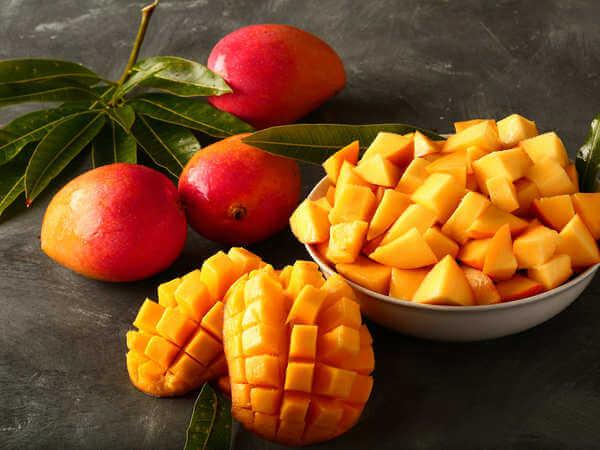
You probably know the mango tree by its more colloquial name, "the king of fruit." This is a fitting title for the delicious, highly versatile member of the drupe family, sometimes known as stone fruits. Mangoes are native to India and Southeast Asia and have been cultivated in tropical regions throughout the world. The sweet taste is similar to peaches or nectarines, but has a much different texture—they tend to be drier and firmer than their succulent cousins.
Mangoes come in many varieties—the Tommy Atkins variety is among the most popular in North America. According to some sources, there may be as many as a thousand different types of mangoes worldwide, including those with red skin and yellow flesh and those with orange skin and bright pink flesh.
Where can mangoes be found?
Mangoes are tropical fruits, so it makes sense that you'll find them in places like Florida, Mexico, and Hawaii—all of which are tropical states. But mangoes don't just grow where the weather is always toasty: mango trees can grow in various climates, including places with mild winters.
So what's required to make sure your mango tree thrives? First, let's talk about temperatures. Mango trees have low-temperature limits; if the trees get too cold, they will be injured or die. Certain varieties of mangoes—primarily those with Asian heritage—are more cold-tolerant than others. Still, all of them should be exposed to temperatures below 35°F for long periods or to temperatures below 30°F at all. If you like mangos and want to grow a mango tree yourself, remember that you should never plant one where the temperature gets much colder than that.
Mangoes are not just juicy fruits–they offer a lot more than meets the eye.
There are many reasons to love mangos, but did you know there's even more to this delicious fruit than just the juicy interior goodness?
● It turns out mango butter has several other uses beyond just eating. For instance, it can be found in various cosmetics and toiletries. Mango butter, extracted from the seeds of the fruit, is used as a moisturiser, in soaps and shampoos, and even in lip balms. Mango butter is often compared to cocoa butter due to its similar compositional profiles.
● Mangoes grow on trees but are considered tropical fruits. This makes them distinct from apples or oranges, which grow on trees that can be found throughout temperate climates.
You can find mangoes in all the colours of the rainbow, like the Haden mango, which is yellow, or the Alphonso mango, which is orange. What makes a particular variety of mango stand out? Their flavour! Some people prefer mangos that are super sweet and creamy, like ice cream (like the Alphonso), while others prefer mangos that have a slight tang to them (like the Haden). That's why there are so many varieties -- over 300! That sounds like a lot, but it means that no matter what your taste buds are looking for in fruit, there's bound to be at least one variety of mango that you love.

Health benefits of mangoes
Did you know that the health benefits of mangoes are almost as good as they taste? I'm going to talk about the health benefits of mangoes.
Mangoes are rich in fibre.
It's well known that a high-fibre diet can do wonders for your health, and it may help prevent heart disease, obesity, and diabetes. A mango's fibre content fills you up faster and keeps you feeling fuller longer; this helps regulate blood sugar while reducing cravings for salty or sweet treats. It also aids in digestion and can help prevent constipation. A healthy digestive tract has been shown to reduce cholesterol levels.
Mangoes can help improve digestion.
Mangos are high in fibre and contain enzymes that help break down protein, aiding digestion. It's also one of the few fruits whose skin contains fibre, so when you're munching a mango that hasn't been peeled, you're getting more of those all-important health benefits. While they may not be able to fix all your problems, they can help with constipation and other digestive issues—unless diarrhoea is what you have (in which case, maybe just see your doctor?).
Mangoes contain antioxidants
Antioxidants are complicated little buggers, and we still don't understand everything about them yet. It's a good thing they're so darn tasty! Science has discovered that the group of nutrients known as antioxidants combat free radicals in the body. Free radicals are nasty chemicals that can damage healthy cells and even cause cancer. Antioxidants fight against these free radicals and keep us healthy, or at least healthier than we would be without them. A lot is still unknown about how antioxidants work, but we know that people who eat enough fruits and vegetables significantly reduce their risk of heart disease and stroke.
Mango juice has anti-inflammatory properties.
Like a handful of other fruits we've talked about, mangos contain polyphenols. What does this mean? It means that mangos help reduce inflammation and, in turn, fight diseases like arthritis, asthma, and joint pain. Polyphenols are also high in antioxidants. Antioxidants can help support cardiovascular health. In case you need another reason to drink mango juice: mangoes are high in Vitamin C!
The skin of the mango can be eaten and is full of nutrients.
Speaking of the skin, you may be wondering if it's safe to eat. It is. Mango skin contains nutrients such as vitamins, minerals, and antioxidants that are also found in the flesh of the fruit. The skin is an excellent source of dietary fibre, which has been shown to lower cholesterol levels and keep blood sugar steady. So, if you want to get even more out of your mangoes — literally — go ahead and eat that peel. You can consume it raw or cook it into dishes like chutneys. Make sure your mango is ripe first; its skin will be bitter otherwise.
Mango is a natural sweetener.
You might think that fruit is already too sweet to be eaten by a person with diabetes, but there's more to the sweetness of mango than meets the eye. Mango has shown superb results in managing blood sugar and could be your best bet when you want something sweet. Mangoes contain fructose, which is the most common sugar found in fruits. Without an insulin spike, your body can easily break down this naturally occurring monosaccharide. Fructose also causes less glycation (the process of sugars binding to proteins) compared to other sugars like glucose and galactose. So it provides your cells with less inflammatory damage caused by high blood sugar levels.
Mangoes can help regulate blood sugar levels.
People with diabetes often avoid mangoes, but they have health benefits if eaten in moderation. Although mangoes contain a sugar called fructose, a simple sugar that can raise blood sugar levels, they also contain fibre. Because dietary fibre slows down the rate at which the body converts carbohydrates into glucose, it can help regulate blood sugar levels when eaten in moderation.
Importance of knowing when a mango is ripe
In the early days of my relationship with mangoes, I was lost. Was this mango ripe? If so, how ripe was it? When is a mango ripe? As I intently studied the fruit's firm body and waxy skin, my mind filled with questions. What did it mean to be "ripe" in a mango context? Were mangoes like peaches or plums, where they could go from rock-hard to spoiled in no time? Were they like bananas, which had to ripen at home before being eaten and went bad almost instantly once perfectly ripe?
These are all questions that I have asked (and answered) over the years. So if you, too, are swimming in a sea of uncertainty when it comes to purchasing and storing your favourite tropical fruit, read on for answers.
How to tell if a mango is ripe
"When is a mango ripe?" This simple question can be the difference between a delicious, juicy mangolicious experience and a bitter, disappointing one. Those new to eating mangoes or those who do not know how to tell when they're ripe may find themselves chomping into this sweet fruit only to get a mouthful of sour disappointment. But you don't have to resort to taking your chances with this luck-of-the-draw delicacy. You can learn exactly how (and when) to eat your mango in no time!
● Look for colour. Green mangoes will not ripen, so if you see a green mango, that's the colour it'll be. No matter how yummy it tastes when it's finally fully formed, a green mango will never become orange or yellow with time.
● Smell the mango. If you can't smell anything from your nose or mouth, you'll have to use your eyes and hands instead. But if you can smell the mango, then just do so. Ripe mangos will give off a fruity aroma even before they're cut open; unripe mangos are more sour-smelling and disagreeable.
● Gently squeeze the mango. There are several reasons people enjoy squeezing things; one is their small size (ease of holding and overall portability). Another is their flexibility (they can be moulded into various shapes). Ripe mangos give way slightly when pressed firmly but still retain some firmness in the middle—this means they're ready to eat! Unripe mangos are usually rock hard due to a lack of sugar content within their pulp and/or skin (which causes much less "give" under pressure).
How to tell if a mango is overripe
You can tell a mango is overripe if it's too soft. It should be a bit firm, similar to an avocado, as this will indicate that the mango still has some ripening left to do. A ripe mango should also have a sweet smell, not a sour one. If it has any dark or black spots, or if there are signs of mould on the mango skin, throw it away—they're already gone bad! Also, avoid mangos with fermented smells that feel mushy when you give them a gentle squeeze.

How to prepare and cut mangoes
Remove the stem
Hold the mango upright with the stem facing away from you to remove the stem. Place your hand over the stem and use your other hand to cut down through the flesh to split it in half (this helps prevent cutting into the pit). If that doesn't work, you can also try cutting off the top of the mango first and then cutting off the bottom.
Score your mango into four sections.
Use your knife to score the mango into four sections. This will allow you to cut around the large seed without losing a lot of flesh. The mango should be scored so that each section has some of the skin but is mostly flesh.
You may need to hold onto the mango with your hand while scoring it, as it can be a bit slippery. Be careful not to cut yourself while doing this step.
After you have scored each section, cut around the seed so that all of the flesh is detached from it and put into one of the four sections you created with your knife. When this step is done correctly, each part should look like a thick slice of mango.
Cut off the skin
To prepare the mango, first, use a sharp knife to cut off the skin. You might find it easier to hold the fruit like an ice cream cone and cut it down with your knife parallel to the table.
It's possible to eat this way without removing the skin, but some people find it too difficult to bite through. The hard part of this step is making sure you don't cut yourself–this is why a sharp knife is essential here. Also, keep in mind that if you do not remove all of the skin, there will be tiny bits of it left on each piece, which can get stuck between your teeth. If you have braces or other dental work that could be damaged by something like this happening, it's best to peel all of the skin away before eating.
Be careful not to throw mango skins out so that other animals can access them; they are very smelly and may attract flies or pests into your home! Also, avoid throwing them into compost piles because they will take too long for bacteria and fungi to break down—it may stink up your whole yard or garden!
Cut off the flesh and cut it into bite-sized pieces
Cut off the flesh of the mango and cut it into bite-sized pieces.
It's best to cut lengthwise along the pit and then remove the flesh from the skin with a spoon.
You can also cut it into cubes or strips.
Well, with the ability to cut and prepare mangoes, you will be able to eat more of them. As a result, your savings on mangoes will increase. This is because you can purchase larger quantities of mangoes at one time. After all, you can cut them yourself. You will also be able to make many recipes with mangoes, including refrigerated fruit dip and desserts! Mangoes are healthy.
The case for mango as your new weight loss tool
If you're looking for an easy and tasty way to increase weight loss, look no further! Mango is the perfect solution. Mangoes are a delicious fruit, and they can be integrated into any weight loss program. They are rich in vitamins C, A, B6, and E and potassium—and most importantly, they will fill you up.
Mangoes are also packed with flavonoids and antioxidants that help to reduce inflammation within the body. It's vital for anyone seeking to lose weight to reduce inflammation within their bodies to make it easier for them to shed pounds.
One of the best ways to add more mangoes to your diet is through a simple fruit smoothie. All you need is one cup of diced mangoes, one cup of non-fat yoghurt (of course), one-half teaspoon of grated ginger root, and a pinch of salt. Combine all ingredients in a blender until smooth and creamy—and enjoy! You'll be consuming essential minerals that will help keep your skin glowing and prevent acne breakouts!
Share:
Health benefits of Honey beans
3 Versatile uses of cassava leaves