
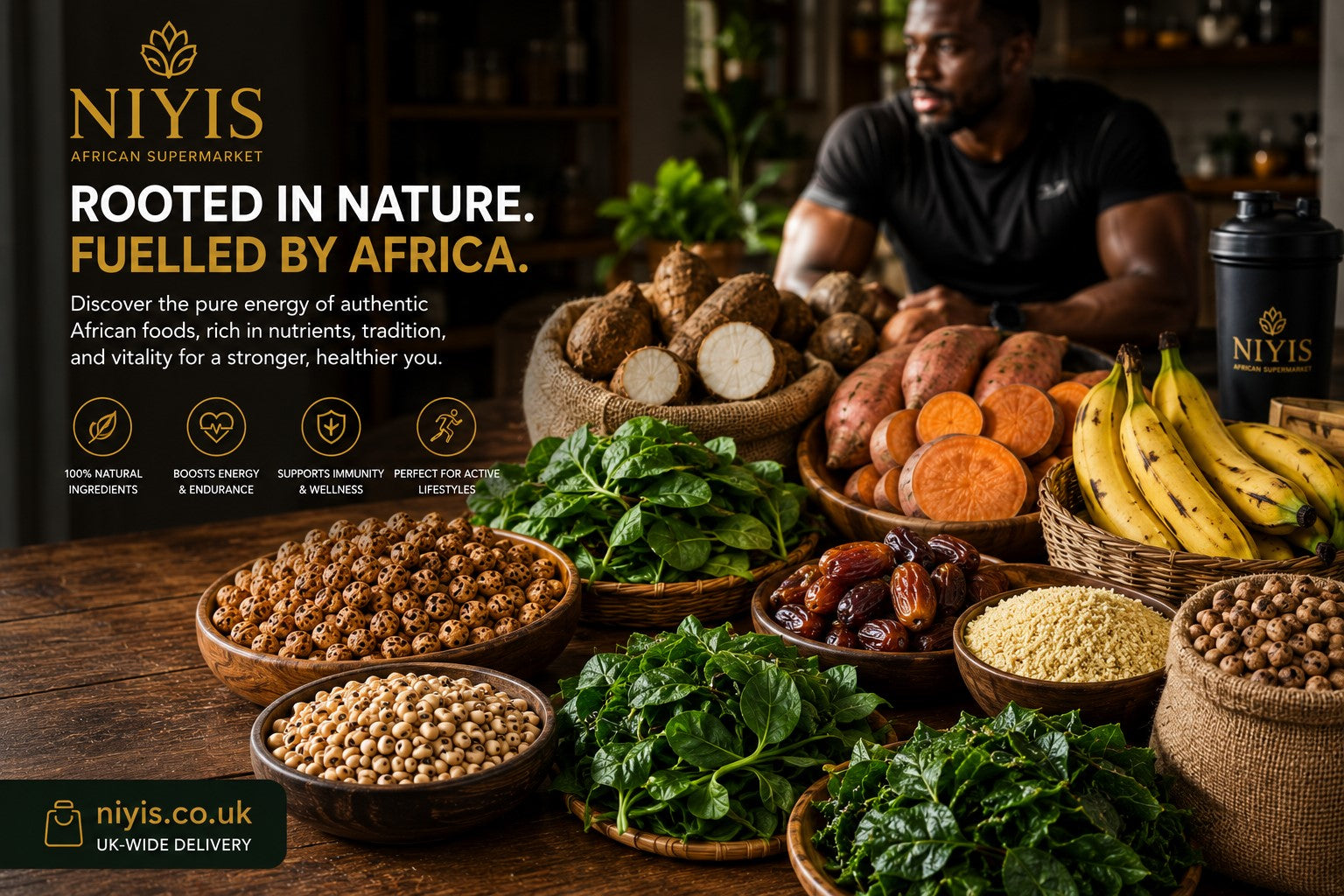
African foods for energy are gaining popularity in the UK as more people look for natural ways to support stamina, productivity, exercise performance, and overall wellbeing. Many traditional African foods contain complex carbohydrates, fibre, healthy fats, vitamins, minerals, and antioxidants that help fuel the body throughout the day.
From nutrient-rich tiger nuts and beans to leafy vegetables like ugu and waterleaf, African cuisine offers a wide variety of foods that may help support healthy energy levels without relying heavily on highly processed snacks or sugary drinks.
What Are African Foods for Energy?
African foods for energy are nutrient-dense foods commonly consumed across Africa that provide carbohydrates, healthy fats, protein, vitamins, and minerals needed to support daily physical and mental performance.
Which African Foods Are Best for Energy?
Some of the best African foods for energy include:
-
Tiger Nuts
-
Beans
-
Yam
-
Plantain
-
Ugu Leaves
-
Waterleaf
-
Brown Rice
-
Sweet Potatoes
-
Egusi
-
Dates
These foods help provide sustained energy through a combination of fibre, nutrients, and slow-releasing carbohydrates.
Nutritional Profile of African Foods for Energy

Many traditional African foods contain nutrients that help support healthy energy production.
|
Nutrient |
Common African Food Sources |
Potential Benefit |
|
Complex Carbohydrates |
Yam, plantain, beans |
Sustained energy |
|
Fibre |
Tiger nuts, beans, vegetables |
Slower energy release |
|
Iron |
Ugu leaves, waterleaf |
Supports oxygen transport |
|
Magnesium |
Tiger nuts, beans |
Muscle and nerve function |
|
Protein |
Fish, beans, eggs |
Recovery and endurance |
|
Antioxidants |
Vegetables, spices |
Supports overall wellness |
|
Healthy Fats |
Egusi seeds, fish |
Long-lasting energy |
You can shop authentic energy-supporting ingredients from Niyis African Supermarket, including Tiger Nuts, Fresh Ugu Leaves, and Fresh Waterleaf.
For more traditional ingredients, browse the African Grocery Collection.
Top Benefits of African Foods for Energy
1. May Provide Long-Lasting Energy
One of the biggest advantages of traditional African foods is their reliance on complex carbohydrates rather than highly processed sugars.
Foods such as yam, beans, sweet potatoes, and plantain release energy gradually, helping to reduce sudden spikes and crashes in blood sugar levels.
Many people choose these foods before work, exercise, or busy days because they can help maintain steady energy throughout the day.
You can find authentic African staples through the African Grocery Collection.
2. Rich in Fibre for Sustained Fuel
Fibre slows digestion and helps regulate how carbohydrates are absorbed by the body.
Excellent African sources of fibre include:
-
Tiger nuts
-
Beans
-
Plantain
-
Vegetables
Tiger nuts are particularly popular because they contain fibre, magnesium, and antioxidants that support overall wellbeing.
For additional nutritional support, explore the Benefits of Tiger Nuts.
3. Supports Healthy Iron Levels
Iron plays an important role in carrying oxygen around the body. Low iron levels can contribute to tiredness and fatigue.
Traditional Nigerian vegetables such as:
are commonly included in soups and meals because they contain valuable nutrients.
Read more in our guide to Nigerian Soups Rich in Iron.
4. May Support Physical Performance
Many African foods naturally combine carbohydrates, protein, and healthy fats.
Examples include:
-
Beans and plantain
-
Moi Moi
-
Egusi soup
-
Fish and vegetables
This nutrient combination helps provide fuel while supporting recovery after physical activity.
Athletes and active individuals often include Fresh ugu leaves and Fresh waterleaf in meals because of their nutrient density.
5. Supports Overall Wellness

Energy is influenced by more than calories alone. Nutrients such as magnesium, iron, B vitamins, and antioxidants all contribute to normal body function.
Traditional African ingredients often provide a broad range of these nutrients naturally.
You may also enjoy:
Traditional African Uses

Across West Africa, energy-supporting foods have long been part of daily diets.
In Nigerian households, Tiger Nuts are commonly soaked and blended into kunu aya, a refreshing traditional drink enjoyed for nourishment and hydration.
Beans have traditionally served as an affordable source of protein and energy, while yam remains one of the most widely consumed energy foods across many African communities.
Vegetable soups prepared with Fresh Ugu Leaves and Fresh Waterleaf continue to be valued for their nutritional benefits and satisfying nature.
These traditional eating habits align closely with modern nutrition recommendations focused on whole foods and balanced meals.
How to Use African Foods for Energy
Breakfast
-
Moi Moi
-
Boiled eggs
-
Tiger nuts
Midday Snack
-
Tiger nuts
-
Dates
Lunch
-
Beans and plantain
-
Vegetable soup
Pre-Workout Meal
-
Yam
-
Fish
-
Vegetables
Recovery Meal
-
Egusi soup
-
Turkey
-
Ugu vegetables
Useful ingredients can be found in:
Related recipes:
-
Kunu Aya Recipe
-
Nigerian Beans and Plantain Recipe
-
Healthy Vegetable Soup Recipe
-
African Breakfast Smoothie
Possible Side Effects
Although African foods are generally nutritious, moderation is important.
Potential concerns include:
-
Excess calorie intake from large portions
-
Digestive discomfort from excessive fibre
-
Food allergies
-
Sensitivity to certain ingredients
Individuals with underlying medical conditions should seek professional advice before making significant dietary changes.
Who Should Avoid Certain Foods?

Some African foods may not be suitable for everyone.
Extra caution may be required for:
-
Individuals with food allergies
-
People with digestive disorders
-
Those on medically restricted diets
-
Individuals monitoring carbohydrate intake
Always consult a healthcare professional when appropriate.
Where to Buy African Foods for Energy in the UK

You can buy authentic African foods for energy from Niyis African Supermarket with UK-wide delivery.
Popular products include:
You can also browse:
FAQs
What are the best African foods for energy?
Tiger nuts, beans, yam, plantain, vegetables, fish, and sweet potatoes are among the most popular energy-supporting African foods.
Are tiger nuts good for energy?
Yes. Tiger Nuts contain fibre, magnesium, and carbohydrates that may help support sustained energy.
Which Nigerian food gives the most energy?
Yam, beans, plantain, and rice are commonly consumed as major energy sources.
Can African foods help reduce fatigue?
Nutrient-rich foods may support overall wellbeing and energy levels when consumed as part of a balanced diet.
Are ugu leaves good for energy?
Fresh Ugu Leaves contain nutrients including iron that contribute to normal body functions.
How do Nigerians traditionally boost energy naturally?
Traditional foods such as yam, beans, tiger nuts, vegetable soups, and fish are commonly included in balanced meals.
Is kunnu aya good for energy?
Kunnu aya made from tiger nuts is traditionally enjoyed as a nourishing beverage across West Africa.
Can athletes eat African foods?
Yes. Many African foods provide carbohydrates, protein, vitamins, and minerals suitable for active lifestyles.
Related Recipes
You may also enjoy:
-
Kunu Aya Tiger Nut Drink Recipe
-
Nigerian Beans and Plantain Recipe
-
Healthy Vegetable Soup Recipe
-
Egusi Soup with Fish
-
African Breakfast Smoothie
-
Grilled Fish with Ugu Vegetables
Related reading:
References
-
PubMed
-
National Institutes of Health (NIH)
-
NHS
-
Harvard Health Publishing
-
Cleveland Clinic
-
British Nutrition Foundation
-
Nutrients Journal
-
Journal of the International Society of Sports Nutrition
Research suggests that nutrient-dense whole foods containing complex carbohydrates, fibre, vitamins, minerals, and protein can help support sustained energy levels and overall wellbeing as part of a healthy lifestyle.
Share:
Beyond Fufu: 5 Other Ways to Use Cassava Flour in the UK (2026)
Nigerian Vegetables and Their Benefits + Where to Buy Them in the UK (2026)