
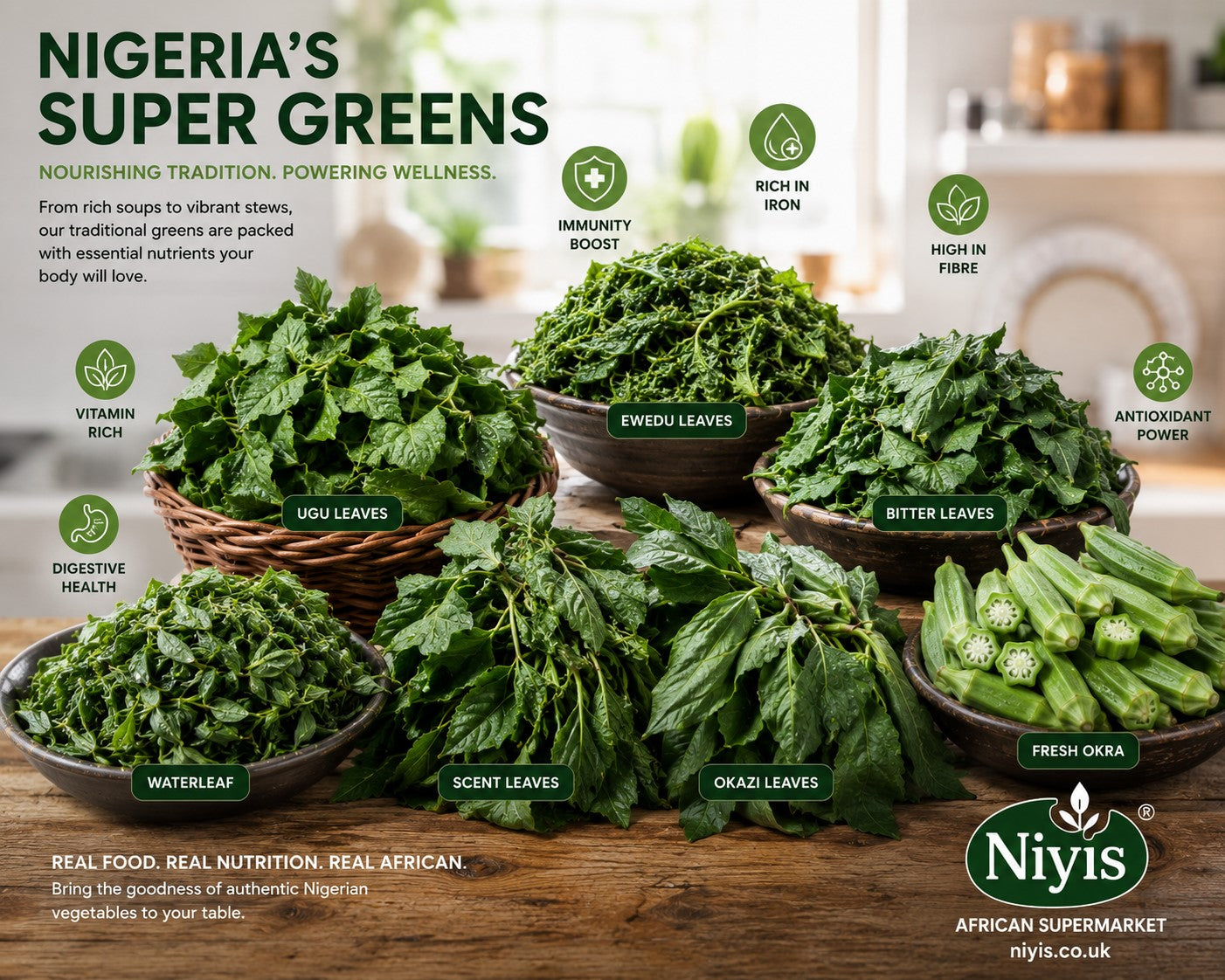
Nigerian vegetables and their benefits are gaining increasing attention in the UK as more people embrace African foods for wellness, nutrition, and traditional cooking. Nigerian leafy vegetables such as ugu, ewedu, bitter leaf, waterleaf, scent leaf, and okazi are nutrient-dense foods rich in vitamins, minerals, fibre, and antioxidants. These traditional African vegetables have been used for generations in soups, stews, and medicinal food preparations. Whether you are looking to improve your diet, support digestive health, or recreate authentic Nigerian meals in the UK, Nigerian vegetables offer both nutritional and cultural value.
What Are Nigerian Vegetables?
Nigerian vegetables are traditional African leafy greens and plant foods commonly used in soups, stews, and healthy meals across Nigeria.
What Are Nigerian Vegetables Good For?
Nigerian vegetables may help support:
-
Digestive health
-
Immune function
-
Healthy blood production
-
Heart health
-
Hydration
-
Overall nutritional wellbeing
Many are naturally rich in fibre, vitamins, minerals, and antioxidants.
Nutritional Profile of Nigerian Vegetables

Most Nigerian vegetables contain essential nutrients that support overall health.
|
Nutrient |
Common Sources |
Potential Benefit |
|
Vitamin A |
Ugu, bitter leaf |
Eye health |
|
Vitamin C |
Waterleaf, scent leaf |
Immune support |
|
Iron |
Ugu, ewedu |
Healthy blood production |
|
Calcium |
Bitter leaf, ewedu |
Bone health |
|
Fibre |
Okra, waterleaf, ugu |
Digestive support |
|
Antioxidants |
Most leafy vegetables |
Cellular protection |
|
Folate |
Ugu, waterleaf |
Cell growth |
Popular vegetables available from Niyis include:
Top Benefits of Nigerian Vegetables
1. May Support Digestive Health
Many Nigerian vegetables contain dietary fibre, which plays an important role in digestion and gut health.
Vegetables such as:
are traditionally consumed as part of balanced diets that support healthy digestion.
Fibre helps maintain normal bowel movements and may contribute to feelings of fullness after meals.
2. Rich in Vitamins and Minerals
Nigerian vegetables are packed with essential nutrients.
Ugu leaves are particularly valued for their iron and folate content, while bitter leaves contain a range of plant compounds traditionally associated with wellness.
Many Nigerian soups combine several vegetables together to create nutrient-dense meals.
Explore the African Vegetables Collection for authentic ingredients.
3. May Support Immune Function
Vegetables rich in vitamin C and antioxidants may contribute to normal immune function.
Examples include:
-
Waterleaf
-
Scent leaf
-
Bitter leaf
-
Ewedu
These vegetables are often combined with spices and herbs in traditional Nigerian recipes.
Pair them with ingredients from the African Grocery Collection for complete meal preparation.
4. May Support Healthy Blood Production

Iron-rich vegetables are highly valued in Nigerian cuisine.
Ugu leaves are one of the most commonly recommended vegetables because they naturally contain iron, folate, and other nutrients involved in red blood cell production.
Many Nigerian households traditionally prepare ugu soup for nutritional support.
Read more:
5. Naturally Low in Calories
Most leafy vegetables are naturally low in calories while providing significant nutritional value.
This makes them popular among people looking to maintain healthy eating habits while enjoying traditional Nigerian meals.
Vegetable-rich soups often include:
Traditional African Uses

Nigerian vegetables have been used for generations in family cooking and cultural celebrations.
Examples include:
Ugu Leaves
Used in:
-
Edikang Ikong
-
Ugu Soup
-
Vegetable Soup
Ewedu Leaves
Used in:
-
Ewedu Soup
-
Amala Meals
-
Traditional Yoruba Dishes
Bitter Leaf
Used in:
-
Ofe Onugbu
-
Bitterleaf Soup
-
Traditional Herbal Food Preparations
Waterleaf
Used in:
-
Edikang Ikong
-
Afang Soup
-
Vegetable Soups
These traditional uses help preserve cultural heritage while providing nutritional benefits.
Related reading:
-
https://niyis.co.uk/blogs/news/10-health-benefits-of-bitter-leaves
-
https://niyis.co.uk/blogs/news/nutrition-and-health-benefits-of-jute-leaves
How to Use Nigerian Vegetables
Popular ways to enjoy Nigerian vegetables include:
Soups
-
Ewedu Soup
-
Bitterleaf Soup
-
Afang Soup
-
Edikang Ikong
Smoothies
Some vegetables can be blended into nutrient-rich green smoothies.
Stews
Vegetables can be added to tomato stews and sauce preparations.
Healthy Side Dishes
Lightly steamed vegetables can accompany rice, beans, and grilled proteins.
Recommended ingredients:
Possible Side Effects

Although Nigerian vegetables are highly nutritious, some individuals may experience:
-
Digestive discomfort from excessive fibre intake
-
Allergic reactions to specific vegetables
-
Sensitivity to herbal compounds
Moderation is important.
Vegetables should be thoroughly washed and properly prepared before consumption.
Who Should Avoid Certain Vegetables?
Speak with a healthcare professional if you:
-
Have known food allergies
-
Have kidney conditions requiring dietary restrictions
-
Follow medically supervised diets
-
Experience digestive disorders
Most healthy adults can safely enjoy Nigerian vegetables as part of a balanced diet.
Where to Buy Nigerian Vegetables in the UK

You can buy authentic Nigerian vegetables and African groceries from Niyis African Supermarket with UK-wide delivery.
Popular options include:
Browse:
FAQs
What are the healthiest Nigerian vegetables?
Ugu, ewedu, bitter leaf, waterleaf, and scent leaf are among the most nutrient-rich Nigerian vegetables.
Are Nigerian vegetables good for digestion?
Many Nigerian vegetables contain fibre that may support digestive health.
Which Nigerian vegetable contains iron?
Ugu leaves are particularly known for their iron content.
Is bitter leaf healthy?
Bitter leaf contains antioxidants and nutrients that may support overall wellness.
Can I buy Nigerian vegetables in the UK?
Yes. Niyis African Supermarket supplies authentic Nigerian vegetables across the UK.
What is waterleaf used for?
Waterleaf is commonly used in Edikang Ikong, Afang Soup, and vegetable soup.
Are frozen vegetables as good as fresh vegetables?
Frozen vegetables can retain many nutrients and offer convenience for cooking.
How do Nigerians traditionally eat vegetables?
Vegetables are most commonly prepared in soups, stews, and traditional family meals.
Related Recipes
-
Ewedu Soup Recipe
-
Afang Soup Recipe
-
Edikang Ikong Recipe
-
Bitterleaf Soup Recipe
-
Nigerian Vegetable Soup Recipe
-
Healthy Green Smoothie
-
Ugu Soup Recipe
Related Niyis Articles:
-
Fresh Ugu Leaves in the UK: Storage, Uses & Where to Buy
-
Benefits of Ewedu Leaves
-
10 Health Benefits of Bitter Leaves
-
Afang Soup Recipe Guide
-
Nigerian Vegetable Soup Guide
References
-
PubMed
-
NIH
-
NHS
-
Harvard Health
-
Cleveland Clinic
-
British Nutrition Foundation
-
Peer-reviewed nutrition journals
Research consistently shows that diets rich in vegetables, fibre, antioxidants, vitamins, and minerals support overall health and wellbeing. Nigerian vegetables provide a nutrient-dense and culturally significant way to increase vegetable intake while enjoying authentic African cuisine.
Share:
African Foods for Energy: 10 Natural Energy-Boosting Foods in the UK (2026)
Is Okra Water Healthy? Benefits, Uses & Where to Buy Okra in the UK (2026)