
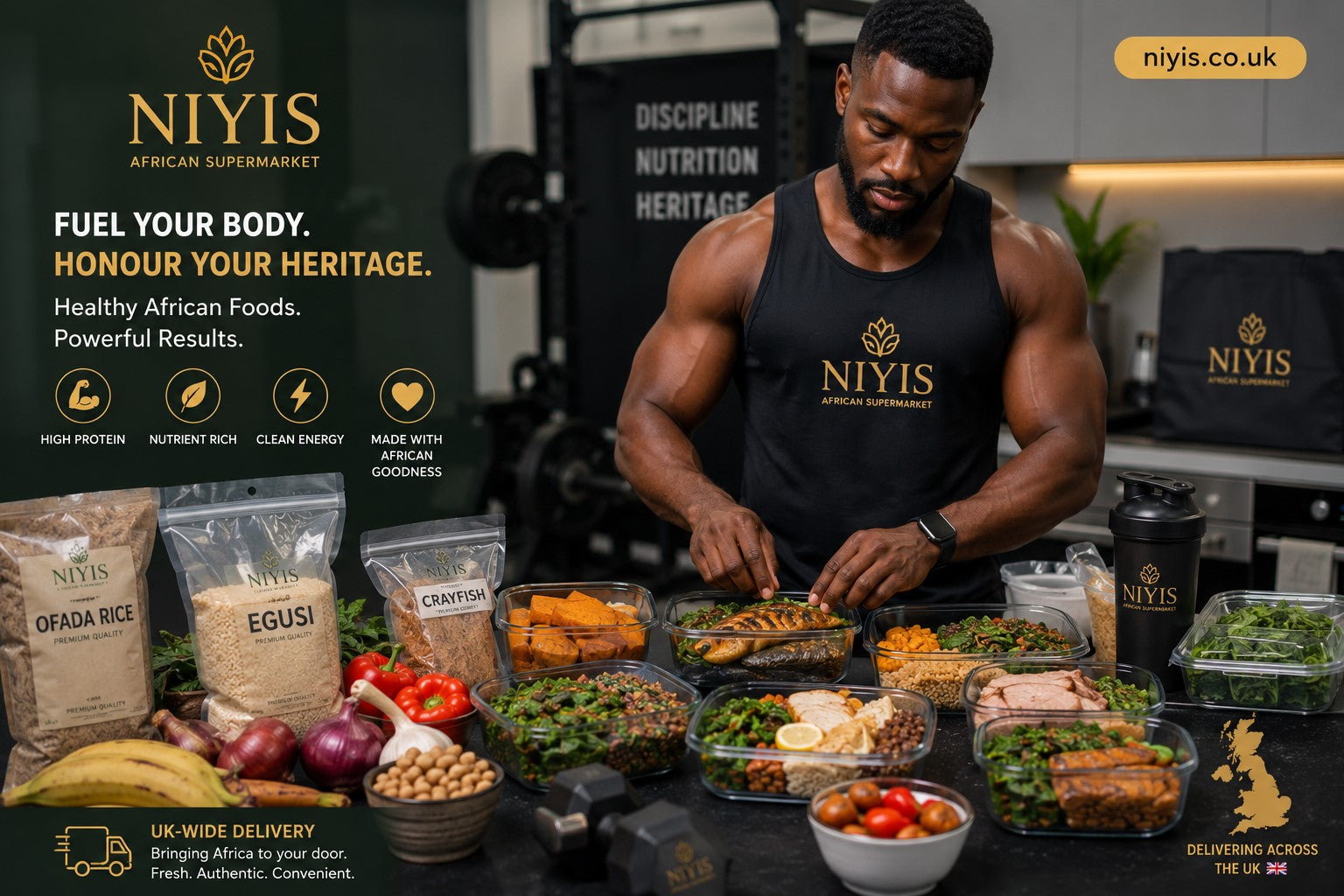
Healthy Nigerian foods for gym diets are becoming increasingly popular among fitness enthusiasts in the UK who want nutrient-dense meals that support muscle growth, recovery, and overall wellness. Traditional Nigerian foods offer a powerful mix of protein, fibre, vitamins, minerals, and healthy fats that can fit perfectly into strength training, bodybuilding, and weight management plans. From protein-rich beans and fish to nutrient-packed vegetables like ugu and waterleaf, Nigerian cuisine offers many natural foods that can help fuel workouts while supporting recovery and performance.
What Are Healthy Nigerian Foods for Gym Diets?
Healthy Nigerian foods for gym diets are traditional Nigerian ingredients and meals that provide protein, complex carbohydrates, vitamins, minerals, and healthy fats to support exercise performance, muscle recovery, and fitness goals.
Which Nigerian Foods Are Best for Gym Diets?
Some of the best healthy Nigerian foods for gym diets include:
-
Beans
-
Moi Moi
-
Grilled Fish
-
Smoked Turkey
-
Egusi
-
Ugu Leaves
-
Waterleaf
-
Tiger Nuts
-
Brown Rice
These foods can help support muscle development, recovery, and sustained energy levels when consumed as part of a balanced diet.
Nutritional Profile of Healthy Nigerian Foods

Many traditional Nigerian foods contain nutrients that are essential for athletes, bodybuilders, and active individuals.
|
Nutrient |
Nigerian Food Sources |
Potential Fitness Benefit |
|
Protein |
Beans, fish, turkey, eggs |
Muscle growth and recovery |
|
Fibre |
Tiger nuts, beans, vegetables |
Digestive health and satiety |
|
Iron |
Ugu leaves, waterleaf |
Oxygen transport and energy |
|
Magnesium |
Tiger nuts, beans |
Muscle function |
|
Healthy Fats |
Egusi seeds, fish |
Hormonal support |
|
Antioxidants |
Vegetables, spices |
Recovery from exercise |
|
Complex Carbohydrates |
Yam, rice, sweet potatoes |
Sustained workout energy |
You can shop authentic Nigerian fitness ingredients from Niyis African Supermarket including Tiger Nuts, Fresh Ugu Leaves, and Fresh Waterleaf.
For more ingredient ideas, browse the African Vegetables Collection and the African Grocery Collection.
Top Benefits of Healthy Nigerian Foods for Gym Diets
1. May Support Muscle Growth and Recovery
Protein is one of the most important nutrients for anyone involved in strength training. Sports nutrition research consistently shows that adequate protein intake helps support muscle repair and growth after exercise.
Traditional Nigerian foods such as beans, grilled fish, turkey, eggs, and egusi provide quality protein sources that can be incorporated into post-workout meals.
A meal of egusi soup paired with lean fish and vegetables provides protein alongside important micronutrients. You can also include Fresh Ugu Leaves in soups to increase nutrient density.
For more nutrition-focused content, read:
2. Rich in Fibre for Digestive Health
Fibre plays an important role in digestion, satiety, and blood sugar management. High-fibre foods may help gym-goers maintain healthy eating habits by promoting fullness.
Excellent Nigerian fibre sources include:
-
Beans
-
Vegetables
-
Tiger nuts
-
Plantain
-
Whole grains
Tiger nuts are particularly popular because they contain fibre, magnesium, and antioxidants.
You can also browse the African Vegetables Collection for additional fibre-rich ingredients commonly used in healthy Nigerian meals.
3. May Support Energy Levels During Training

Exercise requires fuel, and traditional Nigerian carbohydrates can provide long-lasting energy.
Examples include:
Unlike highly processed carbohydrates, these foods provide a slower release of energy that may help sustain performance during workouts.
Many athletes combine carbohydrate-rich meals with protein sources before and after exercise to support recovery.
You can find authentic Nigerian cooking ingredients through the African Grocery Collection.
4. Supports Micronutrient Intake
Micronutrients such as iron, magnesium, potassium, and vitamin C contribute to overall health and athletic performance.
Leafy vegetables commonly used in Nigerian cooking are excellent sources of these nutrients.
Popular options include:
These vegetables are frequently used in traditional soups and healthy meal preparation.
For more wellness information, read:
Traditional Nigerian Fitness Foods

Long before modern gym culture became popular, Nigerians consumed many nutrient-rich foods that naturally supported active lifestyles.
Beans were widely consumed as an affordable protein source. Farmers and labourers often ate yam for energy, while fish supplied protein and healthy fats.
In many Nigerian homes, Tiger Nuts are traditionally soaked and blended into kunnu aya, a refreshing drink enjoyed across West Africa.
Vegetable soups prepared with Fresh Waterleaf and Fresh Ugu Leaves remain staple meals because they combine flavour with nutritional value.
This combination of protein, vegetables, and complex carbohydrates reflects many modern sports nutrition recommendations.
How to Use Nigerian Foods in a Gym Diet
High-Protein Breakfast
-
Boiled eggs
-
Fresh fruit
Pre-Workout Meal
-
Brown rice
-
Grilled fish
Post-Workout Meal
-
Lean turkey
-
Small serving of swallow
Healthy Snack

-
Tiger nuts
-
Groundnuts
Recovery Dinner
-
Vegetable soup
Useful ingredients can be found in the:
Related recipes:
-
Kunu Aya Recipe
-
Healthy Nigerian Vegetable Soup Recipe
-
Egusi Soup with Fish
-
Nigerian Beans and Plantain Recipe
Possible Side Effects
Although healthy Nigerian foods can be highly nutritious, moderation remains important.
Potential concerns include:
-
Excess calorie intake from large portions
-
Digestive discomfort from excessive fibre
-
Food allergies
-
Excess oil consumption in some soups
Individuals with medical conditions should consult a qualified healthcare professional before making significant dietary changes.
Who Should Avoid Certain Foods?
Some Nigerian foods may not be suitable for everyone.
Extra caution may be needed for:
-
Individuals with food allergies
-
People with digestive disorders
-
Those following medically prescribed diets
-
Individuals advised to limit protein intake
Always seek personalised medical advice when necessary.
Where to Buy Healthy Nigerian Foods in the UK

You can buy authentic Nigerian fitness foods and ingredients from Niyis African Supermarket with UK-wide delivery.
Recommended products include:
If you want more ingredient inspiration, explore Niyis African Supermarket for Nigerian staples that fit into a gym-friendly meal plan.
FAQs
Are Nigerian foods good for bodybuilding?
Yes. Many Nigerian foods provide protein, healthy fats, vitamins, and complex carbohydrates that support muscle development.
What Nigerian food has the most protein?
Beans, fish, turkey, eggs, and egusi are among the highest-protein Nigerian foods.
Are tiger nuts good for gym diets?
Tiger nuts provide fibre, minerals, and carbohydrates that can support active lifestyles.
Is Moi Moi healthy for athletes?
Moi Moi is made from beans and provides protein and fibre, making it a popular choice among fitness-conscious individuals.
Which Nigerian vegetables are best for gym diets?
Fresh Ugu Leaves, Fresh Waterleaf, and Fresh Ewedu Leaves are nutrient-rich options.
Can Nigerian food help with weight loss?
Weight loss depends on overall calorie intake and activity levels, but many Nigerian foods can fit into a balanced weight management plan.
Is egusi good for muscle growth?
Egusi contains protein and healthy fats that may support recovery when consumed in moderation.
Can athletes eat swallow?
Yes. Swallow can provide carbohydrates for energy, but portion control remains important.
References
-
PubMed
-
National Institutes of Health (NIH)
-
NHS
-
Harvard Health Publishing
-
Cleveland Clinic
-
British Nutrition Foundation
-
Journal of the International Society of Sports Nutrition
-
Nutrients Journal
Research consistently suggests that adequate protein intake, fibre-rich foods, vegetables, and nutrient-dense whole foods can support exercise performance, recovery, and overall health when combined with regular physical activity and a balanced diet.
Share:
The Great Nigerian Soup Debate: Egusi vs. Ogbono – Which Side Are You On?
Smoked Turkey Secrets: How to Get Incredibly Tender Smoked Turkey in the UK (2026)