
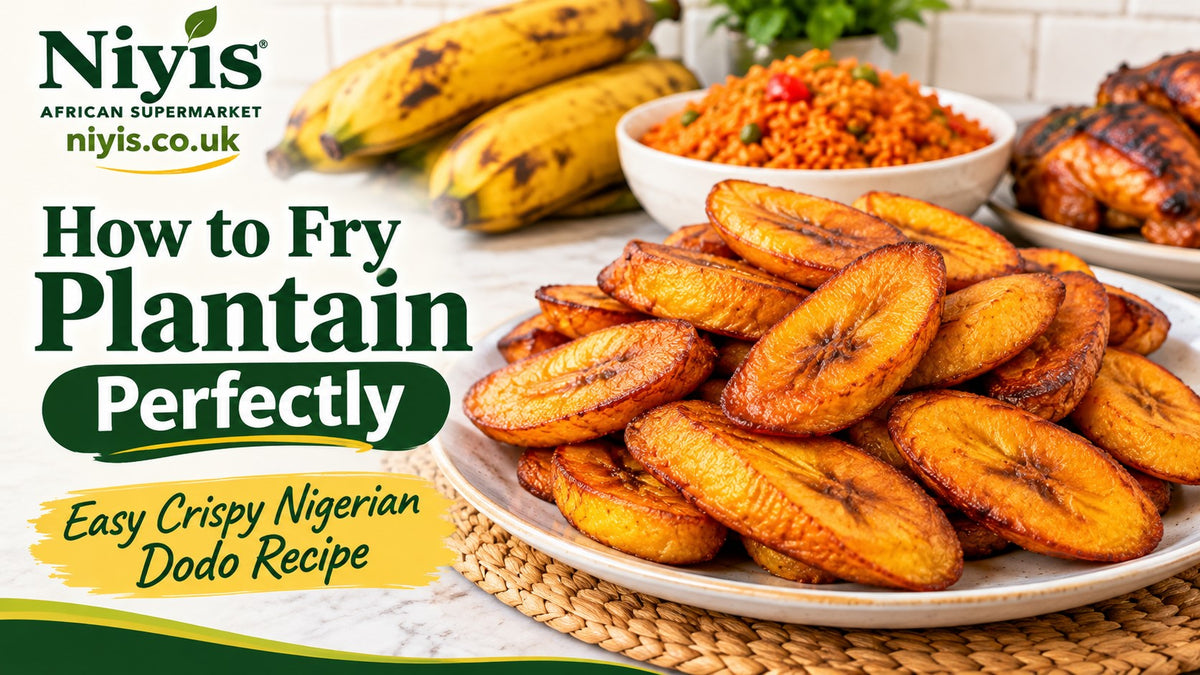
Learning how to fry plantain is one of the easiest ways to bring authentic Nigerian flavour to your kitchen. Nigerian fried plantain, popularly known as dodo, is made by slicing ripe plantains and frying them until their edges become golden brown and slightly caramelised while the inside remains soft and tender.
Whether you are preparing Nigerian food in the UK or recreating your favourite homemade meals, getting the best fried plantain depends on choosing the right ripeness, cutting evenly sized slices and maintaining the correct frying temperature. Plantains also provide carbohydrates, fibre and naturally occurring potassium, making them a versatile ingredient in everyday meals.
From traditional dodo served with jollof rice to sweet fried plantain paired with beans, this guide explains how to make delicious Nigerian fried plantain every time.
How Do You Fry Plantain?
To fry perfect Nigerian plantain:
-
Choose ripe yellow plantains with black spots for natural sweetness.
-
Peel and slice diagonally into medium-sized pieces.
-
Heat vegetable oil in a frying pan over medium heat.
-
Add the plantain slices without overcrowding the pan.
-
Fry for approximately 2–3 minutes on each side until golden brown.
-
Remove and drain on kitchen paper.
-
Serve hot with jollof rice, beans, eggs or Nigerian stew.
The secret to delicious dodo is using properly ripened plantains and avoiding excessively hot oil.
1. Choosing the Best Plantain for Frying
The ripeness of your plantain determines its sweetness, texture and final appearance.
Although green and yellow plantains can both be fried, traditional Nigerian dodo is best prepared using ripe plantains.
Here is how to identify the right plantain for frying.
|
Plantain ripeness |
Appearance |
Best use |
|
Green |
Firm, green skin |
Kpekere and savoury dishes |
|
Partially ripe |
Green and yellow skin |
Firmer, less sweet fried plantain |
|
Ripe |
Yellow skin |
Traditional dodo |
|
Very ripe |
Yellow skin with black spots |
Sweet, caramelised dodo |
|
Overripe |
Mostly black, very soft flesh |
Baking and mashing, if still fresh and suitable |
Which plantain is best for dodo?
Choose yellow plantains with noticeable black spots. At this stage, their natural starch has converted into more sugars, creating the sweetness associated with Nigerian fried plantain.
Avoid plantains that are excessively mushy, leaking or showing signs of spoilage.
For convenient shopping, Niyis offers Fresh Yellow Plantain Box 5kg, selected for sweetness and suitable for making traditional dodo.
If you prefer firmer, savoury plantains for other recipes, explore Fresh Green Plantain.
For more information, read our guide to ripe vs unripe plantain and the dishes you can prepare.
2. How to Slice Plantain for Perfect Dodo
Slicing technique makes a noticeable difference to how your plantain cooks.
Before cutting, wash the outside of the plantain, trim both ends and remove the skin.
You can slice plantain in three popular ways:
Diagonal slices: Cut across the plantain at an angle. This creates longer pieces with more surface area for browning. It is one of the most popular shapes for Nigerian dodo.
Round slices: Cut the plantain into circular pieces. These cook relatively quickly and are suitable for smaller portions.
Chunky slices: Cut into thicker pieces for a softer centre and more substantial bite.
For traditional Nigerian fried plantain, medium-thick diagonal slices are an excellent option.
Avoid cutting the plantain too thinly if you want a soft, tender centre. Very thin slices are more likely to become crisp, similar to plantain chips.
Pro tip: Try to keep all your slices approximately the same thickness. This helps them cook evenly and prevents some pieces from burning while others remain undercooked.
3. Best Oil and Frying Temperature
Choosing the right cooking oil is essential when learning how to fry plantain.
A neutral-tasting oil with a suitable high smoke point works well because it allows the natural sweetness of the plantain to remain the main flavour.
Popular options include:
-
Vegetable oil: A versatile choice for traditional dodo.
-
Sunflower oil: Has a relatively neutral flavour and works well for frying.
-
Groundnut oil: Offers a subtle nutty flavour.
-
Palm oil: Gives plantain a distinctive colour and flavour, although it changes the taste of the finished dish.
For everyday frying, Niyis Vegetable Oil is a convenient option.
The ideal oil temperature is approximately 170–180°C.
If you do not have a cooking thermometer, test the oil with one small slice. It should begin sizzling gently when added.
Avoid overheating the oil. Excessively hot oil can brown the outside before the inside becomes properly tender.
Also, avoid overcrowding the pan because adding too many slices at once lowers the oil temperature and can produce greasy plantain.
4. Step-by-Step Nigerian Fried Plantain Recipe

Here is a simple Nigerian dodo recipe you can prepare at home.
Ingredients
-
2–3 ripe plantains
-
Vegetable oil for frying
-
Salt to taste
-
Optional seasoning of your choice
Preparation time
10 minutes
Cooking time
10–15 minutes
Method
Step 1: Prepare the plantains
Wash the plantains, cut off the ends and peel away the skin.
Step 2: Slice evenly
Cut diagonally into medium-thick slices. Keep the thickness consistent for even cooking.
Step 3: Season lightly
Add a small amount of salt if desired. You can also leave the plantain unseasoned to enjoy its natural sweetness.
Step 4: Heat the oil
Pour enough vegetable oil into a frying pan to cover the bottom generously. Heat over medium heat until it reaches approximately 170–180°C.
Step 5: Add the plantain
Carefully place the slices into the hot oil. Leave enough space between them to allow even frying.
Step 6: Fry until golden
Allow the plantain to fry for approximately 2–3 minutes on each side, depending on thickness and ripeness.
Turn each slice carefully when the underside becomes golden brown.
Step 7: Remove and drain
Transfer the cooked plantain to a plate lined with kitchen paper to absorb excess oil.
Step 8: Serve immediately
Enjoy your freshly prepared dodo while warm.
5. Seasoning Variations for Fried Plantain
Traditional Nigerian dodo is often prepared with just ripe plantain and a little salt. However, you can experiment with different flavours.
|
Seasoning |
Flavour |
Best serving idea |
|
Salt |
Simple and savoury |
Jollof rice |
|
Cayenne pepper |
Spicy warmth |
Beans and stew |
|
Ginger powder |
Mild aromatic flavour |
Grilled chicken |
|
Smoked paprika |
Smoky flavour |
Grilled fish |
|
Garlic powder |
Savoury taste |
Eggs and vegetables |
|
Cinnamon |
Sweet aromatic flavour |
Breakfast or snacks |
For a spicy Nigerian-inspired variation, lightly season your sliced plantain with salt and a little cayenne pepper before frying.
You can also explore Nigerian spices and how to use them for inspiration.
Remember that seasoning should complement the plantain rather than overpower its natural sweetness.
6. What to Serve with Nigerian Dodo

One reason Nigerian fried plantain remains popular is its versatility. Its natural sweetness complements savoury, spicy and rich Nigerian meals.
Here are some delicious combinations.
1. Jollof Rice and Chicken
Dodo is a classic accompaniment to Nigerian jollof rice. The sweetness of the plantain balances the spicy tomato-based rice, while grilled or fried chicken completes the meal.
2. Beans and Fried Plantain
Beans and dodo are a much-loved Nigerian combination. The soft, savoury beans pair beautifully with the sweet, golden plantain.
Try Niyis Premium Nigerian Honey Beans for a traditional beans dish.
3. Fried Rice and Plantain
Serve dodo alongside Nigerian fried rice with chicken, turkey or fish for a satisfying lunch or dinner.
4. Yam and Egg Sauce
Fried plantain can accompany boiled yam and Nigerian egg sauce. This combination works particularly well for breakfast.
5. Moi Moi and Dodo
Serve warm dodo with steamed Nigerian moi moi for a delicious and filling meal.
6. Nigerian Stew and White Rice
The sweetness of fried plantain provides a pleasant contrast to spicy tomato stew and plain rice.
For more meal inspiration, explore our 15 Nigerian lunch ideas.
7. Common Plantain Frying Mistakes

Even a simple recipe can go wrong when certain cooking mistakes are overlooked.
|
Mistake |
What happens |
How to avoid it |
|
Using green plantain |
Dodo tastes less sweet |
Choose ripe yellow plantain |
|
Cutting unevenly |
Uneven cooking |
Slice consistently |
|
Oil too hot |
Outside burns quickly |
Maintain medium heat |
|
Oil not hot enough |
Plantain absorbs excess oil |
Heat oil before frying |
|
Overcrowding the pan |
Uneven browning |
Fry in batches |
|
Frying too long |
Plantain becomes dry |
Remove when golden |
|
Leaving cooked plantain uncovered for too long |
Steam can soften the surface |
Serve shortly after frying |
How do you keep fried plantain from becoming soggy?
Use properly heated oil, avoid overcrowding the pan and drain the finished plantain on kitchen paper. Serve shortly after frying for the best texture.
8. Where to Buy Plantain in the UK
Finding good-quality ripe plantain is important when preparing authentic Nigerian dodo at home.
If you live in the UK, Niyis African Supermarket makes it easier to shop for Nigerian plantains and complementary African groceries online.
You can explore:
-
Fresh Yellow Plantain Box 5kg: Sweet, ripe plantains for traditional dodo.
-
Fresh Green Plantain Box 5kg: Firm plantains for savoury recipes.
-
Vegetable Oil: A versatile cooking oil for frying.
-
Palm and Cooking Oils Collection: Explore different oils for Nigerian cooking.
-
African and Caribbean Groceries: Shop complementary ingredients for everyday Nigerian meals.
Whether you are preparing dodo for breakfast, lunch or a family gathering, Niyis helps you find ingredients for authentic African cooking in the UK.
Check individual product listings for current stock and delivery information.
9. Frequently Asked Questions About Frying Plantain
1. How long does it take to fry plantain?
Plantain generally takes approximately 2–3 minutes per side when fried in properly heated oil. Cooking time depends on thickness, ripeness and oil temperature.
2. Should plantain be ripe before frying?
For traditional Nigerian dodo, yes. Ripe yellow plantains with black spots provide the natural sweetness and soft texture associated with fried plantain.
Green plantains can also be fried, but they produce a firmer, less sweet result.
3. Why is my fried plantain hard?
Your plantain may be insufficiently ripe, sliced too thinly or fried for too long. Choose ripe plantains and avoid excessive cooking.
4. Can I fry plantain without salt?
Yes. Ripe plantains contain natural sugars and taste delicious without additional seasoning. Salt is optional.
5. What is the best oil for frying Nigerian plantain?
Vegetable oil is a popular choice because of its neutral flavour. Sunflower and groundnut oils are also suitable options.
6. How do I make crispy fried plantain?
Use evenly sliced plantain, maintain an appropriate frying temperature and avoid overcrowding the pan. For crispier results, use slightly thinner slices, although traditional dodo is usually soft inside.
7. Can I fry frozen plantain?
Yes, provided it is sold as a frying-ready product. Follow its preparation instructions and avoid placing ice-covered or wet plantain directly into hot oil because it can cause dangerous splattering.
8. Can I use overripe plantain for dodo?
Yes, provided it is still fresh and safe to eat. Very ripe plantains are particularly sweet but can become soft and fragile during frying. Handle them carefully.
9. What is the difference between dodo and plantain chips?
Dodo is made with ripe plantain sliced into medium or thick pieces and fried until golden and tender. Plantain chips, known as kpekere in Nigeria, are usually sliced thinly and fried until crisp.
10. Related Nigerian Recipes
Want more ways to enjoy plantain and other traditional Nigerian meals? Explore these guides:
Final Thoughts
Knowing how to fry plantain perfectly comes down to three important things: choosing the right plantain, slicing it evenly and maintaining the correct frying temperature.
For authentic Nigerian dodo, use ripe yellow plantains with black spots, fry until golden brown and serve while warm.
Whether you enjoy yours with jollof rice, beans, fried rice or egg sauce, Nigerian fried plantain is a simple dish that makes everyday meals more enjoyable.
Looking for ripe plantains and authentic Nigerian cooking ingredients? Explore the Niyis African Supermarket collection and bring the taste of home to your kitchen.
Share:
Ugu vs Uziza vs Ukazi: Differences, Uses and How to Cook With These Nigerian Vegetables in the UK (2026)
How to Make Amala: A Complete Guide to Yam Flour, Preparation and Serving in the UK (2026)