
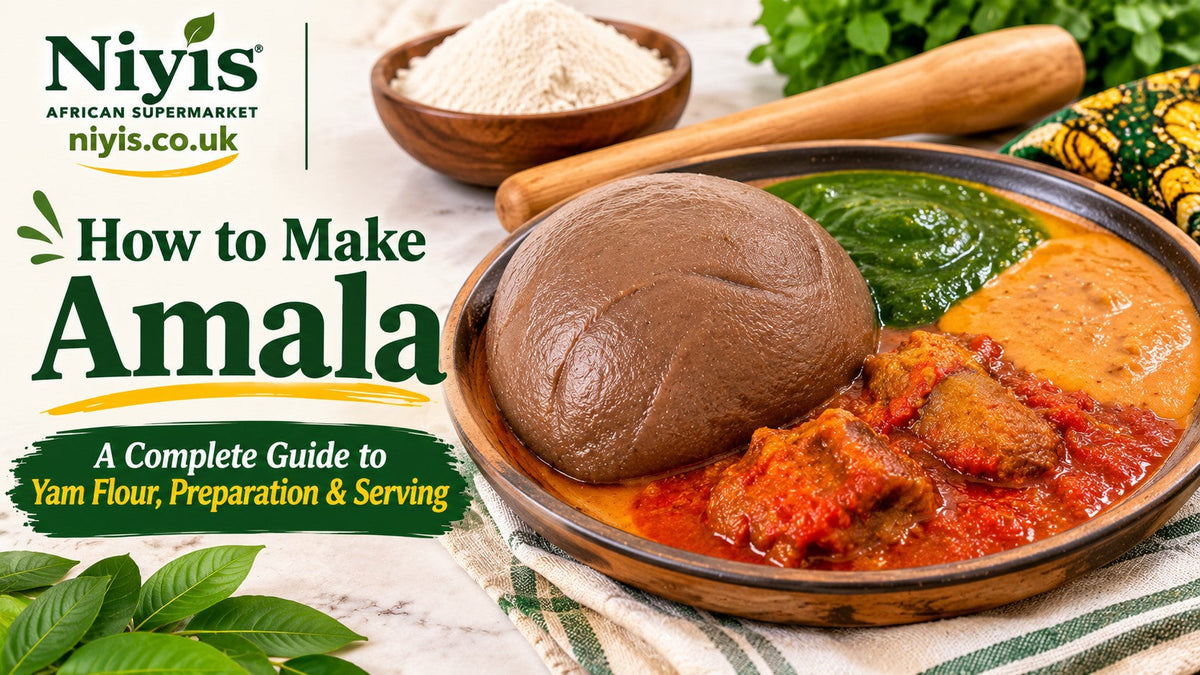
Learning how to make amala is easier when you understand the different types of amala flour, how much water to use and the right stirring technique. This traditional Nigerian swallow is especially popular in Yoruba cuisine, where it is commonly served with ewedu, gbegiri and pepper stew. For Nigerians living in the UK, authentic ingredients are available from African grocery shops, making it possible to prepare smooth, satisfying amala at home. Made mainly from processed yam, cassava or plantain, amala is a carbohydrate-rich food that provides energy and is usually enjoyed with vegetable, bean or meat-based soups.
How Do You Make Amala?
To make traditional yam amala, bring water to a boil in a saucepan, gradually add yam flour while stirring continuously, then mix firmly over low heat until smooth, thick and stretchy. Add a little hot water if necessary, cover briefly to cook through, stir again and serve hot with ewedu, gbegiri or your preferred Nigerian soup.
1. What Is Amala?
Amala is a traditional Nigerian swallow prepared by mixing flour with hot water until it forms a smooth, firm or soft dough. It is particularly associated with Yoruba cuisine and is often eaten by hand with soups and stews.
The most familiar version is dark brown or black amala made from yam flour, known as elubo isu. Its earthy flavour and soft, stretchy texture make it a popular partner for ewedu and gbegiri.
Amala is generally served as part of a meal rather than eaten alone. The soup or stew provides additional flavour, vegetables and protein, depending on the ingredients used.
2. Different Types of Amala

There are three commonly discussed types of Nigerian amala. Their differences come from the ingredients used to produce the flour.
|
Type |
Main ingredient |
Colour and texture |
Common description |
|
Amala Isu |
Dried yam flour |
Brown to dark brown, smooth and stretchy |
Traditional yam amala |
|
Amala Lafun |
Fermented, dried cassava flour |
Usually pale cream or off-white |
Lighter-coloured amala |
|
Amala Ogede |
Dried unripe plantain flour |
Usually light brown or greyish |
Plantain-based amala |
Which amala is most traditional?
Amala Isu, made from yam flour, is the familiar choice for the classic combination of amala, ewedu and gbegiri. Amala Lafun and Amala Ogede offer alternatives with different flavours and textures.
For a closer comparison, read Niyis' guide to the different types of amala flour.
3. How to Choose the Right Amala Flour
The flour you choose affects the colour, taste and final consistency of your amala.
For traditional yam amala, look for finely milled yam flour specifically labelled yam flour, elubo isu or yam flour for amala. Avoid confusing it with instant pounded yam flour, which is made for a different swallow and preparation method.
Niyis Yam Flour (Elubo for Amala) is specifically sold for preparing traditional amala. Check the pack instructions and available sizes before purchasing.
Good-quality flour should be dry, free-flowing and properly stored. Avoid flour with signs of moisture, mould, insects or an unusual smell.
4. How to Make Amala Step by Step

Preparation time: 2 minutes
Cooking time: 5 to 10 minutes
Servings: 2 to 3, depending on portion size
Ingredients
-
2 cups yam flour (elubo isu)
-
Approximately 3 to 4 cups water, adjusted as needed
Method
-
Boil the water: Pour water into a clean saucepan and bring it to a rolling boil.
-
Reduce the heat: Lower the heat slightly to control splashing while you add the flour.
-
Add the yam flour: Sprinkle in the flour gradually, stirring continuously with a wooden spatula or amala turning stick.
-
Mix firmly: Stir and turn the mixture until the flour absorbs the water and begins forming a thick dough.
-
Break up lumps: Press any lumps against the side of the saucepan and continue turning until the mixture becomes smooth.
-
Adjust the consistency: If the amala is too thick or stiff, add a small amount of hot water. If it is too soft, add a little more flour gradually while stirring.
-
Allow it to cook: Cover the saucepan and leave on low heat for a few minutes, then stir thoroughly again.
-
Serve: Shape into portions and serve while hot with your preferred Nigerian soup.
The exact water quantity depends on the flour, grind and preferred texture. Add water gradually rather than pouring it all in at once.
5. How to Get Smooth, Lump-Free Amala
A good amala should be smooth, evenly mixed and free from dry flour pockets. These practical tips help you achieve the right texture:
-
Use boiling water: Hot water helps the flour cook and bind into a dough.
-
Add flour gradually: Adding too much at once can create stubborn lumps.
-
Stir continuously: Use firm, consistent movements to combine the flour and water.
-
Control the heat: Lower heat makes it easier to mix without scorching the bottom.
-
Adjust carefully: Add hot water in small amounts if the dough becomes too firm.
-
Allow it to cook through: Cover briefly and stir again before serving.
|
Amala problem |
Possible cause |
How to correct it |
|
Too many lumps |
Flour added too quickly |
Stir firmly and press lumps against the pan |
|
Too soft |
Too much water |
Add flour gradually while mixing |
|
Too hard |
Not enough water |
Add small amounts of hot water |
|
Dry flour inside |
Incomplete mixing |
Continue turning and allow it to cook |
|
Burnt bottom |
Heat too high |
Reduce heat and stir regularly |
6. What to Serve with Amala: Ewedu, Gbegiri and Stew
The classic Yoruba combination is Amala, Ewedu and Gbegiri, often called Abula. Each component contributes a different flavour and texture.
Ewedu Soup
Ewedu is made from jute leaves and is known for its smooth, slightly slippery consistency. It is commonly seasoned with iru, salt and other ingredients according to preference.
You can prepare it with fresh leaves or convenient Frozen Ewedu, which is ready to cook.
Gbegiri Soup
Gbegiri is a smooth Nigerian bean soup traditionally made with peeled beans, often honey beans or brown beans. The cooked beans are blended or mashed and simmered with seasoning to create a creamy soup.
For an authentic flavour, try Nigerian Honey Beans (Ewa Oloyin). Add ground crayfish for savoury depth and iru locust beans for traditional seasoning.
Pepper Stew
A well-seasoned pepper stew brings the combination together. It can include peppers, onions, palm oil, meat, fish or assorted protein. Spoon it over the ewedu and gbegiri or serve it alongside them.
For more ideas, explore Niyis' guide to preparing traditional Yoruba soups.
7. Where to Buy Amala Ingredients in the UK
If you are preparing amala in the UK, Niyis African Supermarket stocks ingredients for traditional Nigerian meals.
Recommended ingredients include:
-
Yam Flour for Amala for preparing traditional Amala Isu.
-
Frozen Ewedu for making ewedu soup.
-
Nigerian Honey Beans for gbegiri and other bean dishes.
-
Frozen Iru for authentic seasoning.
Browse the African and Caribbean vegetables collection for vegetable ingredients, the grocery staples collection for flour and beans, or the wider African grocery collection for pantry essentials.
For more meal inspiration, read Niyis' guides to African-Caribbean pantry essentials, Nigerian food shopping in the UK and warming African soups.
8. Frequently Asked Questions
1. What flour is used to make traditional Nigerian amala?
Traditional Amala Isu is made from yam flour, also called elubo isu. It is produced from peeled, processed and dried yam that is milled into flour.
2. How do you make amala without lumps?
Add the flour gradually to boiling water while stirring continuously. Mix firmly, press out lumps and adjust the consistency with small amounts of hot water.
3. Is amala made from yam or cassava?
It can be made from different ingredients. Amala Isu uses yam flour, Amala Lafun uses cassava flour, and Amala Ogede uses plantain flour.
4. Why is my amala too soft?
You may have added too much water or not enough flour. Add a little more flour gradually while stirring until the dough becomes firmer.
5. What soup goes best with amala?
Ewedu and gbegiri with pepper stew are the classic Yoruba combination. Amala can also be served with efo riro, egusi, okro and other Nigerian soups.
6. Can I use poundo yam flour to make amala?
Poundo yam flour is designed for preparing instant pounded yam, not traditional amala. For the familiar amala flavour and texture, choose yam flour labelled elubo for amala.
7. Is amala healthy?
Amala provides carbohydrates for energy. Its overall nutritional value depends on the flour, portion size and accompanying soup. Pairing it with vegetables, beans, fish or meat can make a more varied meal.
8. How do I store yam flour?
Keep yam flour in an airtight container in a cool, dry place away from moisture, heat and pests. Follow the storage instructions on the packaging.
9. Can I prepare amala ahead of time?
Amala is usually best served freshly prepared while warm. If you have leftovers, cool them promptly, refrigerate in a covered container and reheat thoroughly before eating.
Conclusion
Making smooth Nigerian amala at home starts with choosing the right flour and learning how to combine it with hot water. Add the flour gradually, stir firmly, control the consistency and allow it to cook through before serving.
For the classic Yoruba experience, pair your amala with ewedu, gbegiri and pepper stew. With the right ingredients from Niyis, you can prepare this familiar Nigerian meal in your UK kitchen.
Share:
How to Fry Plantain Perfectly: Easy Crispy Dodo Recipe in the UK (2026)