
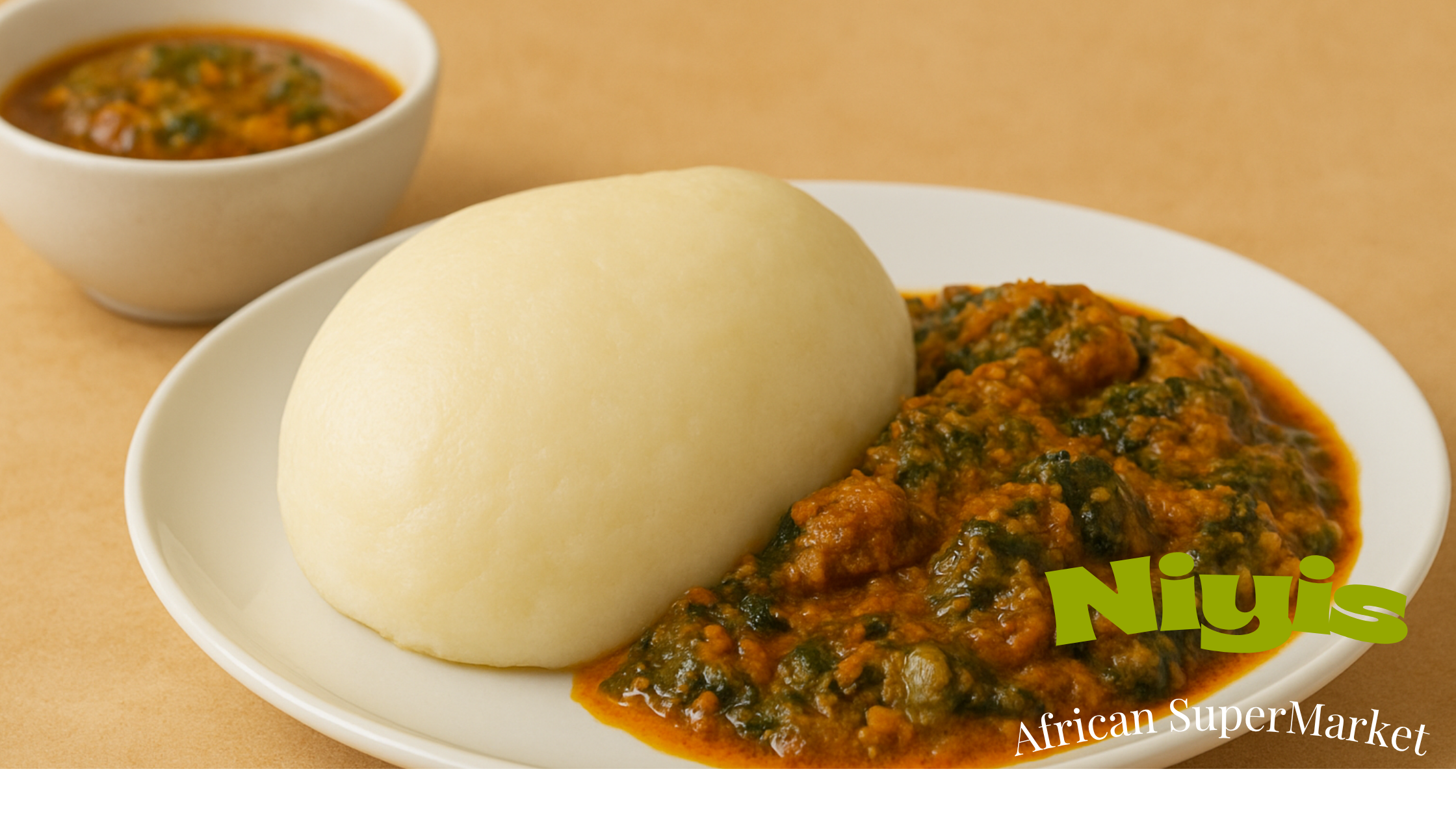

Making perfect pounded yam in the UK, especially without a mortar and pestle, might seem impossible, but it is actually easier than you think.
Craving that soft, stretchy, authentic texture? Or just trying to bring a bit of home to your kitchen? You can get the same great results with the everyday tools you’ve already got. And if you are wondering, “Is pounded yam gluten-free?” the answer is yes. Real pounded yam, made from pure yam tubers or 100 percent yam flour, contains no gluten, making it a great option for anyone seeking gluten-free traditional meals.
And you know. That feeling. You know the one. The feeling that comes with the thought of a perfectly soft, pillowy mound of pounded yam, ready to be cradled with a rich, steaming spoonful of Ogbono, Egusi or Okra soup. For many of us, that taste is the ultimate comfort, the very definition of a meal that feels like home.
But then, reality hits. You are in your UK kitchen, and there is no mortar and pestle in sight. That heavy, wooden vessel that was the heart of so many family kitchens feels a world away. The craving remains, but the tool is missing. Do you just give up on that dream?
Absolutely not. At Niyis, we believe that no distance or missing equipment should stand between you and the tastes you love. We are here to tell you a secret: you can create incredibly authentic, fluffy, and delicious pounded yam right here in your UK kitchen, using tools you likely already own.
It is all about understanding the technique and, most importantly, starting with the right ingredient.
The Foundation: It All Starts with the Yam

Before we even talk about methods, let's talk about the star of the show: the yam itself. You cannot make a great pounded yam from a subpar yam. This is the single most important step.
For that perfect, fluffy result, you need a yam that is high in starch and low in water. This is what allows it to bind together into that smooth, dough-like consistency instead of turning into a gummy paste. This is why we always recommend a high-quality soft yam, White Yam or Puna Yam, some prefer our Yellow yam. These varieties are celebrated for their dry, starchy flesh, making them the ideal choice for pounding.
When you are selecting your yam, look for tubers that feel heavy for their size and have firm, rough skin. Avoid any that feel soft or have blemishes. The quality of your starting ingredient will determine 90% of your success.
Ready to find the perfect yam? You can Shop our premium selection of authentic yams here, sourced to give you that true taste of home.
Method 1: The Food Processor (The Quick & Easy Champion)
This is, without a doubt, the fastest and easiest method to get a fantastic result. A food processor is designed to do the hard work for you, breaking down the cooked yam with minimal effort.
What You'll Need:
- A good quality food processor
- Your chosen yam
- A Pot of boiling water
Step-by-Step Guide:
- Prep the Yam: Peel your yam and cut it into small, uniform cubes, about one inch in size. Smaller cubes will cook faster and more evenly.
- Boil Until Tender: Place the yam cubes in a pot of salted water and boil until they are fork-tender. You should be able to easily slide a fork through a piece without any resistance. Do not overcook it, as it can become too waterlogged.
- Drain and Cool Slightly: Drain the yam in a colander and let it sit for just a minute or two. You want it to cool down enough to handle but still be steaming hot.
- Process in Batches: Place a handful of the hot yam cubes into the bowl of your food processor. Do not fill it more than halfway. Pulse the yam in short bursts. You will see it start to break down and come together.
- Form the Dough: Keep pulsing until the yam forms a smooth, elastic ball that pulls away from the sides of the bowl. This should only take about 30-60 seconds. Do not over-blend, or it will become sticky and gummy.
- Repeat: Remove the finished ball and repeat with the remaining yam until it is all processed. You can use a spatula to help shape the portions into a neat mound on a plate.
Pro Tip: If the yam seems a bit dry as it is processing, add a tablespoon of the hot water you reserved from the pot. This can help it bind together perfectly.
Method 2: The Powerful Blender (The Common Kitchen Hero)
Not everyone has a food processor, but many of us have a powerful blender. This method requires a little more technique and patience, but it can still produce a wonderful result.

What You'll Need:
- A high-powered blender (a standard, less powerful one may struggle)
- Your chosen yam
- A Pot of boiling water
Step-by-Step Guide:
- Prep and Boil: Just like with the food processor, peel and cube your yam. For this method, boil it until it is very, very soft. It needs to be more tender than for the food processor to make the blender's job easier.
- Work in Very Small Batches: This is the key to success with a blender. Place only a few cubes of yam into the blender jug at a time. Overfilling will cause the blades to get stuck.
- Add a Little Water: Add about two tablespoons of the hot water from the pot to the yam in the blender. This helps create a vortex and gets the blades moving.
- Pulse, Don't Blend: Use the "pulse" function on your blender. Give it a few short pulses, then stop. Use a spatula to scrape down the yam from the sides of the jug. Repeat this process of pulsing and scraping until the yam is smooth and has come together in a ball.
- Shape and Serve: Remove the finished pounded yam and repeat with the remaining cubes until you are done.
Pro Tip: Be patient. This method takes more effort than the food processor. Do not be tempted to just hold the blend button down, as this will overwork the yam and make it gummy.
Method 3: The Potato Masher (The Low-Tech, High-Reward Way)

This method is for when you have no fancy gadgets. It is the most labour-intensive, but it also gets you closest to the authentic, hands-on feeling of using a mortar and pestle.
What You'll Need:
- A strong potato masher or two sturdy forks
- Your chosen yam
- A pot of boiling water
Step-by-Step Guide:
- Prep and Boil: Peel and cube your yam, then boil it until it is extremely tender and soft.
- Drain Well: Drain the yam thoroughly. Let it sit in the colander for a few minutes to ensure as much water as possible has evaporated.
- Start Mashing: Place the hot yam cubes into a large, sturdy bowl. Using your potato masher or two forks held back-to-back, begin to press down and twist, just as you would with a pestle.
- Add Water Sparingly: As you mash, the yam will start to come together. If it seems too dry and crumbly, add a tablespoon of hot water at a time, continuing to mash and fold until you achieve a smooth, stretchy dough.
- Put Your Back Into It: This method requires some elbow grease! Keep mashing and pounding until there are no lumps left and the texture is consistent.
Pro Tip: This method gives you the most control over the final texture. You can make it as smooth or as slightly coarse as you like, just by adjusting your mashing technique.
Serving Your Perfect Pounded Yam
You have done it! You have created a beautiful, fluffy mound of pounded yam. Now, what do you serve it with? The magic of pounded yam is in its ability to perfectly complement rich, flavourful soups.
- Egusi Soup: The classic pairing. The nutty, thick melon seed soup is the perfect match for the soft, neutral yam.
- Okra Soup: For those who love a bit of "draw," a delicious, slimy okra soup is a traditional favourite.
- Bitter Leaf Soup: The earthy, slightly bitter flavours of this soup cut through the richness of the yam beautifully.
- Palaver Sauce: A simple, flavoursome stew of spinach and meat that is a wonderful and easy partner for your yam.
You can find all the authentic ingredients you need for these soups, from egusi seeds, Uziza leaves to scent leaves, right here on our site.
Your Taste of Home is Waiting
You do not need a traditional mortar and pestle to enjoy the authentic comfort of pounded yam in the UK. With a little know-how and the right quality yam, your food processor, blender, or even a simple potato masher can become your new best friend in the kitchen.
The most important thing is to start with an ingredient that you trust, one that has the starchy quality needed to create that perfect, pillowy texture. That is where we come in. Shop your African - Caribbean food items and groceries at Niyis today. Try out this tip today and share with us how it went...we look forward to getting your feedbacks.
Share:
10 African Staples You're Ignoring that are Medicines is in Your Kitchen Cabinet
Ripe vs. Unripe Plantain: 7 Dishes You MUST Know