
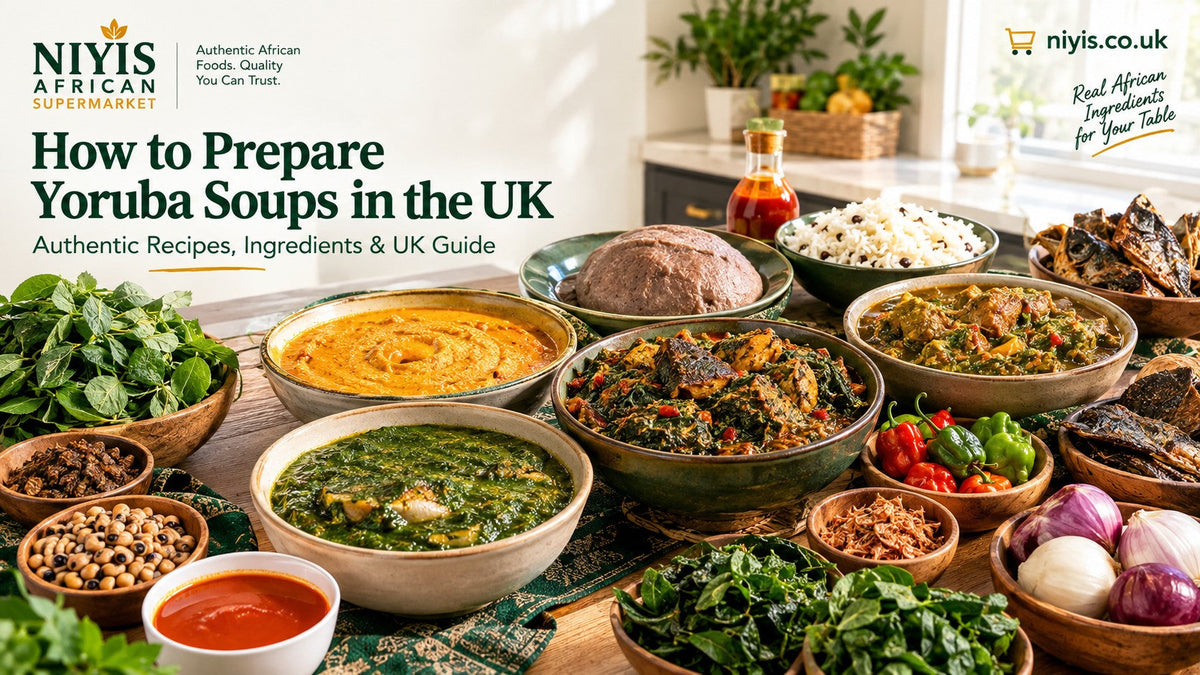
If you are searching for how to prepare Yoruba soups as a Nigerian living in the UK, you can recreate authentic Nigerian flavours without travelling home for ingredients. Yoruba soups are traditional Nigerian dishes built around leafy vegetables, beans, peppers, palm oil, locust beans, meat, fish and carefully balanced spices. Popular examples include Ewedu soup, Gbegiri, Efo Riro, Ayamase and Ofada-style stew. For Nigerians living in the UK, specialist African supermarkets make ingredients such as Ewedu, Iru, Nigerian honey beans, palm oil, crayfish and smoked fish much easier to source.
How Do You Prepare Yoruba Soups in the UK?
To prepare authentic Yoruba soups in a UK kitchen:
-
Choose the correct traditional soup and ingredients.
-
Prepare your meat, fish or seafood.
-
Wash and prepare your vegetables.
-
Build your pepper, palm oil or bean base.
-
Add traditional flavour builders such as Iru and crayfish.
-
Cook the soup until the texture and flavour develop.
-
Serve with the appropriate Nigerian swallow or rice.
-
Store leftovers safely and reheat thoroughly.
The most important rule is simple: use the ingredients that define the soup rather than relying heavily on supermarket substitutes.
What Are Yoruba Soups?
Yoruba soups are traditional Nigerian dishes associated particularly with southwestern Nigeria. They vary considerably, but many feature ingredients such as leafy vegetables, beans, peppers, palm oil, locust beans, fish, meat and traditional seasonings.
Some of the most recognisable Yoruba dishes include:
|
Dish |
Main ingredients |
Common pairing |
|
Ewedu |
Jute leaves, Iru, seasoning |
Amala, Gbegiri, stew |
|
Gbegiri |
Beans, pepper, seasoning |
Amala, Ewedu, stew |
|
Efo Riro |
Leafy greens, peppers, palm oil, protein |
Amala, rice, swallow |
|
Ayamase |
Green peppers, palm oil, Iru, protein |
Ofada rice |
|
Ofada-style stew |
Peppers, palm oil, Iru, protein |
Ofada rice |
Ewedu is particularly associated with Yoruba cuisine and is traditionally served with Amala, Gbegiri and stew. Niyis describes its Ewedu products as suitable for exactly this combination.
Essential Ingredients for Yoruba Soups in the UK

A well-stocked Nigerian pantry makes Yoruba cooking much easier.
Key ingredients include:
-
Ewedu leaves for Ewedu soup
-
Nigerian honey beans for Gbegiri
-
Iru, or locust beans, for traditional savoury depth
-
Palm oil for Efo Riro and pepper-based stews
-
Fresh peppers for Efo Riro and Ayamase
-
Ground crayfish for savoury depth
-
Stockfish for additional seafood flavour
-
Smoked catfish for soups and stews
-
Meat or goat meat for protein
-
Ugu or other leafy vegetables for vegetable soups
-
Yam flour for Amala
Niyis currently has an African vegetables collection containing Nigerian vegetables and pantry ingredients, while itsAfrican grocery collection covers a wider range of Nigerian staples.
How to Prepare Ewedu Soup
Ewedu is arguably one of the most recognisable Yoruba vegetable soups. It is made from jute leaves, also called molokhia, and is known for its characteristic smooth, slightly slippery texture.
Ingredients
For a simple pot of Ewedu, use:
-
Fresh or frozen Ewedu leaves
-
Iru
-
Ground crayfish
-
Salt and seasoning
-
A small amount of water
Niyis currently offers both Fresh Ewedu Leaves and Frozen Ewedu . The fresh version is pre-washed and sand-free, while the frozen version is designed for convenience.
Method
-
Wash the fresh leaves thoroughly if using fresh produce.
-
Cook the leaves briefly until softened.
-
Blend or traditionally whisk them until smooth.
-
Add ground crayfish and Iru.
-
Season to taste.
-
Simmer briefly without overcooking.
For the classic Yoruba experience, serve Ewedu with Niyis Yam Flour for Amala , Gbegiri and a rich pepper stew. Niyis specifically describes its Elubo as suitable for preparing traditional Amala.
How to Prepare Gbegiri Soup
Gbegiri is a smooth Nigerian bean soup traditionally made from peeled beans. It is especially famous as part of the Abula combination, where Gbegiri is served with Ewedu and a spicy stew.
Ingredients
-
Nigerian brown beans or honey beans
-
Pepper
-
Iru
-
Palm oil
-
Crayfish
-
Seasoning
-
Water
For UK kitchens, Niyis Premium Nigerian Honey Beans are a convenient option. Niyis describes them as pre-cleaned Nigerian honey beans and lists them for traditional Nigerian meals.
Method
Cook the beans until extremely soft. Blend until smooth, then strain if necessary for a silky texture.
Return the mixture to the pot and add a little palm oil, Iru, crayfish, pepper and seasoning. Simmer gently until the flavours combine.
Serve hot with Ewedu, Amala and pepper stew.
How to Prepare Efo Riro in the UK
Efo Riro is a rich Nigerian vegetable soup made with leafy greens, peppers, onions, palm oil and protein. It is one of the easiest Yoruba-style dishes to adapt for busy UK households because both fresh and frozen vegetables can work.
Ingredients
-
Ugu or another suitable leafy vegetable
-
Fresh peppers
-
Onion
-
Palm oil
-
Ground crayfish
-
Smoked fish or stockfish
-
Beef, goat meat or assorted meat
-
Seasoning
Niyis currently lists Fresh Ugu Leaves and Frozen Ugu Leaves, giving UK cooks a fresh or freezer-friendly option.
For the protein, Frozen Goat Meat Bone-In is currently listed by Niyis as suitable for Efo Riro, while Smoked Dried Catfish can add a deeper smoky flavour.
Simple Efo Riro Method
-
Cook your meat until tender.
-
Blend peppers and onions.
-
Heat palm oil and cook the pepper mixture thoroughly.
-
Add crayfish and your chosen protein.
-
Add the chopped leafy vegetables.
-
Simmer briefly and adjust seasoning.
Avoid drowning the vegetables in excess water. Efo Riro should be rich and concentrated rather than watery.
How to Prepare Ayamase, the Yoruba Green Pepper Stew

Ayamase, sometimes called Ofada stew or designer stew, is a Yoruba-style green pepper stew commonly served with Ofada rice.
Its characteristic flavour comes from green peppers, hot peppers, onions, palm oil, Iru and assorted proteins.
Ingredients
-
Green bell peppers
-
Scotch bonnet or other hot peppers
-
Onion
-
Palm oil
-
Iru
-
Assorted meat
-
Eggs, if desired
-
Seasoning
For the pepper base, Niyis currently stocks Fresh Mixed Hot Peppers and Fresh Tatashe . Tatashe can contribute colour and sweetness, although a traditional Ayamase profile is generally built around green peppers and hot peppers.
Niyis also stocks Frozen Iru Locust Beans , which the retailer specifically recommends for Nigerian dishes including Ewedu and jollof rice.
Cook the blended peppers until excess water reduces, then add palm oil, Iru and cooked meat. Allow the stew to simmer until the oil and pepper mixture become rich and aromatic.
What to Serve With Yoruba Soups
The right swallow or rice can transform the meal.
Amala
Amala is the classic partner for Ewedu and Gbegiri. Niyis Yam Flour is made specifically for preparing Amala.
Ofada Rice
Ayamase is traditionally associated with Ofada rice. Niyis currently lists Niyis Ofada Rice, although stock status can change.
Pounded Yam
Rich soups such as Efo Riro can also be served with Ayoola Pounded Yam, which Niyis describes as a convenient yam-flour alternative to traditional pounding.
Nutritional Profile of Yoruba Soups
The nutritional value of Yoruba soups varies according to ingredients, portions and cooking methods.
|
Ingredient |
Nutritional contribution |
|
Ewedu |
Fibre, vitamins and minerals |
|
Beans |
Protein, fibre, vitamins and minerals |
|
Ugu |
Micronutrients and fibre |
|
Peppers |
Vitamins, plant compounds and flavour |
|
Fish |
Protein and various micronutrients |
|
Meat |
Protein, iron, zinc and B vitamins |
|
Crayfish |
Protein and savoury flavour |
|
Palm oil |
Dietary fat and energy |
Vegetables and beans can make Yoruba soups a nutrient-dense part of a balanced diet. The NHS recommends eating a variety of fruit and vegetables and notes that vegetables can be fresh, frozen, canned, dried or juiced. It also recommends including beans, pulses, fish, eggs and meat as sources of protein.
For fibre, the NHS recommends that adults aim for around 30g per day as part of a balanced diet. Beans, vegetables and other plant foods can contribute towards that target.
Traditional Yoruba Cooking as a Nigerian Living in the UK
One of the biggest challenges for Nigerians abroad is not knowing where to find the ingredients that give traditional soups their distinctive character.
Ewedu is not simply generic spinach. Gbegiri is not simply ordinary bean soup. Ayamase has a particular pepper, oil and locust-bean profile. Efo Riro depends heavily on its vegetable and pepper base.
That is why authentic Nigerian ingredients matter.
Niyis' current Nigerian vegetable range includes Ewedu, Ugu, bitter leaf, waterleaf, Oha, Uziza and other African vegetables. Its dried fish range includes stockfish, smoked fish and ground stockfish, giving UK cooks multiple options for building traditional soup flavour.
7 Tips for Preparing Yoruba Soups in the UK
1. Use frozen vegetables when fresh is unavailable
Frozen Ewedu and Ugu can make Nigerian cooking much more practical during busy UK weeks.
2. Build a Nigerian freezer
Keep goat meat, shaki, fish and frozen vegetables available so you can prepare soup without starting from zero.
3. Keep Iru in the freezer
Iru has a powerful aroma and distinctive savoury character. A little can transform Ewedu, Efo Riro and pepper-based dishes.
4. Stock up on crayfish
Niyis Ground Crayfish is a useful pantry ingredient for soups and stews. Niyis describes it as adding depth and complexity to African dishes.
5. Use stockfish strategically
Ground Stockfish is convenient when you want concentrated seafood flavour without preparing a whole stockfish piece.
6. Do not substitute every Nigerian ingredient
British spinach may work in an emergency, but Ewedu, Ugu and other Nigerian vegetables provide different textures and flavours.
7. Batch cook
Prepare a larger pot, divide suitable portions and refrigerate or freeze promptly. This makes authentic Nigerian meals much easier during busy working weeks.
Possible Dietary and Food Safety Considerations

Yoruba soups can be rich meals, particularly when prepared with generous amounts of palm oil, fatty meat or heavily salted dried fish.
You can adjust the meal without losing its identity by:
-
Using a moderate amount of cooking oil
-
Adding plenty of vegetables
-
Choosing leaner cuts where appropriate
-
Balancing soup with an appropriate portion of swallow
-
Watching salt levels when using smoked or dried fish
-
Including beans, fish and vegetables regularly
The NHS recommends eating a wide variety of foods, choosing unsaturated oils in small amounts and limiting foods high in salt and saturated fat.
For food safety, keep raw meat and fish separate from ready-to-eat foods and cook proteins thoroughly. The UK Food Standards Agency advises that the centre of food should reach 70°C for 2 minutes, or an equivalent time and temperature combination.
Where to Buy Yoruba Soup Ingredients in the UK
If you are searching for where to buy Yoruba soup ingredients in the UK, Niyis African Supermarket is a practical starting point because its current catalogue covers fresh and frozen Nigerian vegetables, pantry staples, meat, seafood, dried fish, oils and flours.
For Ewedu and vegetable soups, browse the African Vegetables Collection .
For beans, flour, grains and other pantry staples, explore the African Grocery Collection .
For meat and fish, the Meat & Seafood Collection includes Nigerian cooking favourites such as goat meat, shaki and fish.
For stockfish, smoked fish and dried seafood, the Dried Fish Seasoning Collection currently includes stockfish fillets, smoked barracuda, smoked catfish, ground stockfish, dried shrimp and other products.
Recommended Niyis ingredients for Yoruba soups
Niyis currently states that it offers UK delivery, with free shipping thresholds and next-working-day options subject to its delivery terms and product type. Fresh produce can have separate dispatch schedules, so check individual product information before ordering.
FAQs About Preparing Yoruba Soups in the UK
1. What are the most popular Yoruba soups?
Some of the best-known Yoruba dishes include Ewedu, Gbegiri, Efo Riro and Ayamase. Ofada rice is commonly served with Ayamase-style stew.
2. What is Ewedu soup made from?
Ewedu is made primarily from jute leaves, also known as molokhia. It is traditionally seasoned with ingredients such as Iru and crayfish and commonly served with Amala, Gbegiri and stew.
3. What is Gbegiri made from?
Gbegiri is traditionally made from cooked beans that are blended or mashed into a smooth soup, then seasoned with ingredients such as pepper, Iru and crayfish.
4. What do you eat Ewedu with?
The classic combination is Ewedu, Gbegiri, pepper stew and Amala. It can also be enjoyed with other Nigerian swallows depending on personal preference.
5. Can I use frozen Ewedu in the UK?
Yes. Frozen Ewedu can be a convenient option when fresh jute leaves are unavailable. Niyis currently lists Frozen Ewedu specifically for Ewedu soup, stews and sauces.
6. What is the difference between Efo Riro and Ewedu?
Ewedu is a smooth jute-leaf soup with a characteristic mucilaginous texture. Efo Riro is a richer vegetable-based dish typically prepared with leafy greens, peppers, palm oil and protein.
7. What is Ayamase served with?
Ayamase is traditionally served with Ofada rice. It is known for its green pepper base, palm oil, Iru and rich protein component.
8. Can Nigerians living in the UK make authentic Yoruba soups?
Yes. The main challenge is sourcing traditional ingredients. Specialist African supermarkets make ingredients such as Ewedu, Iru, Nigerian beans, palm oil, crayfish, stockfish and Nigerian meats much easier to obtain.
9. What is the best swallow for Ewedu and Gbegiri?
Amala is the classic pairing. Niyis Yam Flour, or Elubo, can be used to prepare Amala at home.
10. Can I freeze Nigerian soups?
Many cooked Nigerian soups can be portioned and frozen safely when handled correctly. Cool cooked food promptly, store it appropriately and follow food-safety guidance for reheating.
Related Yoruba and Nigerian Recipes
Once you have your ingredients, explore these related Niyis guides:
-
15 Proven Ewedu Leaves Benefits and How Nigerians Use Them in the UK
-
Why Ground Stockfish Is a Must-Have Ingredient for Authentic Nigerian Cooking
Final Takeaway
Learning how to prepare Yoruba soups as a Nigerian living in the UK starts with understanding the ingredients that give each dish its identity.
For a classic Abula meal, think Ewedu + Gbegiri + stew + Amala. For Efo Riro, build around leafy vegetables, peppers, palm oil, crayfish and your preferred protein. For Ayamase, focus on green peppers, Iru, palm oil and a rich protein base, then serve it with Ofada rice.
The UK does not have to mean compromising on Nigerian food. With the right African vegetables, beans, palm oil, crayfish, stockfish, meat and traditional flours, you can recreate the soups and combinations that make Yoruba cooking so distinctive, right from your own kitchen.
Share:
How to Prepare Igbo Soups as a Nigerian Living in the UK: Authentic Recipes, Ingredients & UK Shopping Guide (2026)
Amazing Meals You Can Make With Frozen Beef Tail Cuts: Nigerian Recipes & UK Guide (2026)