
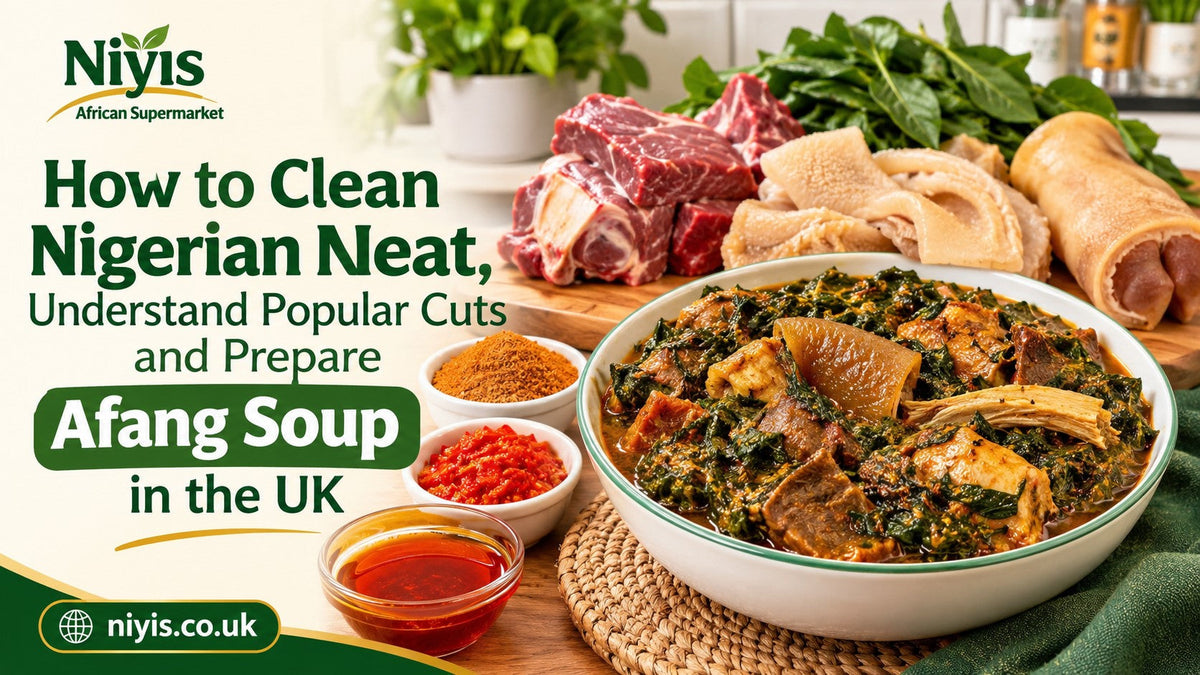
Knowing how to clean Nigerian meat is an important part of preparing delicious traditional meals. From beef, goat meat and chicken to shaki, ponmo, cow foot and roundabout, different Nigerian meat cuts require different preparation and cooking methods. Understanding these differences also helps when preparing popular dishes such as Egusi, pepper soup and Afang soup. For Nigerians living in the UK, finding familiar cuts and authentic soup ingredients can make traditional cooking easier. This guide explains how to handle different meats safely, identify popular Nigerian cuts and prepare a flavourful Afang soup using traditional ingredients.
How Do You Clean and Prepare Nigerian Meat?
To prepare Nigerian meat, check the packaging, thaw frozen meat safely in the fridge, remove any unwanted material where necessary and prepare each cut according to its type. Do not wash raw meat or poultry under running water, as splashing can spread harmful bacteria around the kitchen. Thorough cooking, rather than washing, makes meat safe to eat.
Shaki, cow foot and other tougher cuts usually require longer cooking, while chicken and tender beef cuts cook more quickly. For Afang soup, combine properly cooked meat with waterleaf, shredded afang leaves, palm oil, crayfish, pepper and other preferred ingredients.
1. How to Clean Nigerian Meat Safely
Preparing Nigerian meat starts with good food hygiene. Different cuts may need trimming, portioning or separate preparation, but washing raw meat is not a recommended food-safety step.
The UK Food Standards Agency advises against washing raw meat, fish or poultry because water can spread harmful bacteria onto kitchen surfaces, utensils and other foods.
Follow these steps:
-
Check the meat: Inspect its packaging, use-by date and storage instructions. Do not use meat that shows signs of spoilage.
-
Thaw frozen meat safely: Defrost it in the fridge in a covered container, following the packaging instructions. Keep raw meat separate from ready-to-eat foods.
-
Prepare the work surface: Use a clean chopping board and knife. Keep raw meat and poultry separate from vegetables and cooked foods.
-
Trim where necessary: Remove unwanted visible fat, excess connective tissue or packaging material using clean utensils.
-
Portion the meat: Cut large pieces into suitable sizes for the intended recipe.
-
Cook thoroughly: Follow appropriate cooking instructions and make sure the meat is safely cooked before serving.
If meat is sold as pre-cleaned and ready to cook, follow its specific product instructions. You do not need to repeat intensive cleaning procedures unnecessarily.
2. Popular Nigerian Meat Cuts Explained
Nigerian meat markets use familiar names for different cuts and offal. Understanding them helps you choose the right ingredients for soups, stews and assorted meat dishes.
|
Nigerian meat cut |
What it is |
Texture |
Popular uses |
|
Shaki |
Cow tripe or stomach lining |
Firm and chewy |
Egusi, pepper soup, assorted meat |
|
Ponmo/Kpomo |
Cow skin |
Chewy and gelatinous |
Egusi, ogbono, stews |
|
Roundabout |
Beef intestine |
Distinctive and chewy |
Pepper soup, assorted meat |
|
Abodi |
Beef reed, commonly sold as offal |
Firm |
Assorted meat and soups |
|
Beef liver |
Liver |
Soft and rich |
Stews and fried rice |
|
Cow foot |
Cow's foot and lower leg |
Gelatinous when cooked |
Soups and pepper soup |
|
Goat meat |
Goat flesh |
Firm, with distinctive flavour |
Egusi, Afang, pepper soup |
|
Beef |
Cattle meat |
Varies by cut |
Stews, soups and assorted meat |
What Is Shaki?
Shaki is the stomach lining of cattle, commonly known as beef tripe. It is popular in Nigerian soups because it has a distinctive chewy texture and absorbs seasoning well.
You can use Frozen Beef Tripe (Shaki) 1kg in Egusi, Ogbono, Afang and pepper soup.
What Is Ponmo?
Ponmo, also spelt kpomo, is processed cow skin. It is not the same as shaki. Its appeal is its chewy texture, which makes it a popular addition to assorted meat dishes and Nigerian soups.
What Is Roundabout?
Roundabout is a name commonly used for cow intestine. It is different from both shaki and ponmo, although all three may appear together in a plate of assorted meat.
What Are Abodi and Beef Liver?
Abodi is a Nigerian name associated with beef reed, while beef liver is an organ meat with a softer texture and richer flavour. Both can be included in assorted meat dishes, depending on personal preference.
For a more detailed comparison, read Cow Roundabout vs Shaki, Kpomo and Abodi.
3. How to Prepare Different Types of Nigerian Meat

Not every Nigerian meat cut should be cooked in the same way. Tougher cuts generally need longer cooking, while tender cuts can become overcooked if left simmering for too long.
|
Meat type |
Preparation approach |
Cooking tip |
|
Beef |
Portion into even pieces |
Simmer until tender |
|
Goat meat |
Separate into suitable pieces |
Allow enough time for tougher cuts |
|
Shaki |
Prepare according to packaging and cut |
Cook until tender |
|
Ponmo |
Follow the product's preparation instructions |
Simmer until it reaches your preferred texture |
|
Cow foot |
Use suitable chopped portions |
Slow-cook until tender |
|
Roundabout |
Handle separately and prepare according to the product instructions |
Cook thoroughly |
|
Chicken |
Portion and handle hygienically |
Cook thoroughly, with no raw centre |
For tougher cuts, cook them separately before combining them with softer meat. This prevents the tender pieces from becoming overcooked while waiting for shaki or cow foot to soften.
For convenience, Niyis offers Frozen Goat Tripe (Shaki), which is listed as cleaned and ready to cook. You can also explore Frozen Beef Feet for soups that benefit from a rich, gelatinous cooking liquid.
Read Buying Specialty African Meats and Offal Online in the UK for more information about finding traditional cuts.
4. What Is Afang Soup?
Afang soup is a traditional Nigerian vegetable soup strongly associated with the Efik and Ibibio people of Cross River and Akwa Ibom States. It is also enjoyed in many other parts of Nigeria.
The soup is recognised for its combination of shredded afang or okazi leaves and waterleaf, usually cooked with palm oil, meat, fish, crayfish, pepper and seasoning.
Unlike soups that rely heavily on a seed-based thickener, Afang gets much of its character from its leafy vegetables and the combination of proteins and seafood.
Afang soup is commonly eaten with swallow foods such as garri, fufu, pounded yam and other cassava or yam-based accompaniments.
5. Ingredients for Traditional Afang Soup
The exact ingredients vary between households, but the following are common choices.
|
Ingredient |
Purpose in the soup |
|
Afang/okazi leaves |
Gives the soup its distinctive leafy flavour and texture |
|
Waterleaf |
Adds moisture and soft vegetable texture |
|
Goat meat or beef |
Provides protein and savoury flavour |
|
Shaki |
Adds a chewy texture |
|
Stockfish |
Provides concentrated savoury flavour |
|
Smoked fish |
Adds a smoky seafood taste |
|
Crayfish |
Enhances the overall flavour |
|
Palm oil |
Gives the soup colour and richness |
|
Fresh pepper |
Adds heat |
|
Onion and seasoning |
Build flavour |
For the vegetables, try Fresh Waterleaf (Gbure) and Dried Okazi (Ukazi/Afang)Leaves. Fresh okazi may also be available periodically, so check its product listing before ordering.
For more vegetable guidance, see Ugu vs Uziza vs Ukazi: Differences,Uses and How to Cook With Them.
6. How to Prepare Afang Soup Step by Step

Step 1: Prepare the Meat
Choose goat meat, beef, shaki or a mixture of your preferred cuts. Handle the raw meat safely, then season and cook the tougher pieces until tender. Keep the cooking stock for the soup.
Step 2: Prepare the Fish and Seafood
Soak or simmer stockfish as required by its type and packaging instructions. Prepare smoked fish according to its condition, removing unwanted bones where appropriate.
Step 3: Prepare the Vegetables
Remove unwanted stems and damaged leaves. Wash fresh waterleaf and okazi thoroughly in clean water, then drain. Shred the okazi finely because its leaves are relatively firm.
Step 4: Cook the Soup Base
Place the cooked meat and stock in a suitable pot. Add palm oil, crayfish, pepper and seasoning. Adjust the liquid carefully because waterleaf releases moisture as it cooks.
Step 5: Add Waterleaf
Allow the waterleaf to cook and soften. It helps create the moist base that brings the other ingredients together.
Step 6: Add Afang Leaves
Add the shredded okazi leaves and stir thoroughly. Allow the vegetables to cook until they reach your preferred texture.
Step 7: Add Fish and Adjust Seasoning
Add your prepared stockfish and smoked fish if they have not already been added. Taste the soup and adjust seasoning, pepper and salt as needed.
Serve hot with garri, fufu or pounded yam.
For more traditional Nigerian soup inspiration, explore How to Prepare Igbo Soups as a Nigerian Living in the UK and 10 Nigerian Soups You Can Make With Ground Stockfish.
7. Where to Buy Nigerian Meat and Soup Ingredients in the UK
Finding traditional Nigerian meat cuts and vegetables can be difficult when shopping in mainstream UK supermarkets. Niyis African Supermarket brings together a selection of African groceries, frozen meats, seafood and Nigerian cooking ingredients.
Useful products to explore include:
-
Frozen Beef Tripe (Shaki) for assorted meat and traditional soups.
-
Frozen Goat Tripe for goat offal dishes.
-
Frozen Beef Feet for hearty soups and stews.
-
Fresh Waterleaf for Afang and Edikang Ikong.
-
Dried Okazi Leaves for traditional Afang soup.
Browse the Meat and Seafood collection for meat and fish, or the African and Caribbean Vegetables collection for leafy vegetables. You can also explore the wider African Grocery collection for other Nigerian pantry essentials.
Check individual product pages for current availability, storage instructions and delivery information.
8. Frequently Asked Questions
1. How do you clean Nigerian meat before cooking?
Handle raw meat hygienically, check it, thaw it safely if frozen and trim unwanted material where necessary. Do not wash raw meat under running water because splashing can spread bacteria. Cook it thoroughly.
2. Should you wash shaki before cooking?
Follow the preparation instructions on the product packaging. Some shaki is sold pre-cleaned and ready to cook. Avoid unnecessary washing of raw meat, and always handle it hygienically.
3. What is the difference between shaki and ponmo?
Shaki is cow tripe, which comes from the stomach lining. Ponmo is processed cow skin. They have different textures and are used in different ways in Nigerian cooking.
4. What is roundabout in Nigerian meat?
Roundabout is a common Nigerian name for cow intestine. It is often included in assorted meat dishes and pepper soup.
5. What meat is best for Afang soup?
Goat meat, beef and assorted meat are popular choices. Shaki can also be included for a chewy texture. Stockfish and smoked fish are common additions for deeper flavour.
6. What are the main ingredients in Afang soup?
The main ingredients are afang or okazi leaves, waterleaf, meat or fish, palm oil, crayfish, pepper and seasoning. Stockfish and assorted meat are also popular additions.
7. Can I use dried okazi leaves for Afang soup?
Yes. Dried okazi leaves can be used as an alternative to fresh leaves. Rehydrate them according to the product instructions and shred or prepare them as required by your recipe.
8. Can I make Afang soup without shaki?
Yes. Shaki is optional. You can use beef, goat meat, chicken or fish depending on your preferred combination.
9. What do you eat Afang soup with?
Afang soup is commonly served with garri, fufu, pounded yam and other Nigerian swallow foods.
10. Can I use frozen vegetables for Afang soup?
Yes, where suitable frozen vegetables are available. Follow the product instructions and account for any extra moisture released during cooking.
9. Related Nigerian Recipes and Cooking Guides
Explore more traditional Nigerian food guides and ingredient ideas:
Final Thoughts
Understanding how to clean Nigerian meat, identify popular cuts and prepare traditional soups makes cooking easier and more enjoyable. Shaki, ponmo, roundabout, abodi and cow foot each have their own characteristics, so choosing the right cut depends on the dish you are making.
For Afang soup, the combination of okazi leaves, waterleaf, meat, fish, crayfish and palm oil creates its distinctive flavour. Whether you prefer goat meat, beef or assorted meat, careful preparation and the right ingredients help you bring authentic Nigerian cooking into your UK kitchen.
Share:
What Meat Goes Best with Egusi Soup? Best Traditional Nigerian Combinations in the UK (2026)
Black Friday Kitchen Shopping Guide: Save on Nigerian Groceries and Kitchen Essentials in the UK (2026)