
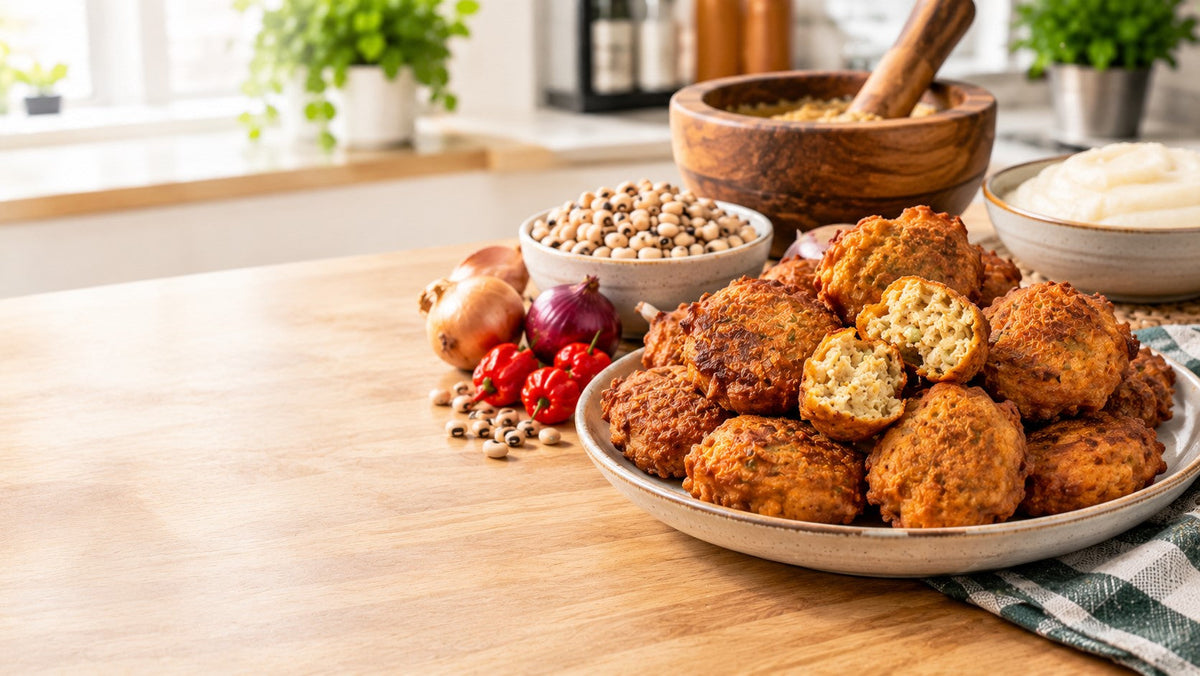
Learning how to make akara at home is easier when you get the beans, batter consistency and frying temperature right. Nigerian akara, also called bean cakes or bean fritters, is a popular West African breakfast and snack made from peeled, blended beans seasoned with onions and peppers, then deep-fried until golden and crisp.
Whether you live in the UK and miss the taste of Nigerian street food or want to try a traditional bean recipe, this guide explains how to choose beans, remove their skins, blend the batter and fry fluffy akara. Beans provide plant-based protein and dietary fibre, making akara a satisfying option when enjoyed as part of a varied diet.
How Do You Make Akara?
Soak black-eyed beans until their skins loosen, rub and rinse away the skins, then blend the beans with just enough water to form a thick batter. Add chopped onion, pepper and salt, then fry spoonfuls in hot oil at approximately 175°C to 190°C until golden and cooked through.
For reliable results, avoid watery batter, overcrowded pans and oil that is too cool.
Ingredients for Nigerian Akara
This recipe makes approximately 12 to 16 small akara, depending on the size of each portion.
|
Ingredient |
Quantity |
Purpose |
|
Black-eyed beans |
250g |
Main ingredient and structure |
|
Onion |
1 small |
Sweetness and flavour |
|
Scotch bonnet pepper |
½ to 1 |
Heat and aroma |
|
Water |
As needed |
Helps blend the beans |
|
Salt |
To taste |
Seasoning |
|
Vegetable oil |
Enough for deep-frying |
Creates a crisp exterior |
Optional additions include a little ground crayfish for extra savouriness, although it is not essential to traditional akara.
For a suitable starting ingredient, Niyis Blackeye Beans are listed for preparing akara, moi moi and other Nigerian bean dishes.
How to Choose and Peel Beans
1. Choose the right beans
Black-eyed beans, also called black-eyed peas or cowpeas, are a popular choice for akara. They blend into a smooth batter and have a mild flavour. Some cooks use other suitable cowpea varieties, but the texture may vary.
For a quicker preparation option, Niyis Peeled Beans are listed in the flours and staples range. Check the live collection for the current product listing and preparation instructions.
2. Soak the beans
Sort through the beans to remove stones or damaged pieces. Rinse thoroughly, then soak them in plenty of water until the skins loosen. Depending on the beans, this may take a few hours.
3. Remove the skins
Rub the soaked beans firmly between your palms to loosen the skins. Add water and allow the skins to float, then pour them away carefully. Repeat the process until most of the skins have been removed.
Rinse the peeled beans thoroughly. Removing the skins helps produce the smooth texture commonly associated with Nigerian akara.
Step-by-Step Akara Recipe

Step 1: Blend the beans
Add the peeled beans to a blender with a small amount of water. Blend until the mixture is smooth and thick. Add water gradually because a watery batter can make the akara spread too much during frying.
Step 2: Add the seasoning
Transfer the batter to a bowl. Finely chop the onion and Scotch bonnet pepper, then stir them into the mixture with salt to taste. For a savoury variation, add a small amount of Niyis Ground Crayfish, checking the product label if you have seafood allergies.
Step 3: Beat the batter
Whisk the batter vigorously for a few minutes to incorporate air. This can help create a lighter texture. The batter should remain thick enough to hold its shape when dropped into the oil.
Step 4: Heat the oil
Pour vegetable oil into a deep, heavy-based pan, leaving enough space at the top to prevent overflowing. Heat to approximately 175°C to 190°C. A kitchen thermometer gives the most reliable reading.
A neutral oil such as KTC Vegetable Oil is suitable for deep-frying.
Step 5: Fry the akara
Carefully drop small spoonfuls of batter into the hot oil. Leave space between portions and fry in batches. Turn them as needed so they brown evenly on both sides.
Cook until the outside is golden and crisp and the centre is cooked through. Remove with a slotted spoon and drain on a rack or kitchen paper.
Frying Temperature and Crispy Akara Tips
The right oil temperature makes a major difference.
-
Oil too cool: Akara may absorb more oil and become greasy.
-
Oil too hot: The outside may brown before the centre cooks.
-
Batter too thin: The bean cakes may spread and become flat.
-
Overcrowded pan: Adding too many portions at once can lower the oil temperature.
-
Insufficient blending: Large pieces of beans can create an uneven texture.
For the best results, maintain a steady temperature, fry in small batches and keep the batter thick but scoopable. Never leave hot oil unattended, and lower the batter carefully to avoid splashes.
Common Akara Mistakes

Why is my akara flat? The batter may be too watery, insufficiently aerated or fried in oil that is not hot enough.
Why is my akara raw inside? The portions may be too large or the oil too hot. Make smaller cakes and allow enough cooking time.
Why is my akara hard? Overly thick batter, insufficient blending or prolonged frying can affect the texture.
Why does my akara break apart? The batter may be too loose or the oil may not be hot enough to set the exterior quickly.
Can I prepare the beans in advance? Yes. You can soak and peel the beans ahead of time, then refrigerate them promptly in a covered container and use them within a safe period. Alternatively, blend the batter shortly before frying for the freshest texture.
What to Serve With Akara
Akara is versatile enough for breakfast, lunchboxes and snacks.
-
Akara and pap: Serve with warm Nigerian ogi or akamu for a classic breakfast combination.
-
Akara and bread: Place the bean cakes inside soft bread for a filling sandwich.
-
Akara and custard: Pair with warm custard for a sweet and savoury contrast.
-
Akara with a pepper dip: Serve with a suitable tomato or pepper sauce for extra flavour.
-
Akara as a snack: Make smaller portions for parties, gatherings or an afternoon bite.
For more Nigerian morning meal inspiration, explore Niyis' quick Nigerian breakfast ideas. You can also use the African-Caribbean pantry essentials guide to plan other staple ingredients for your kitchen.
Where to Buy Akara Ingredients in the UK
You can find Nigerian cooking staples through specialist African grocery retailers. Niyis has a grains and staples collection that includes beans and other ingredients for traditional meals.
If you prefer a shortcut, Niyis also provides a recipe for making akara with bean flour. This method avoids manually peeling whole beans, although the texture can differ from akara made with freshly peeled beans.
Check the live product pages for pack sizes, ingredients and availability before ordering.
Frequently Asked Questions
1. Which beans are best for akara?
Black-eyed beans are a popular choice because they blend into a smooth batter and have a mild flavour.
2. Do I have to remove the bean skins?
Removing the skins helps produce the smooth texture associated with traditional akara. Ready-peeled beans can save preparation time.
3. How long should I soak beans for akara?
Soaking time varies by bean type and age. Soak until the skins loosen enough to rub off easily, then rinse thoroughly.
4. What temperature should I fry akara at?
Aim for approximately 175°C to 190°C. A thermometer helps maintain a consistent temperature, but always monitor the colour and cooking progress.
5. Why is my akara oily?
Oil that is too cool, overcrowding the pan or excessively wet batter can contribute to greasy akara.
6. Can I make akara without Scotch bonnet?
Yes. Leave it out or replace it with a milder pepper if you prefer less heat.
7. Can I make akara with bean flour?
Yes. Bean flour can be mixed with water and seasoning to form a batter. Follow the recipe and flour instructions, as the final texture may differ from akara made with peeled whole beans.
8. What do Nigerians eat with akara?
Popular pairings include pap or ogi, bread and custard. Akara can also be served on its own as a savoury snack.
Related Recipes
Try Niyis' akara with bean flour recipe for a convenient alternative, or explore its Nigerian breakfast guide for more meal ideas.
Conclusion
The secret to crispy Nigerian akara is simple: choose suitable beans, remove the skins thoroughly, blend with minimal water, beat the batter and fry at a steady temperature. Serve the golden bean cakes with pap, bread or your favourite breakfast pairing for a comforting taste of Nigeria at home.
Share:
Ogi vs Custard vs Oats: Differences, Preparation and Breakfast Ideas in the UK (2026)
12 Nigerian Breakfast Ideas: Traditional Meals, Ingredients and Easy Preparation Tips in the UK (2026)