
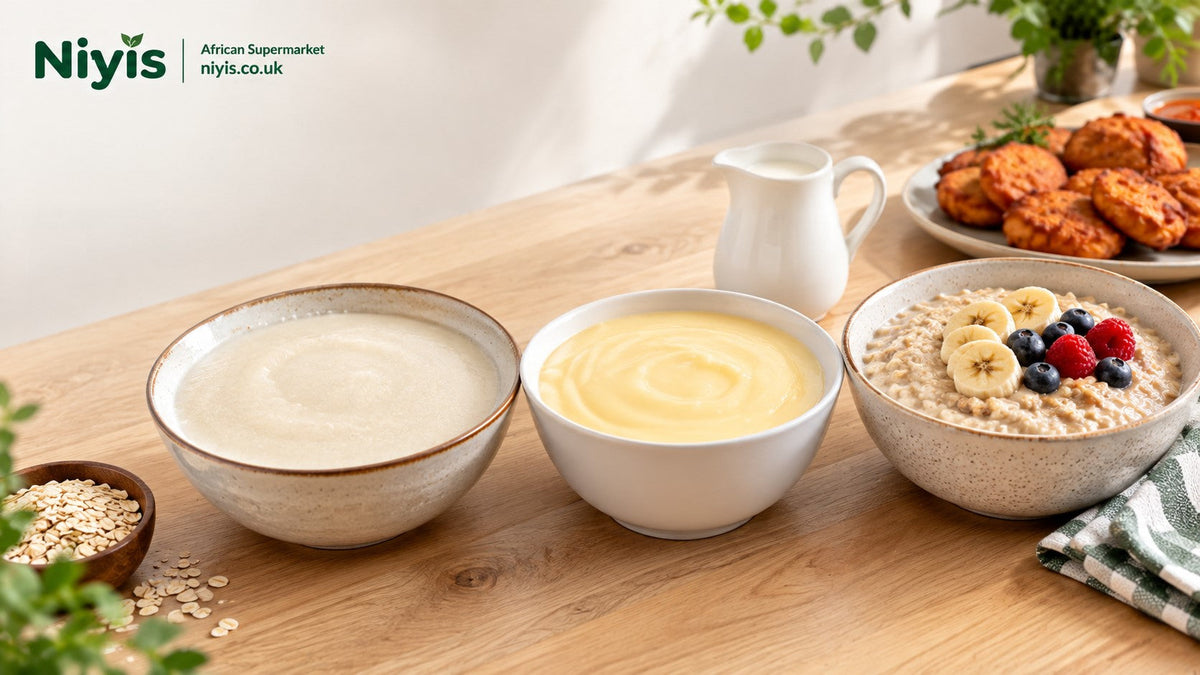
Ogi vs custard is a common comparison for anyone choosing a quick, comforting breakfast. Add oats to the mix and you have three popular options with different ingredients, textures, preparation methods and nutritional profiles. In Nigerian households and across the UK, ogi, also called pap or akamu, is enjoyed alongside custard and increasingly familiar breakfast cereals such as porridge oats.
Which is best for your morning routine? The answer depends on your taste, time, budget and nutritional needs. Ogi is a fermented cereal porridge, custard powder is usually a starch-based mix prepared with liquid, and oats are whole grains that provide fibre. None is automatically the healthiest choice in every situation.
Ogi vs Custard vs Oats
-
Ogi: A traditional fermented maize, millet or sorghum porridge with a smooth texture and mildly tangy flavour.
-
Custard: A smooth, creamy breakfast or dessert made from custard powder and liquid, often milk. Flavour and nutrition depend on the product and preparation.
-
Oats: A cereal made from whole oat grains, usually cooked into porridge. Oats naturally provide dietary fibre, including beta-glucan.
For a traditional Nigerian breakfast, ogi is a familiar choice. Custard suits those who prefer a creamy, sweet flavour, while oats are useful for people looking for a wholegrain breakfast.
Ogi vs Custard vs Oats: Key Differences

|
Feature |
Ogi (pap or akamu) |
Custard |
Oats |
|
Main ingredient |
Fermented maize, millet or sorghum |
Usually starch, flavouring and colourings, depending on brand |
Whole oat grains |
|
Taste |
Mild, sometimes tangy |
Creamy, often sweet and vanilla flavoured |
Mild, nutty and grain-like |
|
Texture |
Smooth and soft |
Silky and creamy |
Creamy or chewy, depending on preparation |
|
Preparation |
Mix with cool water, then add hot water or cook as directed |
Mix powder with a little cold liquid, then add hot liquid and cook as directed |
Simmer with water or milk, or prepare using an appropriate overnight method |
|
Typical preparation time |
Around 5 to 15 minutes for ready-to-cook products |
Around 5 to 10 minutes |
Around 5 to 15 minutes, depending on the oats |
|
Common pairings |
Akara, moi moi, milk, beans or groundnuts |
Milk, fruit, bread or snacks |
Fruit, nuts, seeds, milk or yoghurt |
Times are estimates and depend on the product, portion size and cooking instructions. Frozen ogi may also need thawing before heating.
Ingredients and Nutritional Profile
The main nutritional difference between ogi, custard and oats is the grain or starch used, alongside what you add when preparing them.

|
Nutritional factor |
Ogi |
Custard |
Oats |
|
Carbohydrates |
Usually a major source of energy |
Usually a major source of energy |
Provides carbohydrates for energy |
|
Fibre |
Varies with the grain, processing and straining |
Often low in plain refined custard powder |
Naturally provides dietary fibre, including beta-glucan |
|
Protein |
Depends on the grain and processing |
Depends on the powder and whether milk is added |
Provides some plant protein |
|
Vitamins and minerals |
Depend on the grain and product |
Depend on fortification and added milk |
Naturally contains several minerals and B vitamins |
|
Added sugar |
Depends on sweetening |
Depends on the powder and preparation |
Depends on toppings and sweeteners |
Ogi is fermented, but fermentation does not automatically mean every product contains live probiotic cultures when purchased or served. Processing and heating affect the final product. For more background on the varieties and preparation of this Nigerian staple, read Niyis' guide to different types of ogi cereal.
Oats contain beta-glucan, a soluble fibre associated with helping to maintain healthy blood cholesterol levels when eaten as part of an appropriate diet. However, adding sugar, large amounts of sweetened toppings or high-calorie extras changes the nutritional profile of any breakfast.
The bottom line: compare serving sizes and product labels rather than assuming ogi, custard or oats is always better. Milk, sugar, fruit, nuts and other toppings can substantially change the meal's protein, fibre, sugar and energy content.
Taste and Texture
Ogi: traditional and gently tangy
Ogi has a soft, smooth consistency and can have a mildly sour flavour because of fermentation. White, yellow and brown varieties offer slightly different tastes. Many people enjoy it warm with milk and a sweetener, while others prefer a more traditional savoury pairing.
You can try Tasty Pot White Ogi 500g for a traditional pap breakfast.
Custard: creamy and comforting
Custard usually has a smoother, sweeter taste, particularly when made with vanilla-flavoured powder and milk. It can be served warm for breakfast or as a dessert. The final thickness depends on the amount of powder and liquid used.
For a fruity flavour, Checkers Custard Powder Banana 2kg offers an alternative to classic vanilla custard.
Oats: mild and adaptable
Oats have a natural grain flavour and can be made thick, creamy or relatively loose. Their mild taste works with both sweet and savoury ingredients, making them easy to adapt to different preferences.
Preparation Time and Methods
How to prepare ogi
-
Follow the product's instructions, especially if using frozen ogi.
-
If using a product that requires mixing, make a smooth paste with a little cool water.
-
Gradually add hot water or cook as directed, stirring continuously to prevent lumps.
-
Heat thoroughly and adjust the consistency with water or milk.
-
Serve warm with your preferred accompaniments.
For convenience, Frozen White Ogi 300g is a ready-prepared option that needs thawing and heating according to the pack instructions.
How to prepare custard
-
Mix the recommended quantity of custard powder with a little cold milk or water.
-
Heat the remaining liquid separately.
-
Gradually stir the hot liquid into the paste.
-
Return the mixture to the pan and cook gently while stirring until thickened.
-
Serve warm, following the product's instructions.
For more tips, see Niyis' guide to preparing custard. The method can vary by brand, so check the pack before cooking.
How to prepare oats
-
Measure the oats and water or milk according to the pack instructions.
-
Heat gently in a saucepan, stirring regularly.
-
Cook until the oats reach your preferred texture.
-
Add fruit, nuts, seeds or milk if desired.
For a convenient pantry option, Niyis has listed Quaker Oats 500g. Check the live listing for current stock before ordering.
Nigerian Breakfast Ideas
You do not have to eat these three foods plain. Try these combinations to make breakfast more varied.
-
Ogi and akara: Pair warm pap with bean fritters for a traditional Nigerian breakfast. Use Niyis' akara recipe with bean flour for preparation guidance.
-
Ogi and moi moi: Serve pap with steamed bean pudding for a more substantial meal. Add vegetables or another suitable protein source as desired.
-
Custard with fruit: Add sliced banana or another fruit to custard. If using sweetened powder, taste before adding extra sugar.
-
Oats with fruit and nuts: Add banana, berries, seeds or a small portion of nuts for more variety and texture.
-
Ogi with milk: Add milk if you enjoy a creamier flavour and want to increase the meal's protein and calcium content.
For more options, explore Niyis' quick Nigerian breakfast ideas and its collection of dried pap and custard products.
Possible Drawbacks and Who Should Take Care
Ogi: Its nutritional composition varies with the grain and processing method. Some preparations may be low in fibre or protein, especially when heavily strained and served alone. Pair it with suitable protein-rich foods where appropriate.
Custard: Some products contain added sugar, flavourings or colourings. Custard made with milk may provide more protein and calcium than a version prepared with water. Check labels for allergens and fortification.
Oats: Oats naturally contain fibre, but a sudden increase in fibre intake can cause bloating or discomfort for some people. Increase fibre gradually and drink enough fluid. People with coeliac disease should choose oats specifically labelled gluten-free because cross-contamination can occur.
Anyone managing diabetes or another medical condition should consider portion sizes, toppings and their overall meal plan. If you have specific dietary requirements, a registered dietitian or healthcare professional can offer personalised advice.
Where to Buy Ogi, Custard and Breakfast Products in the UK
Niyis offers a range of Nigerian breakfast staples alongside familiar cereal products. Browse the Pap or Ogi collection to compare listed varieties, including white and yellow ogi.
For a different traditional option, Tasty Pot Yellow Ogi 500g is listed as a yellow pap product. If you prefer a classic vanilla flavour, Checkers Custard Powder Vanilla 2kg is another option to compare.
You can also browse Niyis' wider grocery staples collection for additional pantry essentials. Check live product pages for current prices, pack sizes and availability before ordering.
Frequently Asked Questions
1. Is ogi healthier than custard?
Not automatically. Ogi is made from fermented cereal, while custard powder is usually starch-based. Their nutritional values depend on ingredients, processing, portion sizes and toppings.
2. Is ogi the same as pap or akamu?
Yes. Ogi, pap and akamu are commonly used names for a traditional Nigerian fermented cereal porridge, although local naming and preparation can vary.
3. Is custard good for breakfast?
Custard can be part of breakfast. Its nutritional value depends on the product and whether it is prepared with milk or water, as well as the amount of added sugar.
4. Are oats more filling than ogi?
Oats provide fibre, including beta-glucan, which may help with satiety. However, fullness also depends on portion size, preparation and what else you eat with your breakfast.
5. Can I eat ogi every day?
Ogi can be included regularly in a varied diet. Consider how you prepare it and add other foods that contribute protein, fibre and a range of nutrients.
6. Can babies eat ogi?
Ogi is traditionally served to children in some households, but infant feeding needs depend on age, development and nutritional requirements. Follow current NHS weaning advice and seek guidance from a health visitor or healthcare professional, especially for young infants.
7. Can I prepare custard with water instead of milk?
Usually, yes, if the product instructions allow it. The result may be less creamy and contain less protein and calcium than custard prepared with milk.
8. Which is quickest to prepare: ogi, custard or oats?
It depends on the product. Instant or ready-prepared options can be quick, while frozen ogi requires thawing and heating. Always follow the pack instructions and allow time for safe, thorough heating.
Related Breakfast Recipes and Guides
For more inspiration, read Niyis' guide to breakfast foods for ideas such as oatmeal with fruit and other easy morning meals. Combine these ideas with the recipes and preparation guides linked above to create a breakfast rotation that suits your household.
Conclusion
Ogi vs custard vs oats comes down to taste, convenience, ingredients and how you build your meal. Ogi brings a familiar Nigerian tradition, custard offers a smooth and creamy option, and oats provide a wholegrain choice with naturally occurring fibre.
Rather than choosing one as universally healthiest, compare labels, watch added sugar and think about what you serve alongside each bowl. With the right ingredients, all three can fit into a varied breakfast routine.
Share:
What Is Yaji? A Guide to Nigerian Suya Spice, Ingredients and How to Use It (UK Guide 2026)