
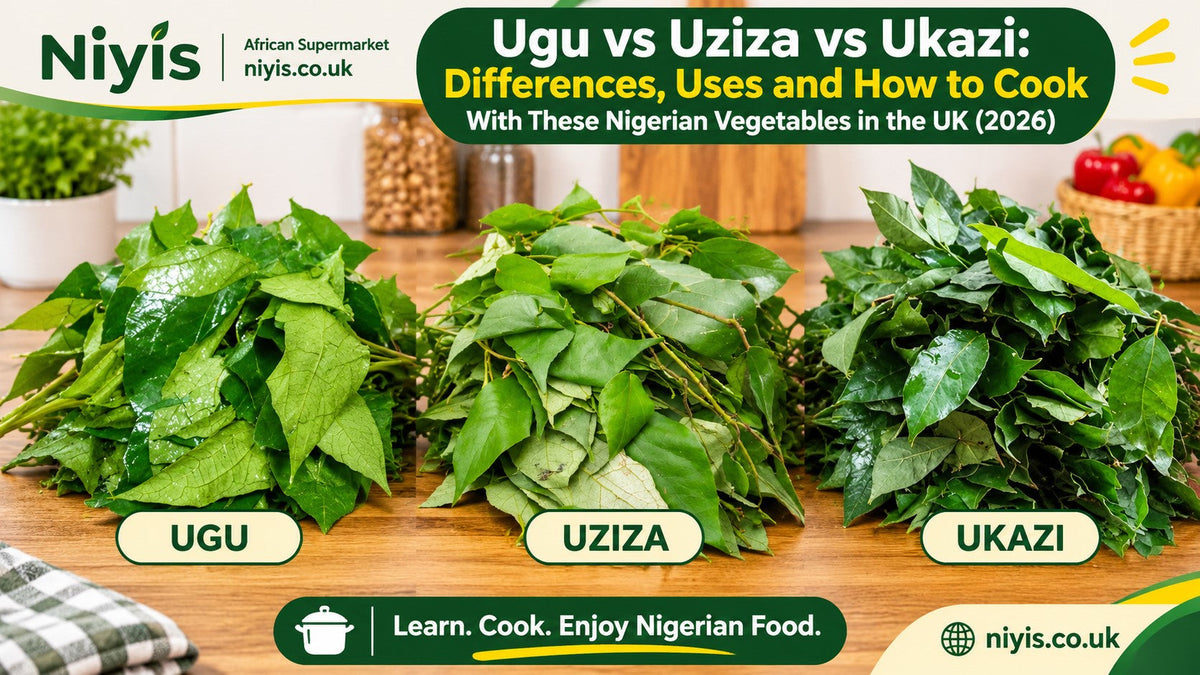
Understanding ugu vs uziza vs ukazi can make a big difference when preparing authentic Nigerian soups. Although all three are popular Nigerian leafy vegetables, they have different appearances, flavours and culinary purposes. Ugu, also called fluted pumpkin leaf, is a familiar ingredient in egusi and vegetable soups. Uziza is an aromatic, peppery leaf used to season soups, while ukazi, also known as afang or okazi, has a distinctive firm texture and earthy flavour. For Nigerians cooking in the UK, knowing which leaf to buy and how to prepare it helps recreate traditional meals with the right taste and texture.
What Is the Difference Between Ugu, Uziza and Ukazi?
-
Ugu: A soft, leafy green vegetable with a mild, fresh flavour. Commonly used in egusi, ogbono and Edikang Ikong.
-
Uziza: An aromatic Nigerian leaf with a strong peppery flavour. Commonly used in Nsala, pepper soup and ogbono.
-
Ukazi: A tougher, slightly bitter and earthy leaf, often shredded finely. Traditionally used in Afang soup and some other vegetable soups.
The main difference is how they contribute to a dish: ugu adds leafy bulk, uziza provides aromatic seasoning, and ukazi gives soups distinctive flavour and texture.
1. Ugu vs Uziza vs Ukazi: Comparison Table

|
Feature |
Ugu |
Uziza |
Ukazi |
|
Botanical name |
Telfairia occidentalis |
Piper guineense |
Gnetum africanum |
|
Appearance |
Green, soft, leafy stems |
Small aromatic green leaves |
Firm, elongated leaves |
|
Flavour |
Mild and fresh |
Peppery and aromatic |
Earthy, slightly bitter |
|
Main purpose |
Adds vegetables and texture |
Adds aroma and spice |
Adds distinctive flavour and texture |
|
Common soups |
Egusi, ogbono, Edikang Ikong |
Nsala, pepper soup, ogbono |
Afang, some vegetable soups |
|
Preparation |
Wash and chop |
Wash and chop finely |
Shred very finely |
These vegetables are not interchangeable in every recipe. Substituting one for another changes the flavour and sometimes the texture of the finished soup.
2. What Is Ugu?
Ugu, botanically known as Telfairia occidentalis, is a popular Nigerian leafy vegetable also called fluted pumpkin leaf. It has green leaves and tender stems, with a mild flavour that works well in soups, stews and vegetable dishes.</text>
Ugu is particularly popular because it complements rather than overpowers other ingredients. It allows the flavours of egusi, crayfish, meat, fish and palm oil to remain prominent.
What is ugu used for?
Common dishes include:
-
Egusi soup
-
Ogbono soup
-
Edikang Ikong
-
Efo Riro
-
Yam porridge
-
Vegetable stir-fries
For UK cooking, try Niyis Fresh Ugu Leaves, which are supplied as a bunch for traditional Nigerian meals. If you prefer a freezer-friendly option, consider Frozen Ugu Leaves.
Cooking tip: Wash fresh ugu thoroughly, remove tough stems if necessary and slice the leaves. Add them towards the end of cooking to avoid making them unnecessarily soft.
3. What Is Uziza?
Uziza comes from Piper guineense, a West African plant valued for its aromatic leaves and seeds. Unlike ugu, which is mainly used as a leafy vegetable, uziza is often used as a seasoning leaf.
Its flavour is peppery, warm and slightly pungent. A small quantity can noticeably change the aroma of a pot of soup.
What is uziza used for?
Uziza is commonly added to:
-
Nsala (white soup)
-
Nigerian pepper soup
-
Ogbono soup
-
Fish soup
-
Traditional meat soups
For convenience, Niyis offers Fresh Uziza Leaves and Dried Uziza Leaves. Fresh leaves are useful when you want their distinctive aroma in a freshly prepared soup, while dried leaves offer a convenient cupboard option.
Cooking tip: Chop fresh uziza finely and add a modest amount towards the end of cooking. Dried uziza can be added according to the product instructions. Start with a little because its peppery flavour can become dominant.
4. What Is Ukazi?
Ukazi, also known as okazi or afang, comes from Gnetum africanum. It is a traditional leafy vegetable associated with southeastern and southern Nigerian cooking.
Unlike the softer leaves of ugu, ukazi is relatively firm and is often shredded into very fine strips before being added to soup. Its flavour is earthy, distinctive and slightly bitter.
What is ukazi used for?
Ukazi is particularly associated with:
-
Afang soup
-
Some traditional vegetable soups
-
Regional meat and seafood dishes
Afang soup commonly combines shredded ukazi with waterleaf, meat, fish, crayfish, palm oil and seasonings.
You can explore Niyis Dried Okazi (Ukazi/Afang) Leaves. Check the product page for current availability before ordering.
Cooking tip: Wash the leaves and shred them as finely as possible. Their firmer texture means they need more preparation than ugu. Combine them with suitable softer vegetables when preparing Afang soup.
5. Which Nigerian Soups Use Ugu, Uziza and Ukazi?
Choosing the right vegetable depends on the soup you want to prepare.
|
Nigerian soup |
Main vegetable |
Other suitable ingredients |
|
Egusi soup |
Ugu |
Egusi, crayfish, palm oil, meat or fish |
|
Ogbono soup |
Ugu or uziza |
Ogbono, stockfish, pepper, crayfish |
|
Nsala soup |
Uziza |
Fish or meat, pepper, crayfish, yam thickener |
|
Pepper soup |
Uziza |
Fish or meat, pepper soup spices |
|
Afang soup |
Ukazi |
Waterleaf, meat, fish, crayfish |
|
Edikang Ikong |
Ugu and waterleaf |
Meat, fish, palm oil and crayfish |
|
Efo Riro |
Ugu |
Pepper, palm oil, assorted meat or fish |
For egusi and ogbono, ugu is a familiar choice when you want a mild leafy vegetable. Uziza is useful when you want a more aromatic, peppery flavour. For traditional Afang soup, ukazi is the defining leafy ingredient.
6. How to Prepare and Cook These Nigerian Vegetables
Good preparation helps preserve the vegetables' flavour and texture.
Preparing ugu
-
Remove damaged leaves and tough stems.
-
Wash thoroughly to remove sand and dirt.
-
Drain and slice into suitable pieces.
-
Add towards the end of cooking.
-
Simmer until the leaves reach your preferred texture.
Preparing uziza
-
Remove damaged leaves and wash carefully.
-
Drain and chop finely.
-
Add a small quantity to your soup.
-
Taste before adding more.
-
Allow the aroma to develop without cooking it for unnecessarily long.
Preparing ukazi
-
Inspect and wash the leaves.
-
Remove unsuitable stems.
-
Shred the leaves very finely.
-
Prepare your soup base and other vegetables.
-
Add ukazi and cook until it reaches the desired tenderness.
For more traditional cooking guidance, explore Niyis' guides to preparing Igbo soups in the UK and preparing Yoruba soups.
7. Fresh vs Dried Nigerian Vegetables: Which Should You Choose?
Fresh and dried vegetables both have a place in a Nigerian kitchen.

|
Type |
Advantages |
Best use |
|
Fresh ugu |
Fresh texture and appearance |
Egusi, Edikang Ikong |
|
Frozen ugu |
Convenient and easy to portion |
Everyday soups and stews |
|
Fresh uziza |
Distinctive fresh aroma |
Nsala and pepper soup |
|
Dried uziza |
Easy to store and use as needed |
Soups, sauces and stews |
|
Fresh ukazi |
Traditional leafy texture |
Afang soup |
Fresh leaves should be refrigerated promptly and used according to their storage instructions. Keep dried leaves sealed in a cool, dry place. Frozen vegetables should remain frozen until needed, following the package directions.
For a more detailed comparison, read Niyis' guide to fresh vs frozen ugu leaves.
8. Where to Buy Ugu, Uziza and Ukazi in the UK
Finding authentic Nigerian vegetables in the UK can be difficult, particularly if you are looking for specific soup leaves rather than ordinary supermarket greens.
Niyis African Supermarket offers a range of Nigerian vegetables and cooking ingredients.
You can browse:
-
Dried Okazi or Ukazi Leaves
You can also explore the wider African grocery collection for soup ingredients such as egusi, ogbono, crayfish and other pantry essentials.
Check individual product pages for current stock, pre-order details and delivery information, especially for fresh vegetables.
9. Frequently Asked Questions
Is ugu the same as uziza?
No. Ugu is a mild leafy vegetable commonly used in egusi and vegetable soups. Uziza is a more aromatic, peppery leaf used to season soups such as Nsala and pepper soup.
Is ukazi the same as afang?
Yes. Ukazi, also spelt okazi, is commonly called afang in parts of Nigeria. It is the distinctive leafy ingredient used in Afang soup.
Can I use ugu instead of uziza?
You can add ugu to a soup that normally contains uziza, but the flavour will be different. Ugu is mild, while uziza provides a peppery aroma.
Which vegetable is used for Afang soup?
Ukazi or afang leaves are essential to traditional Afang soup. They are commonly combined with waterleaf, meat, fish, crayfish and palm oil.
Can I use dried uziza instead of fresh uziza?
Yes. Dried uziza is a convenient alternative when fresh leaves are unavailable. Follow the product instructions and adjust the quantity to suit its flavour intensity.
Which vegetable is best for egusi soup?
Ugu is a popular choice for egusi soup because its mild flavour complements the melon seed base without overpowering it.
How do I store fresh Nigerian soup leaves?
Refrigerate fresh leaves promptly and follow the supplier's storage instructions. Use them while they are still in good condition. Frozen and dried alternatives can be more convenient for longer storage.
Where can I buy ugu, uziza and ukazi in the UK?
You can find these Nigerian vegetables through Niyis African Supermarket, which lists fresh ugu, fresh and dried uziza, and fresh ukazi leaves. Check product pages for current availability.
10. Related Nigerian Recipes and Guides
Try these Niyis guides for more inspiration:
Conclusion
When comparing ugu vs uziza vs ukazi, remember that each vegetable has a different role in Nigerian cooking. Ugu adds mild leafy flavour to soups such as egusi and Edikang Ikong. Uziza brings a distinctive peppery aroma to Nsala and pepper soup. Ukazi gives Afang soup its characteristic earthy flavour and leafy texture.
Choosing the right vegetable helps you recreate traditional Nigerian dishes more authentically, whether you are cooking in Nigeria or the UK. Explore Niyis African Supermarket to find fresh and dried Nigerian vegetables for your next pot of soup.
Share:
15 Nigerian Lunch Ideas: Traditional Meals, Easy Recipes and Ingredients to Buy in the UK (2026)
How to Fry Plantain Perfectly: Easy Crispy Dodo Recipe in the UK (2026)