
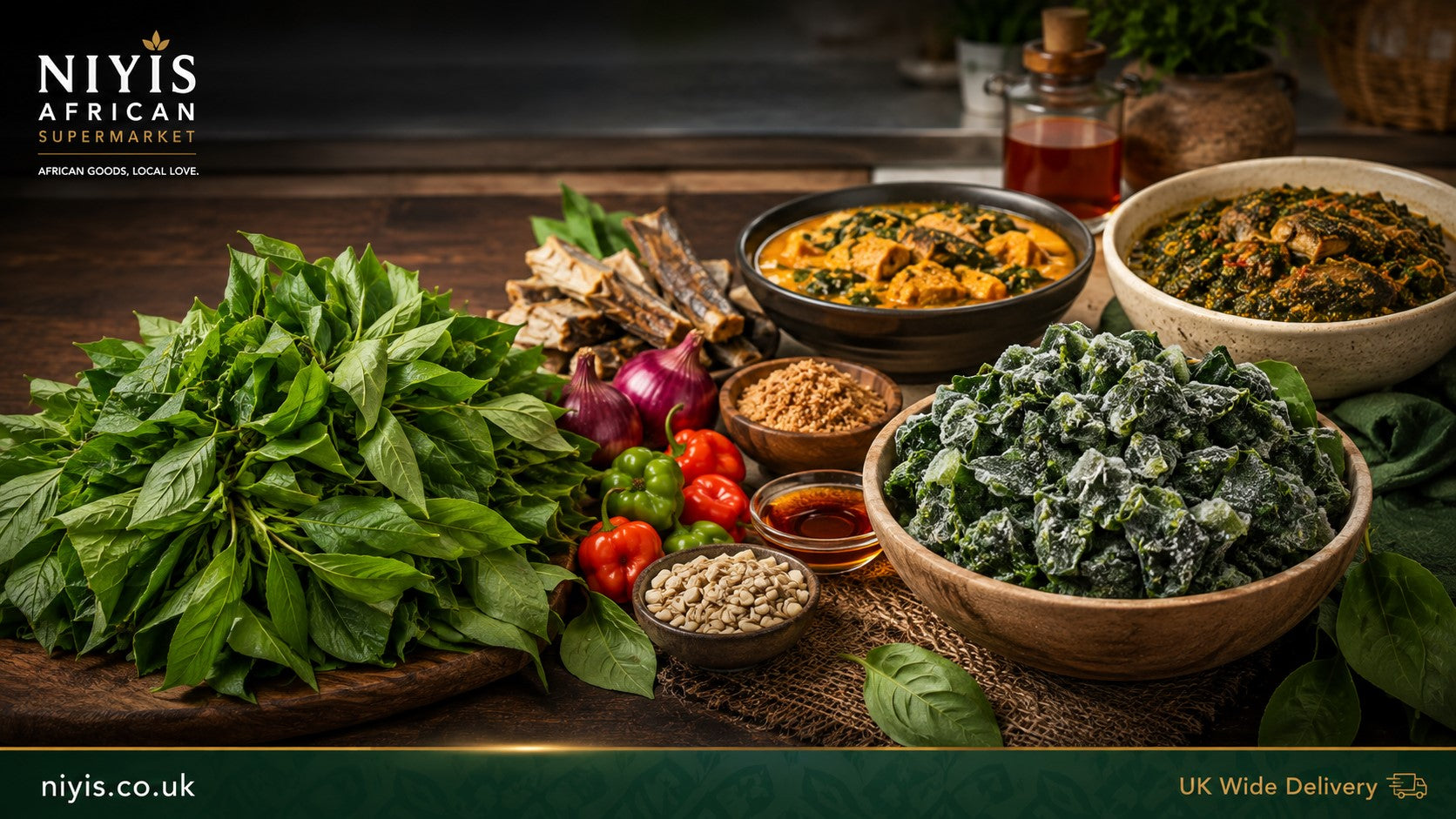
Fresh vs frozen Ugu leaves is a surprisingly important choice for Nigerians cooking traditional meals in the UK. Ugu, also known as fluted pumpkin leaves or Nigerian pumpkin leaves, is a nutrient-rich West African leafy vegetable used in Egusi, Ogbono, Edikang Ikong and other Nigerian dishes. The best option depends on what matters most to you: freshness, flavour, texture, convenience, storage or availability.
For the closest fresh-leaf experience, choose Fresh Ugu Leaves. For convenience and longer freezer storage, Frozen Ugu Leaves can be an excellent alternative. Niyis currently offers both options in the UK.
Is fresh or frozen Ugu better?
Fresh Ugu is usually best for flavour, appearance and texture, while frozen Ugu is often better for convenience, availability and reducing food waste.
Neither is automatically healthier.
Nutrient retention depends on the specific vegetable, storage conditions and processing method. Frozen vegetables can retain nutritional value comparable to fresh vegetables, particularly when fresh produce has been stored for several days before use.
Which Ugu should you buy in the UK?
Choose:
-
Fresh Ugu for maximum freshness and traditional texture
-
Frozen Ugu for convenience and longer storage
-
Dried Ugu when you need a shelf-stable backup
Niyis currently lists all three forms.
Fresh vs Frozen Ugu Leaves at a Glance

|
Feature |
Fresh Ugu |
Frozen Ugu |
|
Flavour |
Fresh, green and aromatic |
Good, with slightly different freshness perception |
|
Texture |
Firmer and more natural |
Softer after cooking |
|
Convenience |
Requires preparation |
Ready to cook |
|
Storage |
Shorter shelf life |
Much longer freezer life |
|
Food waste |
Higher if unused quickly |
Lower when portioned correctly |
|
Availability |
Seasonal and limited |
More consistent |
|
Traditional soups |
Excellent |
Excellent |
|
Egusi soup |
Excellent |
Excellent |
|
Ogbono soup |
Excellent |
Excellent |
|
Edikang Ikong |
Excellent |
Very good |
|
UK meal planning |
Best when cooking soon |
Excellent for meal prep |
Bottom line: Fresh wins for the classic fresh-leaf experience. Frozen wins when convenience and reliable availability matter most.
What Is Ugu Leaf?
Ugu is the Nigerian name commonly used for the leaves of Telfairia occidentalis, also called fluted pumpkin.
It is a leafy vegetable native to tropical West Africa and is particularly important in Nigerian cooking.
Ugu is commonly used in:
-
Egusi soup
-
Ogbono soup
-
Edikang Ikong
-
Vegetable soups
-
Stir-fries
-
Stews
-
Vegetable-based dishes
Niyis describes fresh Ugu as a traditional Nigerian vegetable that is washed, cleaned and cold-packed for delivery.
For a wider look at African vegetables, browse Niyis' African Vegetables Collection.
Ugu Leaves Nutritional Profile

Ugu is valued not just for its role in Nigerian cuisine but also for its nutrient and phytochemical content.
Research on Telfairia occidentalis has identified amino acids and antioxidant-related compounds in the leaves. Ugu contains dietary fibre, plant compounds and micronutrients that can contribute to a varied and balanced diet.
|
Nutritional feature |
Why it matters |
|
Dietary fibre |
Supports a balanced, fibre-rich diet |
|
Plant compounds |
Contribute to dietary antioxidant intake |
|
Micronutrients |
Support overall dietary quality |
|
Amino acids |
Contribute to the nutritional composition of the leaves |
|
Low-calorie vegetable format |
Useful for adding vegetables to meals |
Importantly, eating Ugu should not be viewed as a treatment for anaemia, diabetes or any other disease. Its strongest nutritional role is as part of a varied diet.
Fresh Ugu Leaves: Pros and Cons
Fresh Ugu is the choice for people who want the closest experience to buying leaves from a Nigerian market.
Niyis currently sells Fresh Ugu Leaves, 1 Bunch. The product is described as freshly harvested, washed, cleaned and cold-packed, and is intended for dishes including Egusi, Ogbono and Edikang Ikong.
Advantages of fresh Ugu
-
Excellent fresh texture
-
Strong visual appeal
-
Ideal for traditional recipes
-
Easy to chop to your preferred size
-
Particularly good when cooking immediately
-
Excellent for meals where the appearance of leafy vegetables matters
Disadvantages
-
Shorter storage life
-
Needs refrigeration
-
Requires more preparation
-
Can be harder to find in the UK
-
More likely to be wasted if you buy too much
Fresh Ugu is therefore the better choice when taste, texture and authenticity are your top priorities.
Frozen Ugu Leaves: Pros and Cons
Frozen Ugu solves one of the biggest problems for Nigerians living in the UK: keeping traditional vegetables available without needing to cook them immediately.
Niyis' Frozen Ugu Leaves 500g are described as handpicked at peak ripeness, carefully frozen and ready to use without washing or chopping.
Advantages of frozen Ugu
-
Convenient
-
Ready to cook
-
Longer storage
-
Easy to portion
-
Useful for meal preparation
-
Available outside fresh-leaf harvest periods
-
Reduces the pressure to cook immediately
Disadvantages
-
Texture can become softer
-
Frozen vegetables require freezer space
-
The eating experience can differ from freshly harvested leaves
For busy UK households, frozen Ugu can therefore be the more practical choice.
Is Fresh Ugu Healthier Than Frozen?
This is where the fresh-versus-frozen debate gets interesting.
Fresh does not automatically mean more nutritious.
A major factor is how long fresh vegetables remain refrigerated before they are eaten. Some nutrients can decline during storage.
Frozen vegetables can retain substantial nutritional value, especially when they are frozen soon after harvesting. However, the final nutritional profile depends on the vegetable, preparation method, storage conditions and cooking time.
For Ugu specifically, processing and storage conditions can affect nutrients such as beta-carotene. Blanching, freezing and prolonged storage may all influence nutrient levels.
The most accurate answer is:
Fresh Ugu is not automatically healthier than properly frozen Ugu.
Which Ugu Is Best for Nigerian Soups?

Both work.
For Egusi Soup
Fresh Ugu gives the most traditional fresh-leaf texture.
Frozen Ugu is excellent when you want to cook Egusi without preparing vegetables from scratch.
Niyis' Egusi Soup Guide specifically recommends Ugu as the traditional leafy vegetable and explains that frozen Ugu can also be used.
For Ogbono Soup
Either works well.
If you want fresh leafy pieces with a firmer texture, choose fresh Ugu.
If convenience matters more, frozen Ugu is an excellent option.
For Edikang Ikong
Fresh Ugu is particularly appealing when you want a traditional fresh vegetable texture.
Combine it with Fresh Waterleaf for a classic leafy vegetable combination.
For Stir-Fries
Frozen Ugu can be especially convenient because it requires less preparation.
Fresh vs Frozen Ugu for UK Households
The UK creates a unique challenge for people cooking Nigerian food.
You may not cook Egusi soup every week.
You may also live far from an African supermarket.
Fresh vegetables can therefore become difficult to plan around.
Frozen Ugu solves that problem.
If you regularly prepare Nigerian soups, keeping a pack of frozen Ugu in your freezer means you can make a traditional vegetable-based soup whenever you need it.
For households that cook Nigerian food frequently, the smartest approach may actually be buying both.
Keep fresh Ugu for:
-
Weekend cooking
-
Special occasions
-
Traditional soup preparation
-
Meals where texture matters
Keep frozen Ugu for:
-
Emergency meals
-
Weeknight cooking
-
Meal preparation
-
Unexpected guests
-
Busy schedules
How to Store Fresh and Frozen Ugu
Fresh Ugu
When your fresh Ugu arrives:
-
Check the leaves.
-
Keep them refrigerated.
-
Follow the supplier's storage instructions.
-
Use them as soon as practical.
-
Avoid leaving fresh leaves at room temperature unnecessarily.
Niyis says its fresh leaves are washed, cleaned and cold-packed, and fresh leaves are dispatched according to its produce schedule.
Frozen Ugu
Frozen Ugu is simpler.
Keep it frozen according to the product instructions and remove only the amount you need.
Niyis' frozen Ugu is supplied, cleaned and ready to cook.
How to Cook Ugu Leaves
Ugu is extremely versatile.
Simple method
-
Choose fresh or frozen Ugu.
-
If using fresh, wash and prepare according to your recipe.
-
Chop the leaves.
-
Prepare your soup or stew base.
-
Add your Ugu towards the later stage of cooking.
-
Cook until the leaves reach your preferred texture.
-
Taste and adjust seasoning.
For Egusi, combine Ugu with Niyis Ground Egusi Seeds, palm oil, peppers, stockfish, crayfish and your preferred protein.
You can also use Ugu alongside Fresh Bitter Leaves for a broader selection of traditional Nigerian vegetables.
Related Nigerian Vegetables to Try
Ugu is only one part of the Nigerian vegetable world.
Fresh Waterleaf
Fresh Waterleaf is an excellent partner for Ugu in traditional soups.
Fresh Ewedu
For Yoruba-style meals, try Fresh Ewedu Leaves. Niyis also offers Frozen Ewedu for convenience.
Bitter Leaf
You can also explore Fresh Bitter Leaves for Ofe Onugbu, Egusi and other traditional dishes.
Okro
Fresh Okro is another versatile Nigerian vegetable for soups and stews.
For more inspiration, read Niyis' Nigerian Vegetables and Their Benefits.
Where to Buy Ugu Leaves in the UK
If you are searching for where to buy fresh Ugu leaves in the UK, Niyis African Supermarket currently offers both fresh and frozen options.
Shop Fresh Ugu
Fresh Ugu Leaves, 1 Bunch are harvested to order, washed, cleaned and cold-packed.
Shop Frozen Ugu
Frozen Ugu Leaves 500g are cleaned and ready to cook, making them particularly convenient for Egusi, Ofe Oha, stews and stir-fries.
Need a longer-lasting option?
Niyis also lists Dried Ugu Leaves 50g.
You can browse the complete African Vegetables Collection or the wider African Grocery Collection to build a complete Nigerian shopping basket.
Niyis currently advertises UK delivery, with fresh leaves dispatched according to its produce schedule and frozen products shipped using cold packaging. Always check the individual product page for current availability and delivery information.
FAQs About Fresh vs Frozen Ugu Leaves
Is fresh Ugu better than frozen Ugu?
Fresh Ugu is generally preferable when flavour, appearance and fresh texture are the priority. Frozen Ugu is often better for convenience, storage and meal planning.
Is frozen Ugu still healthy?
Yes. Properly frozen vegetables can retain substantial nutritional value. Frozen Ugu can be part of a balanced diet when prepared and stored correctly.
Can I use frozen Ugu for Egusi Soup?
Yes. Frozen Ugu works very well in Egusi Soup and is particularly convenient because it is already cleaned and ready to cook.
Can I use frozen Ugu for Ogbono Soup?
Yes. Frozen Ugu can be added to Ogbono Soup just as you would use prepared fresh leaves.
Does frozen Ugu taste the same as fresh Ugu?
Not exactly. Fresh Ugu generally has a fresher texture, while frozen Ugu can become softer after cooking. However, both can produce excellent Nigerian soups.
Which Ugu is best for Edikang Ikong?
Fresh Ugu is ideal when you want the traditional fresh texture. Frozen Ugu is a convenient alternative, particularly for UK households.
How long does fresh Ugu last?
Fresh leafy vegetables have a much shorter storage life than frozen vegetables. Refrigerate fresh Ugu promptly and follow the supplier's storage recommendations.
Can I freeze fresh Ugu myself?
Yes, leafy vegetables can be frozen, but preparation before freezing can affect quality. If convenience is your priority, commercially prepared frozen Ugu can save time.
Is Ugu the same as pumpkin leaves?
Ugu is commonly called fluted pumpkin leaf or Nigerian pumpkin leaf. It comes from Telfairia occidentalis, a plant native to tropical West Africa.
Where can I buy Ugu leaves online in the UK?
Niyis sells Fresh Ugu Leaves and Frozen Ugu Leaves online for UK customers.
Related Nigerian Recipes to Make With Ugu
1. Egusi Soup
Use fresh or frozen Ugu with egusi, palm oil, peppers and your preferred protein.
Read Niyis' How to Cook Egusi Soup in the UK for a detailed ingredient and preparation guide.
2. Edikang Ikong
Combine Ugu with waterleaf, meat or fish and traditional seasonings.
Niyis' Fresh Ugu Leaves Guide also highlights Edikang Ikong among the classic dishes made with Ugu.
3. Ogbono Soup
Ugu works beautifully with the rich, drawy texture of Ogbono.
For more ideas, explore Niyis' Nigerian recipes and cooking guides.
4. Ugu and Protein-Rich Meals
For a more balanced meal, combine Ugu-based soups with protein sources such as fish, turkey, chicken, eggs or beans.
Niyis' guide to Healthy Nigerian Foods for Gym Diets highlights Ugu alongside beans, fish, turkey, eggs and other nutrient-rich Nigerian foods.
The Verdict: Fresh or Frozen Ugu?
So, which is better, fresh or frozen Ugu leaves?
There is no single winner.
Choose fresh Ugu if you want the best fresh texture, appearance and traditional market-style experience.
Choose frozen Ugu if you want convenience, longer storage and a dependable ingredient for Nigerian cooking in the UK.
And for regular Nigerian cooks, there is a strong argument for keeping both in your kitchen.
Fresh Ugu is perfect when you are cooking a special pot of Egusi or Edikang Ikong. Frozen Ugu is the lifesaver when you suddenly decide you want Nigerian soup on a busy weekday.
The most important thing is not obsessing over whether fresh or frozen is automatically "healthier". Nutrient retention can vary according to the vegetable, processing method and storage conditions.
For UK households looking for authentic Nigerian vegetables, start with Fresh Ugu Leaves or Frozen Ugu Leaves from Niyis, then build your soup ingredients from the wider African Vegetables Collection.
Share:
10 Health Benefits of Garden Egg for Men and Women in the UK (2026)