
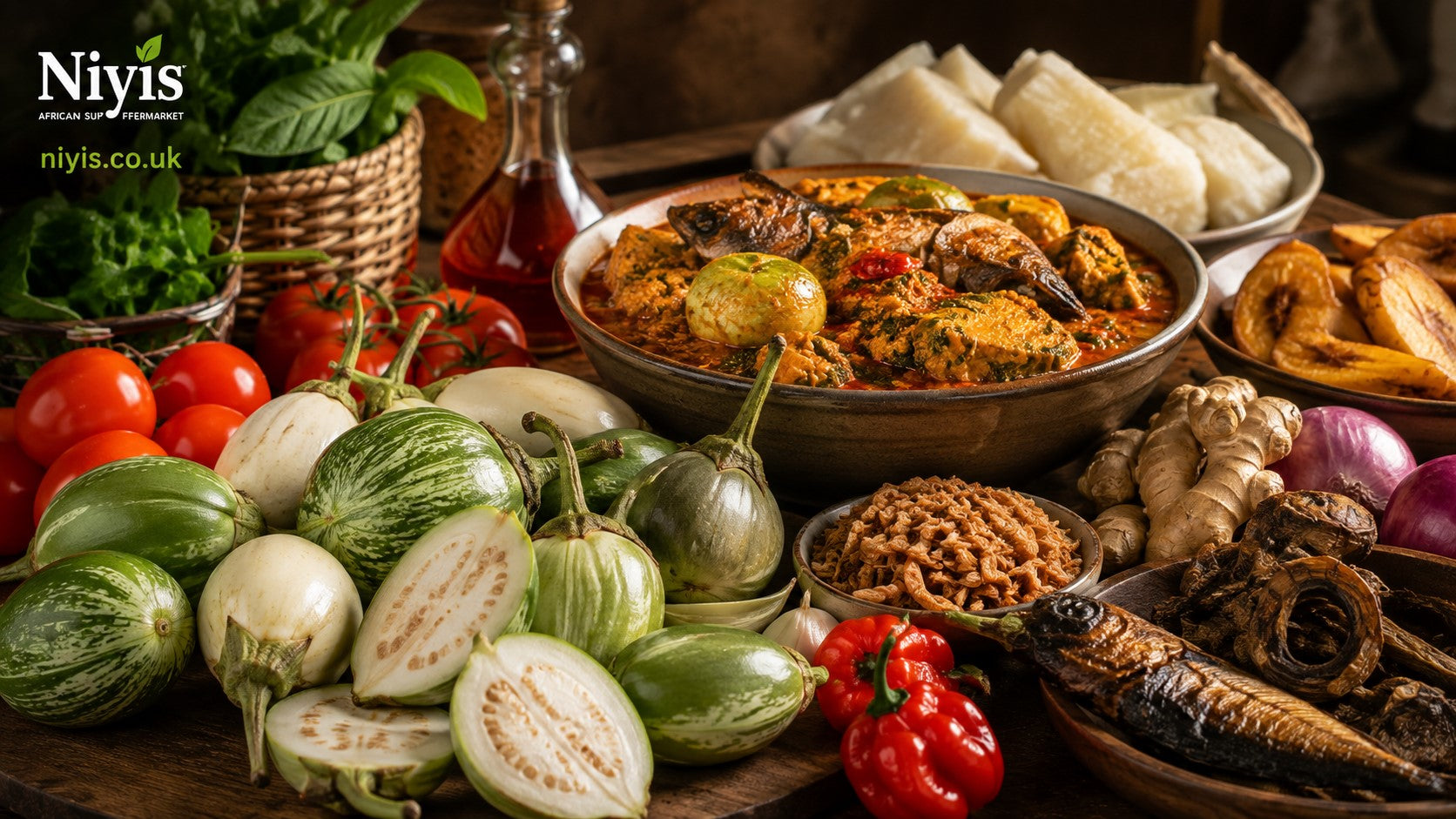
Garden eggs are a versatile African vegetable used in garden egg stew, roasted garden eggs, sauces, salads and traditional West African meals. Also known as African eggplant or aubergine, garden eggs have a soft, creamy texture when cooked and can range from mildly sweet to slightly bitter depending on the variety. For cooks in the UK looking for authentic West African recipes, learning how to cook with garden eggs is an easy way to bring Nigerian and Ghanaian flavours into everyday meals.
Fresh garden eggs are particularly useful because they absorb the flavours of tomatoes, peppers, palm oil, onions, smoked fish and spices beautifully. Niyis currently lists Fresh garden eggs, making it possible to buy authentic African garden eggs online in the UK.
What are garden eggs?
Garden eggs are African eggplants from the nightshade family. They are commonly eaten raw, boiled, roasted, grilled, fried or cooked into stews and sauces.
What is the best way to cook with garden eggs?
For West African cooking, some of the most popular methods are boiling and mashing them into garden egg stew, roasting them until lightly charred, grilling them, or combining them with tomatoes, peppers, palm oil and smoked fish.
What do garden eggs taste like?
Garden eggs have a mild, earthy flavour with some varieties offering a subtle bitterness. Once cooked, the flesh becomes soft and creamy.
Why Garden Eggs Are So Popular in West African Cooking
Garden eggs are more than a substitute for conventional aubergines. Across West African kitchens, they are valued for their ability to absorb rich sauces while retaining enough texture to make a dish satisfying.
Nigerian cooking commonly combines garden eggs with tomatoes, onions, fresh peppers, palm oil and fish. Ghanaian preparations can also pair garden eggs with leafy vegetables and savoury sauces. Niyis recipes feature garden egg stew as well as roasted and grilled garden egg preparations, demonstrating just how adaptable the vegetable can be.
The small African varieties are especially useful for traditional recipes because their flavour and texture work naturally with strong seasonings.
Garden Egg Nutrition: What Does It Contain?

Garden eggs are naturally low in calories and provide fibre, vitamins, minerals and plant compounds. Research specifically examining African eggplant, Solanum aethiopicum, reports fibre and several essential vitamins and describes a range of phytochemicals found in the vegetable.
|
Nutritional component |
Why it matters |
|
Fibre |
Supports normal digestive function |
|
Vitamin C |
Contributes to normal immune function |
|
Vitamin K |
Important for normal blood clotting and bones |
|
Potassium |
Helps maintain normal fluid balance |
|
Magnesium |
Supports normal muscle and nerve function |
|
Polyphenols |
Plant compounds with antioxidant activity |
|
Anthocyanins |
Found particularly in some darker-coloured eggplant varieties |
Eggplant research has identified polyphenols and anthocyanins among its bioactive compounds, although the amount varies considerably between varieties.
This makes garden eggs a useful vegetable to include in a varied, balanced diet, but they should be viewed as food rather than a treatment for any medical condition.
5 Delicious Ways to Cook Garden Eggs

1. Nigerian-Style Garden Egg Stew
If you want to know how to cook garden egg stew, start here.
Garden egg stew is one of the easiest ways to turn this vegetable into a satisfying main dish. A traditional-style version can combine boiled and mashed garden eggs with tomatoes, onions, Scotch bonnet peppers, palm oil and smoked fish.
Ingredients
-
8 to 10 garden eggs
-
3 tomatoes
-
1 large onion
-
1 to 2 Scotch bonnet peppers
-
3 to 4 tablespoons Niyis Palm Oil
-
Smoked mackerel or smoked fish
-
Salt and seasoning to taste
-
Optional dried shrimp or crayfish
Method
-
Wash and trim the garden eggs.
-
Boil for approximately 10 to 15 minutes until soft.
-
Drain and mash roughly with a fork or potato masher.
-
Heat palm oil gently in a saucepan.
-
Add sliced onions and peppers.
-
Add chopped or blended Fresh Tomatoes and cook until the mixture thickens.
-
Stir in the mashed garden eggs.
-
Add flaked smoked fish and seasoning.
-
Simmer gently for another 5 to 10 minutes.
For an authentic smoky flavour, use Niyis Smoked Dried Catfish when available. You can also add Niyis Crayfish for extra depth and traditional flavour.
Serve with boiled yam, rice, plantain or garri.
Niyis has previously published a detailed garden egg stew recipe using garden eggs, tomatoes, palm oil, smoked fish and scent leaf.
2. Roasted Garden Eggs
Roasted garden eggs are ideal when you want something quick with minimal preparation.
Method
-
Wash and dry the garden eggs.
-
Cut larger ones in half.
-
Toss lightly with oil and salt.
-
Place on a baking tray.
-
Roast at approximately 200°C until tender and lightly charred.
-
Serve immediately.
For a West African twist, serve them with a hot pepper and tomato sauce rather than a conventional dip. Use Niyis Fresh Mixed Hot Peppers to prepare a vibrant pepper sauce.
Niyis also recommends roasting garden eggs until slightly charred for a simple appetiser or side dish. Read its guide to the best ways to cook garden eggs for more preparation ideas.
3. Garden Egg and Smoked Fish Sauce
For a deeply savoury meal, combine mashed garden eggs with smoked fish.
Fry onions, tomatoes and Scotch bonnet in palm oil, then add cooked garden eggs and flaked smoked fish. Simmer until thick and creamy.
Use Fresh Mixed Hot Peppers when you want a more vibrant pepper base. Niyis describes its mixed peppers as suitable for stews, jollof, pepper soup and other dishes requiring heat and colour.
For more smoky ingredients, browse Niyis' smoked fish collection, which can help you create richer traditional sauces and stews.
4. Grilled Garden Eggs with Pepper Sauce
Grilling brings out the vegetable's smoky, slightly sweet character.
Halve the garden eggs, brush lightly with oil and grill until tender with charred edges. Serve with a simple sauce made from tomatoes, onions and Scotch bonnet.
This works particularly well as a side dish for grilled fish, chicken or rice. Pair it with Niyis Fresh Ginger and garlic for a more aromatic pepper sauce.
5. Garden Egg and Waakye Leaf Stew
For a Ghana-inspired variation, combine garden eggs with chopped waakye leaves, tomatoes, onions, ginger and palm oil.
Niyis has published a version pairing garden eggs with waakye leaves, highlighting the earthy and slightly bitter flavour created by the combination. Learn more about Ghana's waakye leaves and their traditional uses.
This is an excellent option if you enjoy vegetables with deeper, more complex flavours.
Traditional West African Pairings for Garden Eggs

One of the secrets to enjoying garden eggs is pairing their creamy texture with contrasting ingredients.
|
Garden egg pairing |
Why it works |
|
Rice |
Absorbs rich garden egg sauce |
|
Yam |
Provides a filling, starchy contrast |
|
Fried plantain |
Adds sweetness and caramelisation |
|
Smoked fish |
Adds deep savoury and smoky flavour |
|
Palm oil |
Gives traditional colour and richness |
|
Scotch bonnet |
Adds heat and freshness |
|
Tomatoes |
Balances bitterness with acidity and sweetness |
|
Beans |
Creates a hearty plant-based combination |
|
Crayfish |
Adds savoury depth and umami |
For another authentic side, explore Niyis' guide to the best ways to eat plantains, including fried plantain, baked plantain and other preparations.
You can also serve garden egg stew with Niyis Nigerian beans or use Niyis yam products to create a more filling West African meal.
How to Prepare Garden Eggs Before Cooking
Start by washing the garden eggs thoroughly.
For stews, cut off the stems and quarter or chop the vegetables. You can leave the skin on if you prefer more texture and colour.
For roasting or grilling, halve them and lightly oil the cut surface.
For mashed garden egg stew, boil until tender before mashing.
Avoid overcooking them. Garden eggs should become soft without turning completely watery.
A useful tip is to prepare your pepper base separately. This allows the tomatoes, onions and peppers to develop a richer flavour before the garden egg is introduced.
For extra freshness, combine your garden eggs with Fresh Tomatoes, Fresh Ginger, Fresh Garlic and Fresh Mixed Hot Peppers. These ingredients are useful for building the base of traditional sauces, stews and pepper mixes.
If you are preparing a larger batch, browse Niyis' fresh African vegetables collection for tomatoes, peppers, garden eggs and other produce.
Where to Buy Garden Eggs in the UK
 Finding authentic African vegetables can be difficult if your local supermarket does not stock the smaller varieties traditionally used in West African cooking.
Niyis offers Fresh Egg Plant (Garden Egg) 1kg, described as suitable for grilling, roasting, stewing and frying.
You can also browse the Niyis fresh vegetables range, which includes garden eggs, tomatoes, hot peppers and other ingredients useful for West African cooking.
For more inspiration, read Niyis' guide to buying African vegetables online in the UK, which covers garden eggs, peppers, fresh leaves and other African produce.
Other useful Niyis categories for garden egg recipes include:
-
Fresh vegetables for tomatoes, peppers, ginger, garlic and leafy ingredients.
-
African spices and seasonings for adding depth to stews and sauces.
-
Palm oil for traditional colour and richness.
-
Smoked fish for smoky, savoury flavour.
-
Crayfish for traditional Nigerian sauces and soups.
-
African food cupboard essentials for rice, beans, yam, plantain and other accompaniments.
Niyis states that fresh vegetables and fruits are dispatched on Mondays and that next-day delivery is available for qualifying orders placed before 11am. Delivery terms can change, so check the current product and delivery information before ordering.
FAQs About Cooking Garden Eggs
1. Are garden eggs the same as aubergines?
Yes. Garden egg is a common African name for eggplant or aubergine, although African varieties can differ in shape, colour, size and flavour.
2. Can you eat garden eggs raw?
Yes. They can be washed, sliced and eaten raw. However, many traditional West African recipes cook them first.
3. How do you cook garden egg stew?
Boil and mash the garden eggs, prepare a tomato, onion and pepper sauce with palm oil, then combine the garden egg with the sauce and add smoked fish or another protein if desired.
4. Can you roast garden eggs?
Yes. Roast halved garden eggs at around 200°C until tender and lightly charred. They can then be served with pepper sauce or used in other dishes.
5. What do you eat with garden egg stew?
Popular pairings include rice, yam, fried plantain, bread, fufu and other starchy staples. Niyis also highlights rice, yam and plantain as suitable accompaniments.
6. Do you need to peel garden eggs?
No. The skin is edible. Whether you peel them depends on the recipe and the texture you prefer.
7. How should fresh garden eggs be stored?
Keep them cool and use them relatively soon after purchase. Avoid storing damaged or bruised vegetables alongside fresh produce.
8. Are garden eggs healthy?
Garden eggs can contribute fibre, vitamins, minerals and plant compounds to a balanced diet. Research on African eggplant has identified nutritional and phytochemical components, but individual varieties can differ.
Related Recipes and Guides
Continue exploring African cooking with these Niyis resources:
-
Best ways to cook garden eggs for additional roasting, grilling, salad and stew ideas.
-
Simple steps to make garden egg stew for another detailed garden egg stew method.
-
8 Benefits of Eating Garden Eggs for information about garden eggs and their nutritional value.
-
How to make Nigerian Jollof Rice for a classic pairing with rich garden egg dishes.
-
Best Rice for Nigerian Jollof Rice for choosing rice that stays fluffy and absorbs flavour well.
-
High-fibre foods you need to be eating for more information about garden eggs and dietary fibre.
-
How to Cook Egusi Soup in the UK for another authentic Nigerian cooking guide.
-
Health benefits of Ghana's waakye leaves for a Ghanaian ingredient that pairs well with garden eggs.
-
Best ways to eat plantains for sweet and savoury accompaniments.
-
How to buy African vegetables online in the UK for guidance on sourcing fresh African produce.
Final Word
If you have only ever eaten garden eggs raw or used them occasionally, garden egg stew, roasted garden eggs, grilled garden eggs and smoked-fish garden egg sauce are excellent places to start. Their creamy texture makes them ideal for rich West African sauces, while their mild earthy flavour pairs naturally with tomatoes, peppers, palm oil, fish, yam, rice and plantain.
For cooks in the UK, authentic ingredients make a noticeable difference. Start with fresh African garden eggs from Niyis, add Niyis fresh peppers, Niyis palm oil, smoked fish or crayfish, and turn this underrated vegetable into a meal that tastes like home.
Share:
Buying Specialty African Meats & Offal Online in the UK: Best Cuts for Nigerian Cooking (2026)
Prekese Tea vs. Soursop Tea: Benefits, Taste & How to Choose in the UK (2026)