
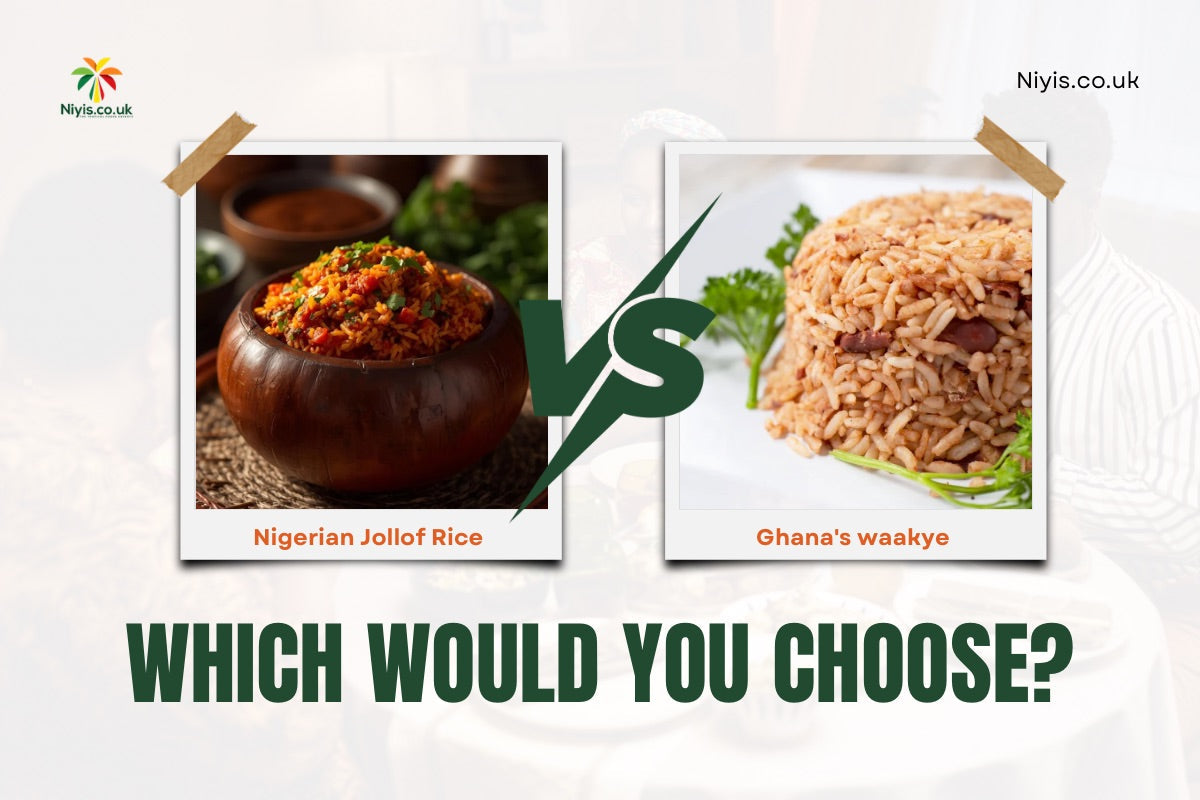
Let's settle a debate that has probably started more friendly family arguments than any other topic in our community: which is better, Jollof Rice or Waakye?
The question alone is enough to get anyone from Nigeria or Ghana talking with passion and pride. For Nigerians, Jollof isn't just food; it's the star of every party, the soul of every celebration, a vibrant, smoky dish that is a national treasure. For Ghanaians, Waakye (or Waakye) is the ultimate comfort food, a hearty, savoury, and deeply satisfying meal that feels like a warm hug from the inside out.
The truth is, this is a debate with no real loser. Both dishes are incredible, iconic representations of their cultures, and beloved by millions. But they are very, very different.
At Niyis, we believe in celebrating all the flavours that make us who we are. So, instead of declaring a winner, let's get into the kitchen and explore what makes each of these dishes so special. We will break down their unique personalities, their secret ingredients, and how you can bring both of these incredible tastes of home to your table here in the UK.
And to get started, you will need the best quality ingredients. You can find everything from authentic long-grain rice to the perfect stock cubes and spices on our website.
Jollof Rice: The Vibrant Soul of a Nigerian Party
If you have ever been to a Nigerian party, you know Jollof Rice. It is the centre of the table, the dish everyone looks for, the one that disappears first. It is more than just a side dish; it is the main event. The aroma of a pot of Jollof simmering on the stove is the smell of celebration, of joy, of home.

What Makes Jollof, Jollof?
The magic of Jollof lies in its cooking process and its specific blend of ingredients. It is a one-pot dish where the rice is cooked directly in a rich, flavourful tomato and pepper sauce, absorbing every bit of that goodness.
- The Rice: You need a long-grain, parboiled rice. This type of rice holds its shape well and doesn't get mushy, ensuring those beautiful, separate grains that Jollof is famous for.
- The Flavour Base: This is the heart of the dish. A perfect Jollof base is a blend of ripe tomatoes, Red bell peppers (tatashe), Onions, and, of course, a healthy amount of Scotch bonnet peppers for that signature heat. This blend is usually pureed until smooth.
- The Secret Spices: This is where every cook has their own secret. But common players include thyme, curry powder, bay leaves, and a couple of high-quality stock cubes, for that deep, savoury umami flavour.
- The "Party Jollof" Smokiness: The legendary smoky flavour that separates good Jollof from great Jollof often comes from the rice slightly burning at the bottom of the pot. This is called the "party rice," and it is a highly prized, crispy delicacy.
The Flavour Profile:
Think of Jollof as a party on a plate. It is a perfect balance of savoury, tangy, and spicy. The sweetness of the tomatoes and peppers is cut through by the heat of the scotch bonnets and the deep savoury notes from the Stock cubes. It is bold, it is complex, and it is incredibly moreish.
How to Serve It:
Jollof is a versatile star. It is fantastic with fried Chicken, grilled beef (suya), or moist, fried fish. It is often served with a side of sweet, fried Plantain (dodo), a cooling coleslaw, or some Moi moi (steamed bean pudding). It is a complete, celebratory meal.

Ready to create your own party at home? You can shop for all your essential Jollof ingredients here, from the perfect rice to the stock cubes that make all the difference.
Waakye: The Hearty Comfort of a Ghanaian Home
If Jollof is the life of the party, Waakye is the comforting embrace that makes you feel safe and cared for. It is a humble, hearty, and incredibly flavourful dish that is a staple in Ghanaian homes. It is the kind of meal you crave on a rainy day or when you need a true taste of home.

What Makes Waakye, Waakye?
Waakye is also a rice dish, but its process and its key partner—beans—are what give it its unique character.
- The Rice and Beans: The foundation of Waakye is cooking rice and black-eyed peas together. This combination makes it more nutritious and gives it a distinct, earthy flavour and a softer texture.
- The Signature Colour: Traditional Waakye gets its beautiful, reddish-brown colour from dried sorghum leaves (waakye leaves) that are cooked with the Rice and Beans. In the UK, these can be hard to find, so many home cooks use a pinch of baking soda as a clever substitute to achieve that familiar colour.
- The Stew is Key: Waakye is almost always served with a protein-rich, spicy stew. This stew, made with a tomato and pepper base similar to Jollof's but often with a different blend of spices and the addition of "wele" (boiled beef or cowhide), is what truly completes the dish.
- The Garnishes: A true Waakye experience is all about the toppings. It is typically served with boiled Spaghetti, Fried fish, Boiled eggs, Gari (roasted cassava granules), and avocado.
The Flavour Profile:
Waakye is savoury, earthy, and deeply comforting. It is less about the bright, tangy punch of Jollof and more about a gentle, satisfying warmth. The combination of rice and beans gives it a wonderful, soft texture, and when paired with the spicy stew and the various toppings, every bite is a new adventure.

How to Serve It:
The beauty of Waakye is in the customisation. You start with a base of the rice and beans, add a generous ladle of the stew, and then top it with whatever your heart desires. The soft boiled egg, the crispy fried fish, the crunchy gari—it all comes together to create a meal that is both filling and incredibly exciting.

Want to bring this Ghanaian comfort to your kitchen? You can find everything you need, from black-eyed peas to the perfect stew ingredients, right here at Niyis.
The Head-to-Head: A Quick Look

| Feature | Jollof Rice | Waakye |
|---|---|---|
| Country of Origin | Nigeria | Ghana |
| Main Ingredient | Long-grain rice | Rice & black-eyed peas |
| Signature Colour | Bright orange-red | Reddish-brown |
| Flavour Profile | Smoky · Spicy · Tangy | Earthy · Savoury · Comforting |
| Cooking Method | Rice cooked in a tomato-pepper base | Rice and beans cooked together; served with a separate stew |
| The Vibe | The life of the party | A warm, comforting hug |
The Final Verdict: Why Choose When You Can Have Both?
So, after all that, who wins the ultimate West African showdown?
The honest answer is: you do. The winner is your stomach, your mood, and your craving. Some days call for the vibrant, smoky celebration of a perfect pot of Jollof. Other days call for the hearty, comforting embrace of a bowl of Waakye loaded with toppings.
The real beauty of our cuisine is its diversity. Jollof and Waakye are not competitors; they are two different, brilliant expressions of West African food culture. They represent different moments, different feelings, and different kinds of joy. To love one is not to dislike the other; it is simply to appreciate the incredible range of flavours our home has to offer.
So, why not make this a weekend of celebration? Why not have a Jollof night on Friday and a Waakye feast on Saturday? You do not have to choose a side. You just have to bring your appetite.
Ready to cook up a storm? We have everything you need to create both of these iconic dishes, right here in the UK. Shop at Niyis
Share:
Ripe vs. Unripe Plantain: 7 Dishes You MUST Know
5 Common Mistakes You're Making When Cooking African Rice